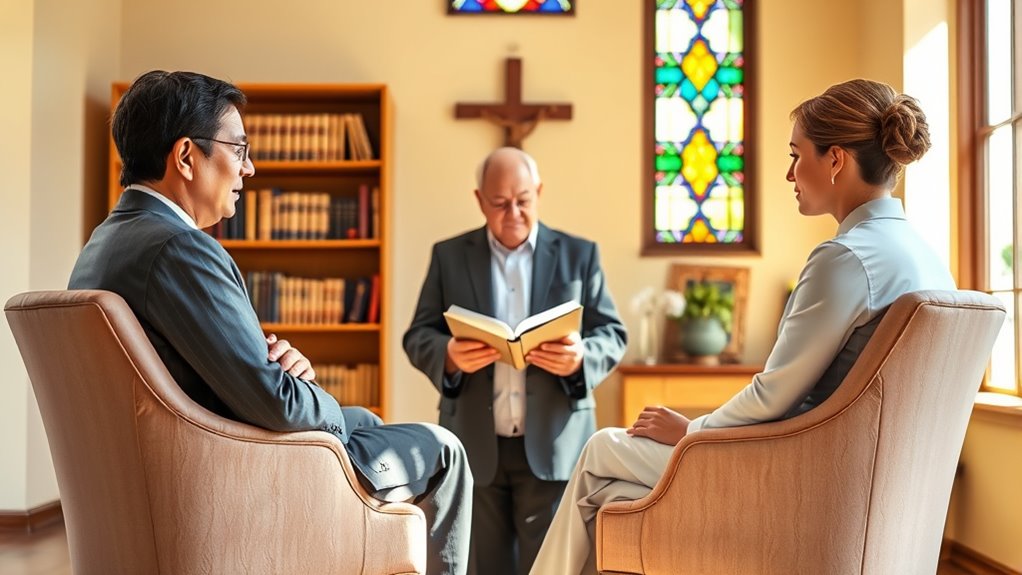

Pre-marital counseling in faith traditions helps you prepare for marriage by focusing on spiritual, cultural, and relational aspects rooted in your beliefs. It promotes understanding, communication, and conflict resolution based on shared values, which can boost satisfaction and stability. Often, it addresses interfaith challenges and respects diverse customs. If you continue exploring, you’ll discover ways these programs strengthen your relationship and help you navigate potential obstacles with faith-based guidance.
Key Takeaways
- Faith-based premarital counseling prepares couples for marriage through biblical principles, emphasizing shared values and spiritual growth.
- It fosters mutual understanding and respect for religious differences, especially in interfaith relationships.
- Counseling sessions are tailored to reflect specific faith traditions, rituals, and cultural contexts of the couple.
- Topics include conflict resolution, communication, family roles, and premarital expectations rooted in faith principles.
- Incorporating interfaith dialogue and cultural sensitivities enhances inclusivity and long-term marital stability.
The Role and Significance of Premarital Counseling in Religious Communities

Premarital counseling plays an essential role in religious communities by preparing couples for the commitments and challenges of marriage through faith-based principles. It fosters interfaith dialogue by guiding couples from different religious backgrounds to understand and respect each other’s beliefs, promoting harmony. Cultural adaptation is also central, as counselors tailor sessions to reflect the couple’s unique cultural and religious contexts. This approach helps address potential conflicts rooted in differing traditions, values, and family expectations. By emphasizing shared faith and cultural understanding, premarital counseling strengthens the foundation for lasting relationships. It encourages open communication about religious and cultural differences, ensuring couples enter marriage with clarity and mutual respect. Additionally, understanding religious doctrines can be crucial in aligning expectations and fostering mutual support. Ultimately, these programs support couples in steering through diversity while upholding their spiritual and cultural identities.
Outcomes and Benefits of Faith-Based Premarital Programs
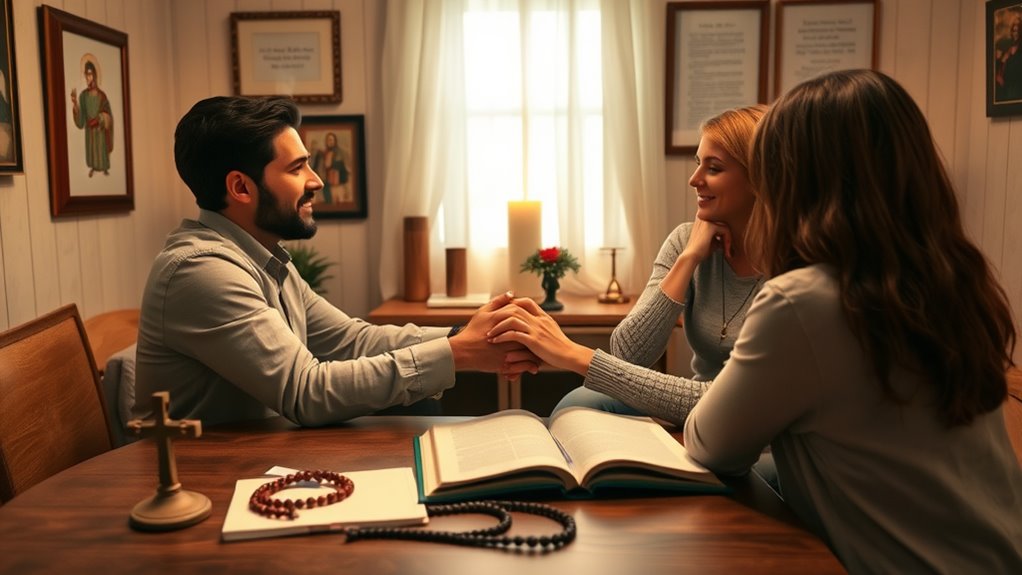
Faith-based premarital programs deliver a range of positive outcomes that can considerably enhance your marriage. They help you navigate interfaith dynamics by fostering mutual understanding and respect for differing beliefs, reducing potential conflicts. These programs also emphasize cultural sensitivity, ensuring your unique traditions and backgrounds are acknowledged and integrated into your relationship. As a result, you gain better communication skills, conflict resolution strategies, and shared spiritual goals. Engaging in faith-based premarital counseling often leads to increased marital satisfaction, stability, and a stronger foundation rooted in your faith and cultural values. By addressing key issues before marriage, you’re more equipped to handle challenges and build a resilient, harmonious partnership that respects both your spiritual and cultural identities. Additionally, understanding the importance of color accuracy in visual representations can metaphorically relate to how aligning your values and beliefs enhances the clarity and harmony in your relationship.
Cultural and Interfaith Challenges in Premarital Preparation
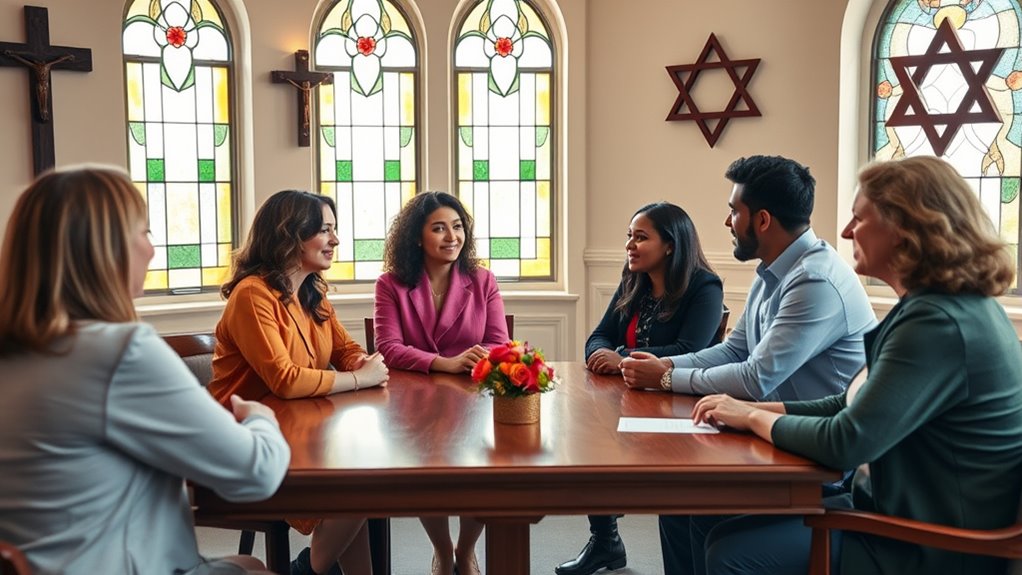
Exploring cultural and interfaith differences can pose significant challenges during premarital preparation, as couples often come from backgrounds with distinct traditions, beliefs, and expectations. Cultural nuances influence how couples interpret family roles, gender dynamics, and religious practices, which can create misunderstandings without proper dialogue. Interfaith dynamics add complexity by blending divergent spiritual values, rituals, and worldview assumptions. You may find it difficult to reconcile differing religious observances or cultural customs, risking conflict or alienation. Successful premarital counseling must address these challenges by fostering mutual understanding and respect. Tailoring discussions to include cultural sensitivities and interfaith considerations helps couples develop realistic expectations and strategies for navigating their unique differences, strengthening their foundation for a harmonious marriage. Incorporating trailer music insights can also enhance the emotional connection and understanding during these discussions, facilitating a more empathetic dialogue.
Key Topics Addressed in Religious Premarital Sessions

During religious premarital counseling, couples typically explore a range of key topics grounded in their faith traditions. These sessions often address biblical principles on marriage, communication, and conflict resolution. You might discuss how to navigate interfaith dialogue, ensuring mutual respect and understanding. Ritual customization is also common, tailoring ceremonies and spiritual practices to reflect both partners’ beliefs. Topics include family roles, trust, sexuality, and premarital expectations rooted in faith. Counselors may explore cultural influences and religious rituals to foster harmony. The goal is to align spiritual values and prepare you for a lifelong partnership. This targeted approach helps couples build a strong foundation, respecting differences while emphasizing shared faith principles. Incorporating insights from predictive analytics can also help couples understand potential future challenges based on data-driven forecasts.
Enhancing Marital Satisfaction Through Spiritual Counseling

Spiritual counseling plays a vital role in enhancing marital satisfaction by aligning couples’ values and beliefs with their everyday interactions. When addressing interfaith dynamics, it helps couples understand and respect each other’s spiritual perspectives, reducing potential conflicts. Cultural sensitivity is essential to tailor counseling to each couple’s unique background, ensuring that religious and cultural differences are acknowledged and respected. By integrating faith-based principles, you can foster deeper emotional connection, trust, and shared purpose. This approach encourages open dialogue about faith, family expectations, and spiritual practices, strengthening the marriage foundation. Understanding religious diversity within couples is crucial to creating a supportive and inclusive counseling environment. Ultimately, spiritual counseling guides couples to navigate differences constructively, promoting harmony and long-term satisfaction rooted in mutual understanding and respect.
Addressing Cultural Diversity and Sensitivities in PMC

Addressing cultural diversity and sensitivities in premarital counseling is essential for making the process relevant and effective for couples from different backgrounds. You need to focus on Cultural Integration by tailoring counseling to respect each partner’s cultural norms, traditions, and language. Sensitivity Training helps counselors recognize and navigate potential conflicts related to cultural differences. To do this effectively:
- Encourage open discussions about cultural expectations and family roles.
- Incorporate cultural traditions into the counseling process.
- Train counselors to develop cultural competence and empathy.
- Emphasize leadership skills such as active listening and adaptability to foster understanding across diverse cultural perspectives.
The Impact of Religious Involvement on Marital Stability

Your level of religious commitment can substantially influence the likelihood of divorce, often strengthening the marriage bond. Faith plays a key role in mediating conflicts by providing couples with shared values and conflict-resolution principles rooted in spirituality. When couples actively participate in spiritual practices together, it can enhance marital stability and promote long-term satisfaction. Additionally, engaging in indoor gardening with diverse and creative planters can foster shared interests and teamwork, further strengthening the couple’s bond.
Religious Commitment and Divorce
Religious involvement plays a significant role in promoting marital stability, as couples who are more committed to their faith often demonstrate stronger bonds and greater resilience against challenges. Your dedication to divine fidelity and sacred vows encourages you to prioritize your marriage, making it less likely to end in divorce. This commitment influences your behavior in key ways:
- Reinforces shared values, fostering mutual respect.
- Encourages ongoing communication rooted in faith principles.
- Strengthens perseverance during difficulties, viewing them as tests of faith. AI tools can also support couples in strengthening their understanding and connection through personalized guidance and resources.
Faith’s Role in Conflict
Faith often serves as a guiding force in managing conflict within marriage, providing couples with a shared moral framework that promotes patience, forgiveness, and understanding. When faced with faith conflict or spiritual disputes, couples can lean on their religious beliefs to navigate disagreements constructively. Faith-based principles encourage reconciliation and emphasize compassion, helping partners see beyond temporary frustrations. Religious involvement can foster a sense of unity, even during challenging times, by reminding couples of their commitment rooted in shared spiritual values. By grounding conflict resolution in faith, couples often find it easier to prioritize harmony over division. This shared spiritual foundation helps reduce long-term tension and supports marital stability, especially when disagreements stem from differing religious perspectives. Additionally, understanding the impact of religious involvement on marital stability can guide couples in strengthening their bond through shared spiritual practices.
Spiritual Involvement Effects
Spiritual involvement plays a significant role in promoting marital stability by reinforcing shared values and fostering a sense of commitment. When couples prioritize spiritual growth and integrate faith into their relationship, they build a strong foundation for longevity. This involvement can: 1. Enhance communication by aligning perspectives through faith-based principles. 2. Increase trust and emotional resilience by cultivating shared spiritual practices. 3. Support conflict resolution with faith-centered strategies that encourage forgiveness and understanding. Additionally, engaging in faith-based practices can provide couples with a sense of community and support, further strengthening their bond over time.
Opportunities for Improving Faith-Based Premarital Initiatives

There are significant opportunities to enhance faith-based premarital initiatives by making them more culturally competent and tailored to diverse populations. You can foster stronger interfaith dialogue to address the unique challenges couples face when navigating differing religious beliefs. Incorporating cultural adaptation into programs ensures that counseling respects language, traditions, and family dynamics, making sessions more relevant and effective. By training counselors in cultural competence, you help couples feel understood and supported, reducing misunderstandings and conflict. Tailoring content to reflect various faith backgrounds and cultural contexts also improves engagement and satisfaction. These improvements promote healthier, more resilient marriages and help couples integrate their faith and cultural identities seamlessly, ultimately strengthening the impact of premarital initiatives across diverse communities.
Future Directions and Research Needs in Religious Premarital Counseling

Advancing research and practice in religious premarital counseling requires a focused effort to address current gaps and adapt to an increasingly diverse population. To improve outcomes, you should prioritize exploring:
- How interfaith dialogue can be integrated into PMC to foster mutual understanding and respect.
- Strategies for ritual customization that honor cultural and religious differences, enhancing engagement.
- Longitudinal studies evaluating the impact of tailored approaches on marital stability and satisfaction.
Frequently Asked Questions
How Do Cultural Differences Influence the Effectiveness of Premarital Counseling?
Cultural differences substantially influence premarital counseling’s effectiveness by highlighting the need for cultural sensitivity. When counselors recognize diverse backgrounds, they help you overcome communication barriers, making discussions more meaningful. Tailoring counseling to your cultural values ensures both partners feel understood and respected. This approach fosters trust, improves understanding, and enhances the overall impact of premarital counseling, increasing your chances of building a strong, harmonious marriage grounded in mutual respect and shared faith.
What Are the Best Practices for Counseling Interfaith Couples?
To counsel interfaith couples effectively, foster open interfaith dialogue that respects each partner’s beliefs. Prioritize faith compatibility by exploring shared values and differences compassionately. Encourage honest communication about religious practices, family expectations, and potential challenges. Tailor your approach to address cultural sensitivities and promote mutual understanding, helping couples navigate their spiritual diversity. This builds trust, strengthens their relationship, and sets a solid foundation for a harmonious marriage.
How Early Should Premarital Counseling Be Initiated for Optimal Outcomes?
Research shows couples who start premarital counseling at least six months before their wedding are more likely to experience lasting satisfaction. Early intervention allows you to address important topics, set expectations, and build strong communication skills. Timing considerations are essential; beginning counseling early gives you ample opportunity to navigate cultural and faith differences, reducing future conflicts. Don’t wait until the last minute—investing in early counseling enhances your chances for a successful, fulfilling marriage.
What Training Is Recommended for Counselors Working With Diverse Faith Backgrounds?
You should pursue extensive training that emphasizes cultural competence and interfaith understanding. This includes learning about diverse religious practices, values, and traditions, as well as developing skills to navigate interfaith couples’ unique challenges. By enhancing your cultural awareness and communication skills, you’ll better support couples from varied backgrounds, foster mutual respect, and create a safe space for open dialogue, ultimately strengthening their relationship and promoting harmony within their faith and cultural differences.
How Can Premarital Programs Better Address Non-Traditional Family Structures?
Did you know that nearly 20% of couples in the U.S. now form non-traditional family structures? To better address these, premarital programs should incorporate inclusive counseling approaches that recognize alternative family dynamics. You can do this by expanding discussions beyond traditional roles, acknowledging diverse relationship types, and tailoring sessions to respect different cultural and family backgrounds. This creates a supportive environment, helping couples build strong bonds regardless of their family configurations.
Conclusion
By embracing faith-based premarital counseling, you can build a stronger, spiritually aligned foundation for your marriage. For example, a couple from different cultural backgrounds might navigate their differences through guided sessions, fostering mutual respect and understanding. These programs not only address practical concerns but also deepen your spiritual connection, boosting long-term stability. Ultimately, engaging in premarital counseling within your faith community empowers you to start your marriage with clarity, support, and shared values.