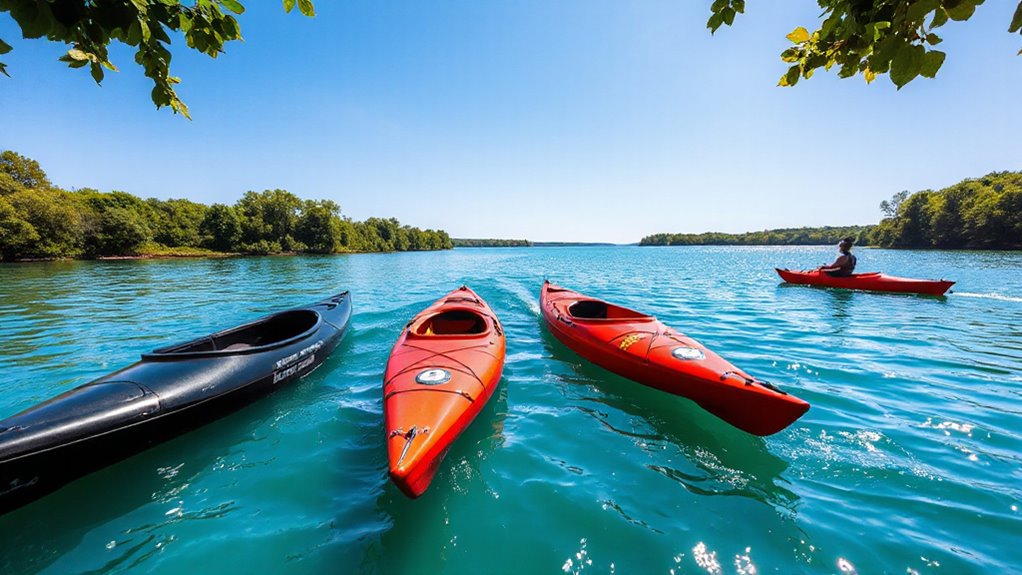
Choosing between a tandem kayak and two single kayaks depends on your paddling style and needs. Tandem kayaks offer stability and larger capacity for shared trips, but they’re bulkier and less nimble. Two single kayaks provide more maneuverability, easier transport, and solo control, ideal for individual adventures. If you want to explore options that suit your trip and paddling partners, continue exploring, and you’ll discover which setup best fits your adventures.
Key Takeaways
- Tandem kayaks are wider, longer, and more stable, ideal for beginners and longer trips with gear, while single kayaks are narrower and more maneuverable.
- Tandem kayaks require coordinated paddling and are heavier for transport, whereas single kayaks are lighter and easier to carry and store.
- Tandem kayaks suit paddling with a partner or family, offering shared experience, while single kayaks are better for solo adventures and navigating narrow waterways.
- Tandem kayaks provide more stability and gear capacity, but are bulkier; single kayaks are faster, more agile, and better for quick, solo paddling.
- Choice depends on paddling goals, water conditions, gear needs, and whether social or solo paddling is the priority.
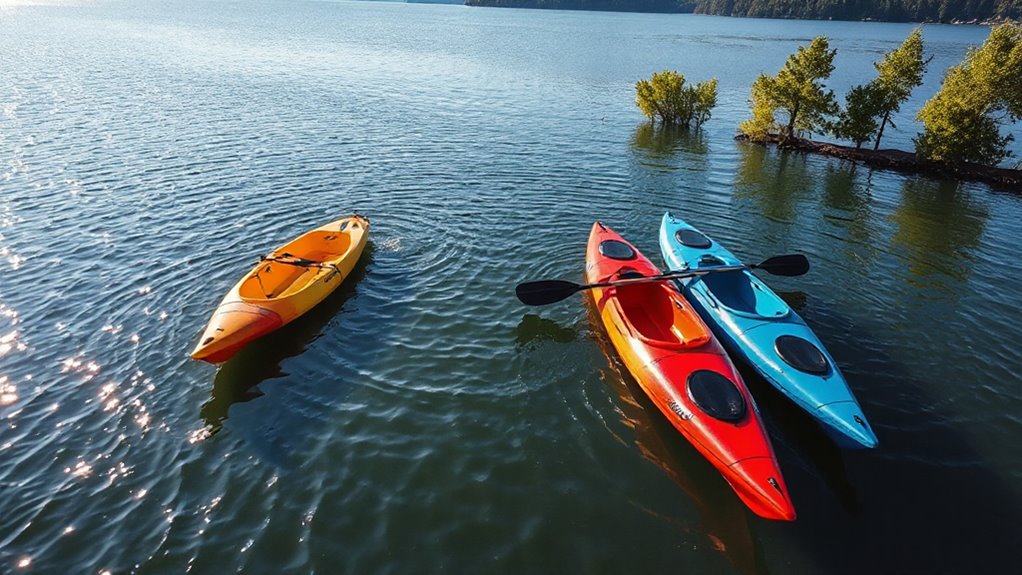
When choosing between tandem kayaks and single kayaks, understanding their differences can help you pick the best option for your paddling adventures. Tandem kayaks are designed for two people, offering a shared experience on the water. They provide a stable platform, making them ideal for beginners or those paddling with a partner, family member, or friend. Because they’re wider and longer, tandem kayaks often feel more stable and can carry more gear, which is great if you’re planning longer trips or carrying supplies. However, they can be bulkier and heavier to transport, making launching and hauling a bit more cumbersome. Paddling a tandem kayak requires coordination with your partner, as both paddlers need to work in tandem to maintain direction and speed. This can be a bonding experience, but it also means that if one person paddles less or less efficiently, it affects the overall performance. Understanding stability is important when selecting the right kayak for your skill level and trip type.
In contrast, single kayaks are built for one person, providing greater maneuverability and responsiveness. If you prefer solo adventures or want more control over your paddling style, a single kayak is a natural choice. They tend to be lighter and easier to transport, fitting comfortably on car racks or in smaller storage spaces. Because they are narrower, single kayaks are quicker and more agile, making them suitable for exploring narrow waterways, rivers, or lakes where maneuverability is key. They also require less coordination since only one person is paddling, allowing you to set your own pace without needing to synchronize with a partner. On the downside, single kayaks might offer less stability for beginners and less storage capacity for gear, which could limit longer trips or those with a lot of equipment.
Ultimately, your decision hinges on your paddling goals. If you enjoy paddling with a partner, sharing the experience, and carrying extra gear, a tandem kayak makes sense. But if you value independence, speed, and ease of transport, a single kayak might be better. Both options have their merits, and your choice should reflect your comfort level, the type of water you plan to explore, and how much gear you’ll need to bring along. Consider also whether you want to introduce someone new to kayaking or pursue solo adventures, as this can influence whether you lean toward a tandem or single kayak. Knowing these differences guarantees you pick a kayak that best fits your style and enhances your time on the water.
Frequently Asked Questions
How Does the Cost of Tandem Kayaks Compare to Two Singles?
You’ll find that a tandem kayak generally costs more than two single kayaks combined. While a single kayak might be more affordable individually, buying a tandem often includes features or larger sizes that increase its price. If you’re on a budget, two single kayaks might be cheaper, but if convenience and shared experience matter most, investing in a tandem could be worth the extra cost.
Which Kayak Type Is Better for Beginners?
You’ll find that tandem kayaks are often better for beginners because they offer more stability and easier coordination. With a partner, you can learn paddling techniques together, which boosts confidence. Two single kayaks might be more challenging initially, as you need to manage balance and steering alone. If you’re just starting out, a tandem kayak simplifies the experience, making it a more comfortable and enjoyable way to learn.
How Do Storage Options Differ Between Tandem and Single Kayaks?
You’ll find that storage options differ mainly in capacity. Tandem kayaks often have more built-in storage compartments, making it easier to carry gear for longer trips. Single kayaks usually have less storage space but are lighter and easier to handle, which can be beneficial for quick outings. When choosing, consider your trip length and gear needs, as tandem kayaks typically accommodate more gear comfortably.
Are Tandem Kayaks More Stable Than Two Single Kayaks?
Yes, tandem kayaks tend to be more stable because their broader beam distributes weight evenly, like a steady ship in calm waters. You’ll find they’re less prone to tipping over, making them ideal if you’re new to paddling or want extra confidence. Two single kayaks, on the other hand, can be more maneuverable but might feel less stable, especially when paddling in rougher conditions.
Can Tandem Kayaks Be Easily Converted Into Two Singles?
Yes, you can usually convert a tandem kayak into two singles, but it depends on the design. Some tandem kayaks are built with removable seats and modular features that make splitting them into two separate boats straightforward. However, not all models offer this flexibility. Check the manufacturer’s instructions or features before purchasing if you want a kayak that easily converts, and be prepared for some assembly and adjustment.
Conclusion
Choosing between tandem and single kayaks is like picking your adventure partner—whether you prefer to glide side by side or carve your own path. Tandem kayaks are your trusted dance partner, smooth and synchronized, perfect for shared journeys. Single kayaks are your solo violin, offering freedom to explore at your own rhythm. Whichever you pick, embrace the water as your canvas, turning every paddle stroke into a brushstroke of unforgettable memories.