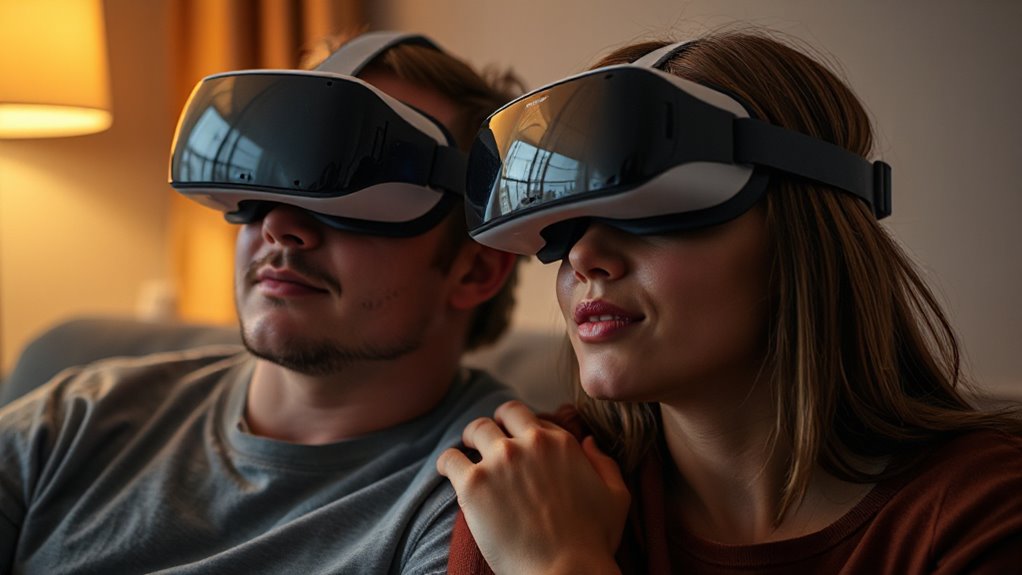
Blending virtual reality with real intimacy lets you create deeply personal connections across distances. VR environments allow you to share experiences like cuddling, dancing, or watching sunsets, despite being apart. Customizable avatars and settings increase authenticity and vulnerability. While VR can’t fully replace physical touch, advancements in haptic tech are closing that gap. If you keep exploring, you’ll discover how this technology is shaping the future of emotional closeness and relationship growth.
Key Takeaways
- Virtual reality enhances intimacy by creating immersive, shared experiences that simulate physical closeness despite geographical distances.
- Customizable avatars and environments foster authenticity and vulnerability, strengthening emotional bonds in virtual settings.
- VR complements real-world intimacy, serving as a meaningful extension when physical contact is limited or challenging.
- Advances in haptic technology aim to simulate touch, deepening the sensory connection between partners in virtual spaces.
- Thoughtful integration of VR with real-life interactions can enrich relationships without replacing genuine physical intimacy.

As virtual reality technology becomes more advanced, it’s reshaping how you experience intimacy and connection. With immersive VR environments, you can interact with others in ways that feel incredibly real, blurring the lines between physical presence and digital simulation. Instead of being limited by geography or physical constraints, you’re now able to share intimate moments with someone miles away, creating a sense of closeness that’s hard to replicate through traditional communication. As you put on a VR headset and enter a virtual space, your senses are engaged, allowing you to see, hear, and even feel aspects of your partner’s presence. This heightened sense of immersion makes your interactions more genuine and emotionally resonant.
Virtual reality blurs physical boundaries, creating authentic, immersive connections that bring intimacy closer despite distance.
In this new sphere, you can explore intimacy on a deeper level, even if you’re physically apart. For example, virtual environments allow you to share experiences like watching a sunset, dancing, or simply cuddling, all within a digital domain that adapts to your desires. The technology enables you to customize avatars and settings, giving you control over how you present yourself and how you connect. This level of personalization can foster vulnerability and authenticity, making your interactions feel more meaningful. You might find yourself opening up more quickly or feeling more comfortable expressing emotions, since the virtual space acts as a safe zone where judgments are minimized. Additionally, smart home technology can enhance your VR experience by creating a comfortable and controlled environment that adapts to your preferences.
However, blending VR with real intimacy also prompts questions about authenticity. You might wonder if these virtual interactions can truly replace physical touch or emotional connection in real life. While VR can enhance feelings of closeness temporarily, it’s important to recognize its limitations. Physical sensations, like the warmth of a hug or the softness of a kiss, are difficult to replicate fully in a virtual setting. Yet, some emerging haptic technologies are attempting to simulate touch, adding another layer of realism. As you navigate these new tools and experiences, it’s essential to strike a balance, understanding that VR can augment your relationships but not entirely substitute genuine physical intimacy.
Ultimately, virtual reality offers a powerful way to deepen bonds, especially when physical distance or circumstances make in-person connection challenging. By embracing these innovations thoughtfully, you can expand your capacity for intimacy, exploring new dimensions of emotional closeness that were previously unimaginable. As you continue to explore and adapt, VR can become a meaningful extension of your relationships, enriching your life with new opportunities for connection and understanding.
Frequently Asked Questions
How Does VR Impact Emotional Connection in Relationships?
VR can enhance emotional connection by allowing you to share immersive experiences with your partner, even when you’re apart. You feel closer as you interact in a virtual environment that fosters intimacy and understanding. However, it might also create a sense of detachment from real-life interactions if overused. You need to balance virtual experiences with genuine, face-to-face moments to maintain authentic emotional bonds.
Can VR Substitute for Face-To-Face Intimacy?
Like Romeo and Juliet’s love, VR can’t fully replace face-to-face intimacy. While it offers an escape and connection, it lacks the warmth, subtle cues, and genuine presence you experience in person. You might feel close through virtual worlds, but true intimacy depends on shared moments, eye contact, and physical touch, which technology still can’t replicate. So, VR can supplement, but not substitute, real human connection.
What Are the Privacy Concerns With VR Intimacy?
You should be aware that VR intimacy raises significant privacy concerns. Your personal data, including biometric information and intimate interactions, could be stored, shared, or hacked if not properly protected. Additionally, there’s the risk of non-consensual recording or surveillance within virtual environments. Always review the platform’s privacy policies, use strong security measures, and be cautious about what you share to safeguard your privacy in VR spaces.
How Do Users Address Consent in Virtual Intimacy?
You guarantee consent in virtual intimacy by clearly communicating your boundaries and expectations before starting. You and your partner should discuss what’s comfortable and set mutual agreements. Using built-in platform features like consent prompts or pause buttons helps reinforce boundaries during the experience. Always check in regularly and respect each other’s responses. By prioritizing open dialogue and mutual agreement, you create a safe, respectful environment that fosters trust and comfort in virtual intimacy.
What Are the Psychological Effects of Blending VR With Real Intimacy?
Imagine it’s the 19th century, and you’re experiencing an emotional revolution. Blending VR with real intimacy can heighten feelings of connection, but it also risks blurring boundaries and creating dependency. You might find yourself feeling more isolated or anxious, as virtual experiences influence your perceptions of reality. Over time, this mix can impact your emotional health, making it harder to distinguish genuine relationships from artificial ones.
Conclusion
As you step into this new frontier, virtual reality becomes a bridge, weaving threads between digital dreams and genuine touch. It’s like holding a flame that flickers between worlds, igniting your senses while grounding you in reality. Embrace the dance where technology and intimacy entwine, creating a symphony of connection that’s both virtual and real. In this delicate balance, you find a universe where hearts beat in sync, blending the best of both worlds seamlessly.