In tandem kayaking, teamwork and trust are essential for a smooth journey. Clear communication, like signals and sharing pace, helps you stay synchronized. Understanding each other’s strengths and establishing roles boosts cooperation and confidence. Trust allows you to relax and respond calmly to challenges, such as currents or rough water. When you both support and support each other, your trip becomes more enjoyable and memorable. Keep exploring; there’s even more to learn about building perfect harmony on the water.
Key Takeaways
- Effective communication about pace, signals, and strokes fosters coordination and prevents wobbling or drifting.
- Understanding each other’s strengths and establishing clear roles enhances cooperation and quick responses.
- Open, honest communication builds trust, enabling paddlers to adapt to challenges and unexpected conditions smoothly.
- Mutual confidence and patience strengthen trust, allowing paddlers to relax and enjoy the shared experience.
- Teamwork and trust deepen connections, improve navigation, and transform kayaking into a rewarding collaborative adventure.
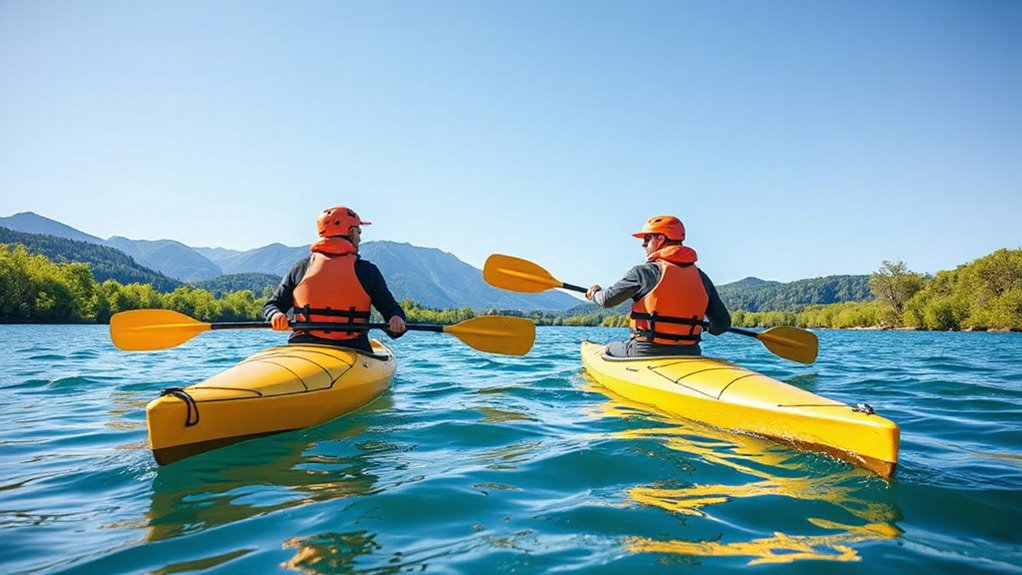
Tandem kayaking is more than just paddling side by side; it’s a test of teamwork and trust that can make or break your experience on the water. When you’re sharing a kayak, your actions directly influence your partner’s stability and enjoyment. Effective communication becomes essential—talking about your pace, coordinating your strokes, and giving clear signals help you stay synchronized. Without it, you risk wobbling or veering off course, which can turn what should be a smooth ride into a frustrating ordeal. Trust plays a vital role here; you need to believe your partner will paddle in harmony with you and respond appropriately to changing conditions. That mutual confidence allows both of you to relax, focus on the scenery, and enjoy the journey.
Building teamwork on the water requires more than just physical effort. It’s about understanding each other’s strengths and weaknesses. If one of you is more experienced, it’s helpful for that person to guide the other gently, offering tips and encouragement rather than criticism. This creates a positive atmosphere that fosters cooperation. You should also establish roles before setting out—deciding who will steer, who will set the pace, and how to handle obstacles. When roles are clear, you avoid confusion and ensure each person knows what’s expected. This clarity helps you respond swiftly to unexpected challenges like sudden currents or gusts of wind, turning potential hazards into manageable situations. Incorporating effective communication strategies can significantly improve your coordination and overall experience.
Establish clear roles to enhance teamwork and respond effectively to challenges.
Trust also involves patience and adaptability. Sometimes, your partner might feel unsure or need reassurance, especially if the water gets rough. You’ll want to stay calm and supportive, reinforcing their confidence rather than criticizing mistakes. If one of you needs to rest or adjust, communicate openly so the other can adapt accordingly. Expecting perfection isn’t realistic, and acknowledging that mistakes happen helps build resilience and trust. As you paddle together over time, you’ll notice that your coordination improves, and your confidence in each other grows. This shared experience deepens your connection, making the journey more enjoyable and memorable.
Finally, trust extends beyond just paddling in sync. It’s about trusting your partner’s judgment, respecting their input, and working together to navigate the water. When you genuinely trust each other, the entire experience becomes more than just a physical activity; it turns into a bonding adventure. You’ll find yourself more attuned to your partner’s cues, more responsive, and ultimately more connected. This foundation of teamwork and trust is what transforms a simple kayak trip into a rewarding shared adventure—one that tests your cooperation and strengthens your relationship on and off the water.
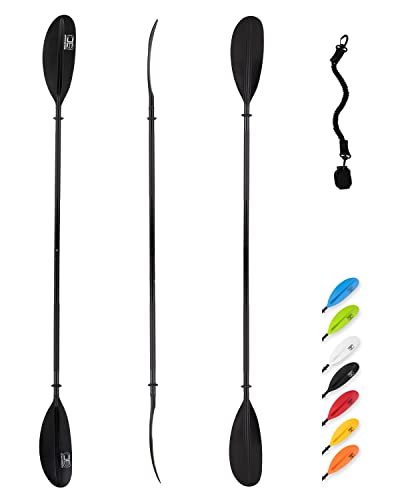
OCEANBROAD Kayak Paddle 90.5in/230cm Alloy Shaft Kayaking Boating Canoeing Oar with Paddle Leash 1 Paddle, Black
MADE TO LAST: This kayak paddle is with high-quality aluminum alloy shaft (1.1mm shell thickness) and fiberglass reinforced…
As an affiliate, we earn on qualifying purchases.
As an affiliate, we earn on qualifying purchases.
Frequently Asked Questions
How Do I Choose the Right Tandem Kayak for Beginners?
To select the appropriate tandem kayak for novices, consider stability, size, and weight capacity. Look for a wider hull for better balance and easier handling. make certain it’s lightweight enough for you to transport and store comfortably. Check reviews for durability and ease of use. Test it in calm waters if possible, and pick a model with comfortable seating. This way, you’ll enjoy your paddling adventures and build confidence quickly.
What Safety Gear Is Essential for Tandem Kayaking?
Think of safety gear as your kayak’s armor, protecting you on the water. You’ll need a well-fitting life jacket for buoyancy and safety, a whistle to signal for help, and a paddle leash to prevent losing your paddle. Consider a helmet if you’re kayaking in rough waters. Always carry a waterproof bag for essentials like a phone and first aid kit. Staying prepared keeps your adventure fun and safe.
How Can I Improve Communication With My Partner During Paddling?
To improve communication during paddling, focus on clear, concise commands and maintain eye contact when possible. Use consistent signals, like paddling strokes or verbal cues, to coordinate your efforts. Keep your tone calm and positive, and listen actively to your partner’s feedback. Regularly check in with each other, and avoid distractions to stay synchronized. Practicing these habits builds trust and makes your tandem experience more enjoyable and efficient.
What Are Common Mistakes to Avoid in Tandem Kayaking?
Like steering a ship through fog, avoid rushing or making sudden moves in tandem kayaking. Don’t ignore your partner’s signals or paddle at different rhythms, as this disrupts harmony. Steer clear of overcorrecting if you hit a obstacle; instead, stay calm and communicate. Refraining from distraction, like checking your phone, helps maintain focus. Remember, smooth sailing depends on shared effort and listening, not individual control.
How Do Weather Conditions Affect Tandem Kayaking Safety?
Weather conditions markedly impact your safety in tandem kayaking. Strong winds can cause instability, making it harder to control the kayak, while rain can reduce visibility and increase the risk of capsizing. Cold temperatures may lead to hypothermia if you’re not properly dressed. Always check weather forecasts before heading out, and be prepared to postpone your trip if conditions look unsafe. Staying alert and adaptable keeps you and your partner safe on the water.

Sirius Signal SB-3L Boating Safety and Emergency SOS Dry Bag Kit for Kayaks, Boats, and Paddle Craft – USCG Approved
All-in-One Safety Kit: Includes everything you need during an emergency on the water
As an affiliate, we earn on qualifying purchases.
As an affiliate, we earn on qualifying purchases.
Conclusion
In tandem kayaking, teamwork and trust aren’t just words—they’re your guiding principles. You communicate, you coordinate, you trust each other’s skills. You paddle in sync, you face challenges together, you celebrate victories side by side. When you embrace collaboration, build trust, and stay connected, every stroke becomes easier. Remember, in tandem kayaking, success depends on working as one, trusting each other, and enjoying the journey—because together, you can conquer any wave that comes your way.

Scuba Choice Black Stainless-Steel Double Ended Snap Bolt Clip, 118mm, Max Opening 10mm, Heavy Duty, Corrosion Resistant for Diving, Snorkeling, Kayaking, Fishing & Outdoor Gear
HIGH-QUALITY STAINLESS-STEEL CONSTRUCTION – crafted from durable stainless steel, this black double-ended snapped bolt clip is corrosion-resistant and…
As an affiliate, we earn on qualifying purchases.
As an affiliate, we earn on qualifying purchases.

Occult Kayak Handles – Gray (2 Pack) – Heavy Duty – Sleek T-Handle Design – Heavy Duty Bungee – Easy 3-Step Installation and Ergonomic Comfort – Kayak and Boating Accessories
SLEEK DESIGN – Our Kayak Handles are not only efficient; they add to the aesthetic appeal of your…
As an affiliate, we earn on qualifying purchases.
As an affiliate, we earn on qualifying purchases.