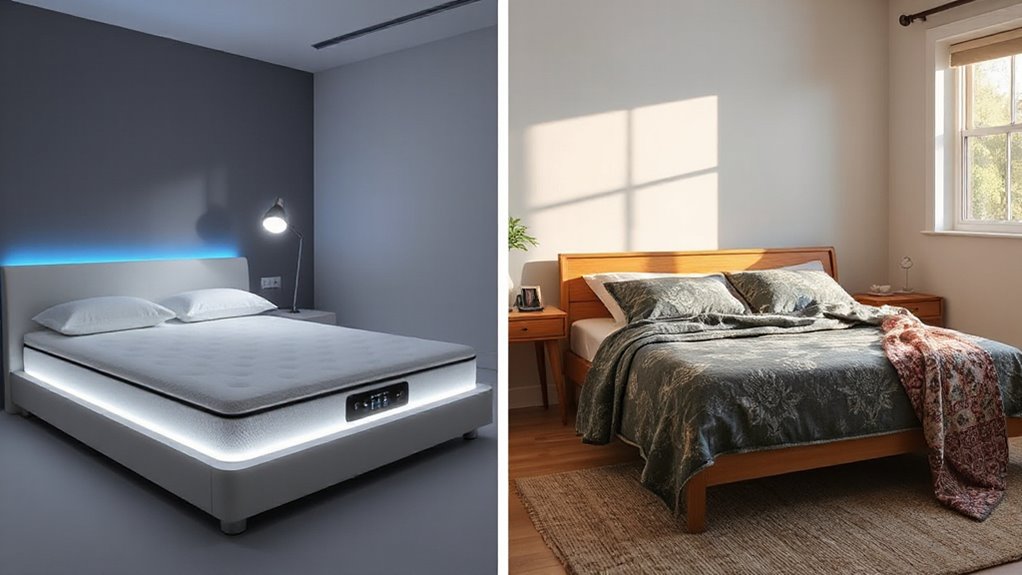

Smart beds offer sensors, automatic adjustments, temperature control, and app connectivity that customize your sleep experience, unlike traditional beds that depend on manual changes. They learn your habits for personalized comfort, help improve sleep quality, and make temperature regulation easier. Although they tend to be pricier, their advanced features can make a big difference in your rest. Keep exploring to discover more about how these innovations can transform your sleep nightly.

Get gifts for the two of you delivered free with Prime
- Fast, free delivery on millions of items
- Prime Video, Amazon Music and more included
- Member-only deals all year
Key Takeaways
- Smart beds feature sensors and automatic adjustments for personalized comfort, unlike traditional beds which rely on manual changes.
- They offer temperature regulation and sleep tracking through integrated technology, whereas traditional beds lack these features.
- Smart beds can be controlled via smartphone apps and adjust support automatically, providing greater convenience than manual traditional beds.
- The higher cost of smart beds reflects advanced features, while traditional beds are more affordable but less customizable.
- Smart beds enhance sleep quality with data-driven insights and adaptive support, offering a more tailored experience than traditional beds.
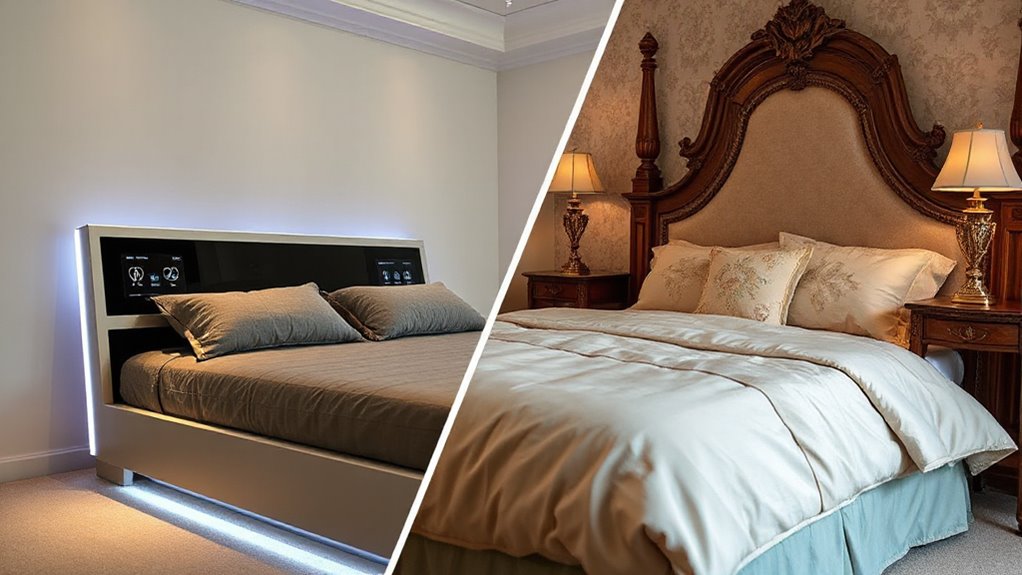
When it comes to choosing a bed, technology has introduced a new player: the smart bed. These modern marvels are designed to enhance your sleep experience with features that traditional beds simply can’t match. Imagine waking up refreshed because your bed adjusts to your preferred firmness or temperature throughout the night. That’s the power of a smart bed—integrating technology to improve comfort, support, and convenience.
Smart beds come equipped with sensors that track your sleep patterns, including movement, heart rate, and breathing. This data helps you understand your sleep quality better and can guide you toward healthier habits. Some models even analyze your sleep cycles and automatically adjust to optimize your rest, so you wake up feeling more energized and less groggy. Unlike traditional beds, which rely solely on your manual comfort preferences, smart beds learn from your habits and adapt accordingly. This personalized approach can make a significant difference, especially if you struggle with tossing and turning or waking up multiple times during the night.
Another advantage of smart beds is their ability to control temperature precisely. If you tend to get cold or hot at night, a smart bed can respond by warming or cooling your surface. You no longer need separate blankets or layers—your bed manages it for you, creating a consistent, comfortable environment. This feature is particularly appealing for couples with differing temperature preferences, as some smart beds allow each side to be adjusted independently. It eliminates the compromise often made with traditional beds, where one person’s comfort might inconvenience the other.
Ease of use also plays a role in the appeal of smart beds. Many come with smartphone apps that let you control settings, track your sleep data, or even set alarms based on your sleep cycles. Some models incorporate adjustable bases, allowing you to elevate your head or legs at the push of a button. This can help with health issues like acid reflux, snoring, or circulation problems. When you compare this to a traditional bed, which requires manual adjustments or none at all, the convenience becomes clear. You get a level of customization and control that was previously unavailable. Additionally, understanding the importance of contrast ratio in other display contexts highlights how visual clarity and detail can be enhanced, similar to how a smart bed enhances comfort and support.
Of course, smart beds do come with a higher price tag, but for many, the benefits outweigh the costs. If you’re someone who values personalized comfort, better sleep quality, and technological integration, a smart bed might be the upgrade you’ve been looking for. It’s not just a place to sleep anymore—it’s a smart, responsive system tailored to your needs, designed to make your nights more restful and your mornings more energized.
smart adjustable bed with app control
As an affiliate, we earn on qualifying purchases.
As an affiliate, we earn on qualifying purchases.
Frequently Asked Questions
How Do Smart Beds Impact Sleep Quality Over Time?
Smart beds can improve your sleep quality over time by automatically adjusting firmness, temperature, and support to suit your needs. They track your sleep patterns and provide insights to help you make better habits. As a result, you may experience fewer disruptions, deeper rest, and increased alertness during the day. Over time, these personalized features can lead to more consistent, restorative sleep, enhancing your overall well-being.
Are Smart Beds Suitable for All Sleep Disorders?
Sure, smart beds are a dream for some, but they’re not a miracle cure for all sleep disorders. You might find them helpful for conditions like sleep apnea or acid reflux, thanks to their adjustable features. However, if you have complex issues like severe insomnia or neurological disorders, a smart bed alone won’t fix everything. Always consult a healthcare professional before relying solely on tech to improve your sleep.
What Maintenance Is Required for Smart Beds?
You need to regularly clean your smart bed’s sensors and control panel with a soft, damp cloth to prevent dust buildup. Check for software updates frequently to guarantee peak performance. Inspect hoses and connections for leaks or damage, and keep the bed’s motors and moving parts free of debris. If you notice any issues, contact customer support promptly. Proper maintenance keeps your smart bed functioning smoothly and extends its lifespan.
How Do Smart Beds Compare in Cost to Traditional Beds?
Smart beds typically cost 20-30% more than traditional beds, depending on features. This higher price reflects their advanced technology, such as adjustable settings, sleep tracking, and connectivity. While you might pay more upfront, many users find the added comfort and health benefits worth the investment. Over time, smart beds can help improve sleep quality, potentially reducing healthcare costs, making them a worthwhile upgrade for those seeking ideal rest.
Can Smart Beds Be Customized for Individual Preferences?
Yes, smart beds can be customized to fit your preferences. You can adjust firmness levels, set personalized sleep programs, and control features like temperature or massage functions via a mobile app or built-in controls. This allows you to tailor your sleeping experience, ensuring ideal comfort and support. With smart beds, you get a personalized setup that adapts to your unique needs, making your sleep more restful and satisfying.
temperature controlled smart bed
As an affiliate, we earn on qualifying purchases.
As an affiliate, we earn on qualifying purchases.
Conclusion
Ultimately, choosing between a smart bed and a traditional bed depends on your lifestyle and needs. For example, imagine someone with sleep issues who upgrades to a smart bed; they might wake up feeling refreshed thanks to personalized adjustments and sleep tracking features. While traditional beds offer comfort and simplicity, smart beds provide advanced benefits that can enhance your overall sleep quality. Consider what matters most to you, and make a choice that supports your best rest.
As an affiliate, we earn on qualifying purchases.
smart bed with independent side temperature control
As an affiliate, we earn on qualifying purchases.
As an affiliate, we earn on qualifying purchases.
Columbus Day / Indigenous Peoples' Day Picks
long weekend sales
As an affiliate, we earn on qualifying purchases.