To stay safe on a tandem bike, communicate clearly with your partner about turns, stops, and obstacles, and keep alert for upcoming hazards. Make certain all equipment is in good shape by checking tires, brakes, and bolts before riding. Wear a helmet, reflective gear, and gloves for added protection and visibility. Choose safe routes away from busy roads and stick to designated bike lanes. For more helpful safety insights, keep going to discover how to enjoy your ride safely.
Key Takeaways
- Communicate clearly with your partner using signals for turns, stops, and speed changes.
- Conduct safety checks on tires, brakes, chain, and fittings before riding.
- Wear helmets, gloves, and reflective gear to enhance visibility and protect against injuries.
- Choose safe, low-traffic routes and maintain predictable riding behavior for smooth coordination.
- Keep a safe distance from obstacles, vehicles, and pedestrians, especially at intersections and on uneven terrain.
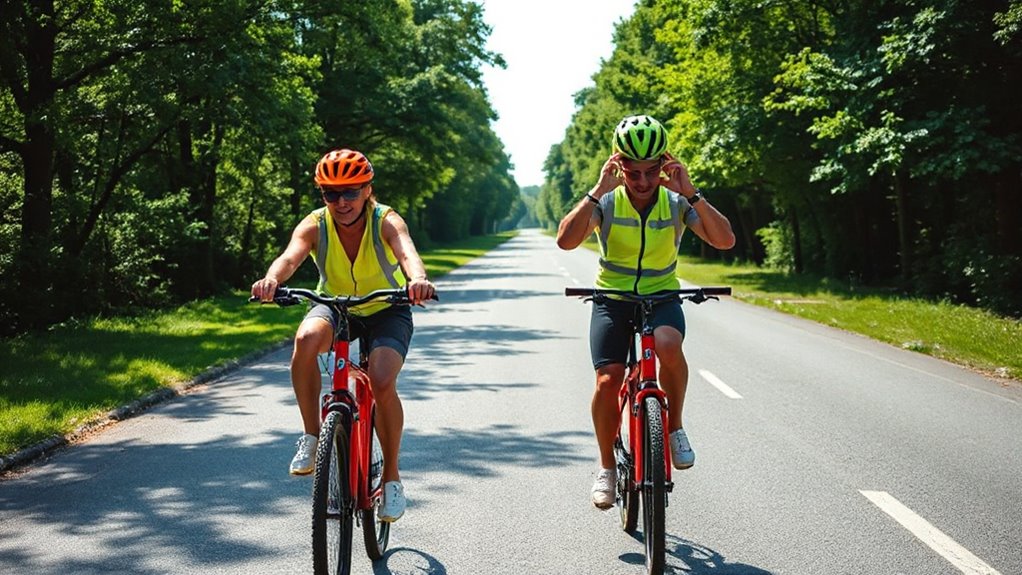
Riding a tandem bike can be a fun and efficient way to enjoy outdoor activities with a partner, but it also requires extra attention to safety. When you’re sharing a bike, communication becomes key. Before you start, make sure both of you understand your roles. The person in the front, often called the captain, is responsible for steering, braking, and signaling. The rider in the back, or the stoker, helps maintain balance and provides additional power. Establish clear signals for turning, stopping, or slowing down, so you can coordinate seamlessly during the ride.
Before hitting the road, perform a thorough safety check on the bike. Ensure the tires are properly inflated and free of debris. Check that the brakes work smoothly and respond quickly. Make sure the chain is lubricated and properly tensioned, and confirm that all bolts and screws are tight. Wearing helmets is non-negotiable; both riders should have properly fitted helmets to protect against head injuries in case of falls or accidents. Consider wearing gloves and reflective clothing or accessories, especially if you plan to ride early in the morning, late evening, or in low-light conditions. Visibility is essential for safety, and being easily seen helps prevent collisions with vehicles or pedestrians.
Perform a thorough safety check: inflate tires, test brakes, lubricate chains, and wear properly fitted helmets.
Choose a route that matches your skill level and the capabilities of your tandem bike. Avoid busy roads with heavy traffic or uneven terrain that could compromise stability. Stick to designated bike lanes or quieter streets whenever possible. Always ride predictably, maintaining a steady speed and avoiding sudden turns or abrupt stops. Keep a safe distance from parked cars, pedestrians, and other cyclists to give yourself plenty of reaction time. Be especially cautious at intersections and driveways, where drivers might not notice a tandem bike approaching. Additionally, using a high-quality home theatre projector can enhance your outdoor movie night experience after your ride, making the outing even more enjoyable.
Communication during the ride is imperative. Keep talking to each other about upcoming turns, obstacles, or changes in pace. The captain should give clear, consistent signals before making any maneuvers, and the stoker should stay alert to follow directions. Pay attention to your surroundings at all times—scanning ahead for potholes, debris, or uneven pavement helps prevent accidents. Remember that riding tandem requires more coordination than riding solo, so patience and attentiveness are your best tools for staying safe. By following these safety tips, you can enjoy your tandem biking adventures while minimizing risks and ensuring a smooth, enjoyable experience for both of you.
As an affiliate, we earn on qualifying purchases.
Frequently Asked Questions
How Do I Choose the Right Tandem Bike Size for Me?
To choose the right tandem bike size, start by measuring both riders’ inseam lengths. Look for a bike with a frame size that matches the shorter inseam to make certain of comfort and control. Test ride different sizes if possible, and consider the bike’s standover height and seat adjustments. Proper fit is key for a smooth, safe ride, so don’t rush the selection process.
What Should I Do if the Bike Starts to Wobble?
If the bike starts to wobble, stay calm and grip the handlebars firmly. Slow down gradually and avoid sudden movements. Shift your weight slightly to help stabilize the bike, and communicate with your partner to coordinate your actions. If the wobbling persists, pull over safely to the side of the road, check for loose parts or tire pressure issues, and make necessary adjustments before continuing your ride.
Are There Specific Clothing Recommendations for Tandem Riding?
Think of your clothing as your armor on the road. Wear bright, breathable fabrics that keep you visible and comfortable, especially in varying weather. Choose snug-fitting gear to prevent loose clothing from catching in the bike’s moving parts. A helmet, gloves, and sunglasses are your trusted allies, shielding you from the unexpected. Layer up for warmth or sun protection, and always prioritize safety over style for a smooth tandem ride.
How Can We Practice Communication Effectively During Rides?
To practice communication effectively during rides, you should establish clear signals and verbal cues before starting. Use simple, consistent words or hand signals to indicate turns, stops, or obstacles. Keep talking during the ride to share your intentions and alert your partner to changes in pace or terrain. Listening actively is just as important as speaking, so stay attentive and responsive to each other’s cues, ensuring a smooth, safe ride.
What Maintenance Checks Are Essential Before Each Ride?
Did you know regular maintenance can extend your tandem bike’s lifespan by up to 30%? Before each ride, you should check tire pressure, brake function, and chain lubrication. Inspect the gears and ensure the quick-release levers are secure. Don’t forget to look over the frame for cracks or damage. These simple steps keep you safe and make your ride smoother, so always take a few minutes to do these checks before hitting the road.
reflective cycling gear for safety
As an affiliate, we earn on qualifying purchases.
As an affiliate, we earn on qualifying purchases.
Conclusion
Riding a tandem bike is a fun way to share the ride, but safety should always come first. Even if you’re worried about coordination or communication, staying alert and following these tips will keep you both safe. Remember, it’s about teamwork and trust—if you’re attentive and cautious, you’ll enjoy your ride without stress. So, don’t let hesitation hold you back; gear up, ride responsibly, and make every mile memorable!
As an affiliate, we earn on qualifying purchases.
As an affiliate, we earn on qualifying purchases.