TL;DR

Get gifts for the two of you delivered free with Prime
- Fast, free delivery on millions of items
- Prime Video, Amazon Music and more included
- Member-only deals all year
The Toy Association has begun its sixth annual Toy Safety Awareness Month, sharing holiday shopping and play guidance throughout November. Its advice focuses on spotting counterfeit toys, using squishy toys as directed, following age labels and checking recalls. A survey cited by the group found that many parents misunderstand the risks or guidance around knockoff squishies and toy age recommendations.
The Toy Association has started its sixth annual Toy Safety Awareness Month, a November campaign urging holiday shoppers to check for counterfeit toys, follow age labels and use squishy toys safely. The industry group says it will publish advice on social media and at PlaySafe.org as families buy gifts and prepare for holiday play.
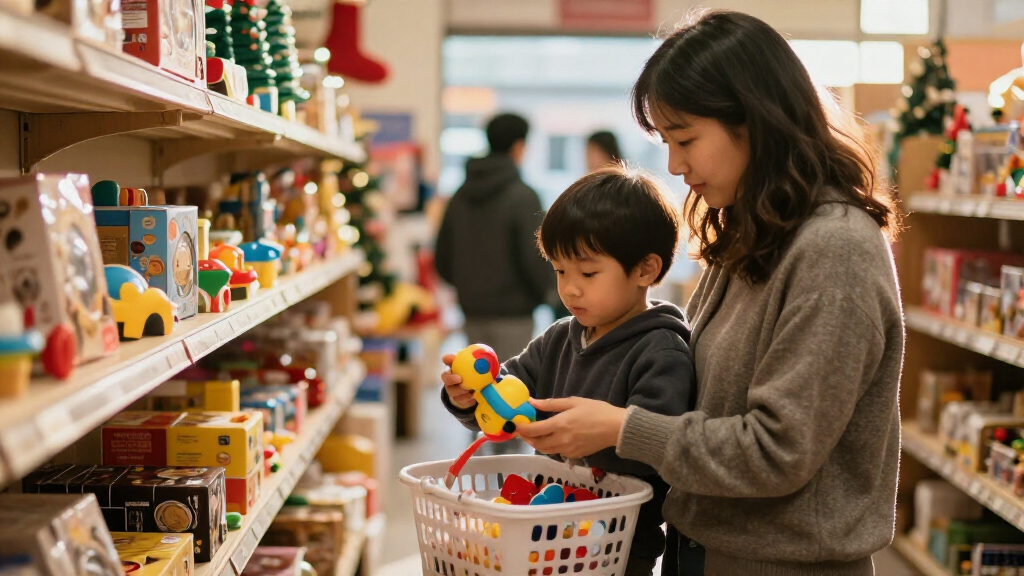
The campaign’s advice includes looking for manufacturer information, age labels, safe-use instructions and company contact details on products and packaging. The association also recommends buying from known brands and trusted retailers, and treating listings with misspellings or missing safety information as warning signs. Its Toy Shopping Checklist and a squishy-toy tip sheet are available through PlaySafe.org.
The association is drawing particular attention to counterfeit and knockoff toys, including squishy toys. It says these products may not meet U.S. toy safety requirements. Potential hazards include small parts that can cause choking if a product breaks, and chemicals prohibited in toys for children. The group warns that a counterfeit squishy could tear or burst, releasing small parts or filling, or contain hazardous chemicals.
The campaign also tells families not to heat, freeze, puncture, bite or otherwise misuse squishy toys. For secondhand purchases and hand-me-downs, it recommends checking recalls.gov. It cautions that party supplies, costumes, electronics and home décor are not necessarily designed or tested as toys, and may contain hazards such as small batteries, non-toy water beads or high-powered magnets.
Holiday Risks Behind Toy Bargains
The guidance addresses a practical challenge for families shopping during the holiday season: a product that looks like a familiar toy may be a counterfeit, and its safety compliance may be difficult to determine from appearance alone. The Toy Association says counterfeit toys can fail to meet federal requirements, making seller and product information relevant to safety decisions—not just price or brand preference.
Survey findings cited by the association point to a gap between concern and understanding. A Wakefield Research survey of 1,000 U.S. parents found that 87% said the lower price of a counterfeit or knockoff toy was not worth the possible safety risk to a child. At the same time, 84% of parents surveyed believed knockoff squishy toys were safe for play. The results are reported by the association; the supplied material does not provide details on the survey’s methodology or margin of error.
Age guidance is another issue with direct implications for gift-givers. The survey found that 35% of parents regarded toy age recommendations as merely suggestions. The association says age grading is safety guidance, particularly where a toy marked for children ages 3 and up may contain small parts that pose a risk to younger children.
Popular right now

Samsung 75-Inch M80H Series Mini LED 4K Smart TV (2026)

Dyson Airwrap i.d. Multi-Styler for Straight and Wavy Hair

KitchenAid Artisan 5-Quart Tilt-Head Stand Mixer, Almond Cream
As an affiliate, we earn on qualifying purchases.
What This November Campaign Covers
The Toy Association describes this as the sixth annual Toy Safety Awareness Month. For this year’s holiday campaign, it is focusing on counterfeit products, squishy toys, age labels and product recalls. The organization’s materials are intended for shoppers as well as adults supervising children’s play.
Joan Lawrence, the association’s “Toy Safety Mom” and senior vice president of standards and regulatory affairs, said the holiday period brings toys into family gatherings but also calls for precautions when shopping. She singled out fraudulent sellers and knockoff squishies as concerns, saying the association was seeing an influx of squishy knockoffs that were not compliant with U.S. toy safety laws. That description is the association’s assessment; the supplied report does not give sales figures or independent testing results.
The campaign’s checklist extends beyond new toys from stores. Its advice to check recalls before buying secondhand or accepting hand-me-downs reflects the possibility that a previously purchased product may later be subject to a recall. The organization directs consumers to its online resources for further guidance.
““The holidays are a joyful time, and toys bring an added element of fun, enrichment, and bonding to gatherings with family and friends.””
— Joan Lawrence, The Toy Association’s “Toy Safety Mom” and senior vice president of standards and regulatory affairs
Limits of the Available Safety Data
The campaign materials describe possible hazards but do not identify specific counterfeit products, sellers or incidents, or provide counts of affected toys. The supplied report also does not include independent test results supporting the association’s characterization of an influx of unsafe squishy knockoffs. Shoppers should treat those statements as the association’s warnings, not as a product-by-product finding.
The survey figures are attributed to Wakefield Research and a sample of 1,000 U.S. parents, but details such as the field dates, sampling method and margin of error are not included in the source material. It is also unclear how many products have been recalled or how often families encounter the hazards described. The association’s recommendations do not establish that every unfamiliar listing or low-cost toy is counterfeit or unsafe.
More Advice Through November
The Toy Association says it will continue sharing holiday safety guidance on social media throughout November. Shoppers can consult the Toy Shopping Checklist and squishy-toy tip sheet at PlaySafe.org for the group’s full recommendations. The source material does not announce a later campaign milestone or report planned enforcement action.
For families, the immediate steps highlighted by the campaign are to inspect packaging and seller information, follow age and use instructions, avoid altering squishy toys, and check recalls when considering secondhand items. Whether the campaign changes consumer behavior or leads to additional safety findings remains to be seen.
Key Questions
What is Toy Safety Awareness Month?
It is The Toy Association’s annual campaign sharing toy-shopping and play-safety guidance. The November 2026 effort is described as its sixth annual campaign.
Where can shoppers find the campaign’s advice?
The association says its Toy Shopping Checklist and squishy-toy tip sheet are available at PlaySafe.org. It also plans to share additional guidance on social media throughout November.
What should shoppers check before buying a toy?
The association recommends checking for manufacturer details, age labels, safe-use instructions and company contact information. It also advises buying from known brands and trusted retailers and being cautious about listings with misspellings or missing safety information.
How should squishy toys be used?
The association advises following the product’s directions and not heating, freezing, puncturing, biting or otherwise misusing squishy toys. It warns that some counterfeit squishies may tear or burst, releasing filling or small parts.
What should families do before accepting a secondhand toy?
The association recommends checking recalls.gov before buying a used toy or accepting a hand-me-down, and reviewing the product’s age label and safety information.
Source: toybook.com