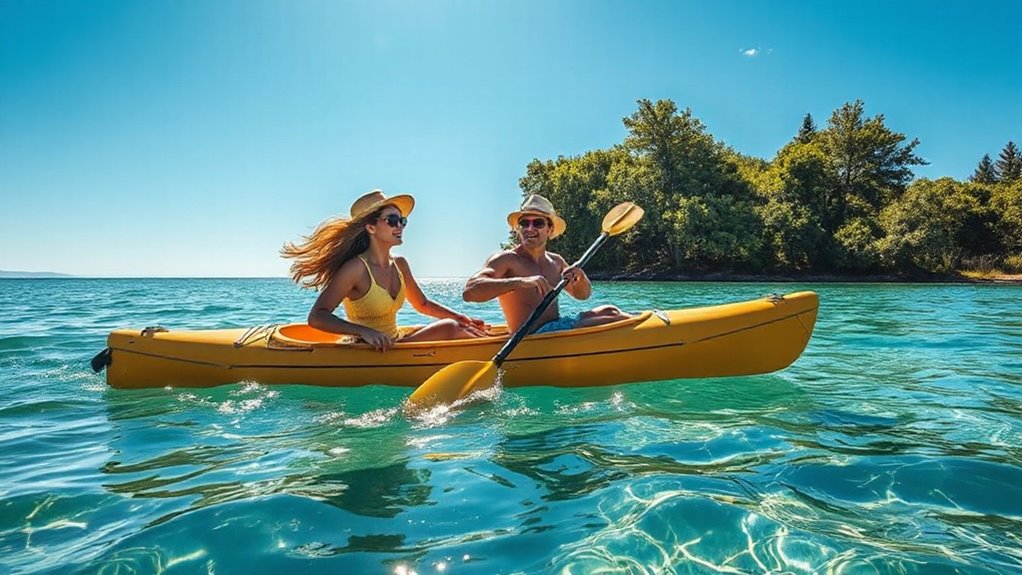
When tandem kayaking with your partner, it’s key to establish clear roles and communicate effectively. Decide who’ll steer and who’ll set the pace, and use simple signals to stay coordinated. Smooth, synchronized strokes help maintain balance and prevent wobbling. Keep your seating balanced and stay mindful of each other’s comfort. Practicing in calmer waters first builds confidence. If you stay attentive to technique, communication, and teamwork, you’ll enjoy a more harmonious paddle, and you’ll discover even more tips to improve your experience.
Key Takeaways
- Establish clear roles and synchronize paddling to maintain balance and rhythm.
- Use simple, consistent signals for effective communication and coordination.
- Sit close for even weight distribution and adjust positioning for stability.
- Focus on smooth, controlled strokes to conserve energy and improve efficiency.
- Prioritize safety, stay aware of surroundings, and support each other throughout the trip.
Tandem kayaking can be a fun and rewarding experience, but it requires coordination and communication between both paddlers. To make the most of your trip, start by establishing clear roles before you hit the water. Decide who will steer and who will set the pace, or alternate roles if you’re both comfortable switching. This way, you avoid confusion and ensure smooth navigation. When you’re paddling together, synchronize your strokes—timing is key. Keep your paddles in sync to maintain a steady rhythm and prevent the kayak from wobbling. A good tip is to practice paddling in unison on calmer waters before venturing into more challenging conditions.
Communication is essential throughout your trip. Use clear, consistent signals to coordinate turns, stop, or change pace. For example, a gentle tap on the paddle or a specific hand gesture can serve as a quick cue that everyone understands. Avoid shouting or overly complex signals, as these can cause confusion or fatigue. Keep a positive attitude and encourage each other, especially when facing rougher waters or unexpected obstacles. A calm, supportive approach helps maintain harmony and makes the experience enjoyable for both of you.
Use clear signals and stay positive to ensure smooth communication and an enjoyable tandem kayaking experience.
Balance is another critical aspect of tandem kayaking. Sit close enough to each other so that your weight distribution remains even, which helps stabilize the kayak. If one person shifts dramatically or leans too far to one side, it can throw off your balance. Adjust your seating slightly if necessary to maintain a centered position, and communicate about any discomfort or imbalance immediately. When paddling, avoid forcing your strokes; instead, aim for smooth, controlled movements. Overexertion or uneven effort can cause fatigue and make steering more difficult. Pay attention to each other’s cues and adapt your paddling accordingly.
Additionally, understanding basic safety protocols can help prevent accidents and ensure a smooth trip. Lastly, be mindful of your surroundings and your partner’s comfort. Take breaks when needed and stay hydrated. Respect the environment by avoiding sensitive wildlife areas and sticking to designated waterways. Remember, tandem kayaking is about shared experience—by working together, listening to each other, and maintaining good communication, you’ll create a memorable adventure. Keep a relaxed attitude, stay attentive, and enjoy the journey on the water with your partner. With patience and practice, you’ll develop a rhythm that makes paddling easier and more enjoyable for both of you.
Frequently Asked Questions
How Do We Choose the Best Tandem Kayak for Beginners?
You should look for a tandem kayak that’s stable, lightweight, and easy to control. Prioritize models with a wide beam for balance and a sit-on-top design for easy entry and exit. Consider your budget and choose a durable material like polyethylene. Test different options if possible, and read reviews to guarantee beginner-friendly features. This way, you’ll find a kayak that boosts your confidence and makes paddling enjoyable.
What Safety Gear Is Essential for Tandem Kayaking?
Think of safety gear as your kayak’s armor, protecting you through every splash and wave. You should always wear a well-fitted life jacket, making sure it’s Coast Guard-approved. Carry a whistle for signaling, a bilge pump to clear water, and a waterproof first aid kit for surprises. Don’t forget a waterproof phone case and a spare paddle. With these essentials, you’re set to navigate calm waters or choppy seas safely.
How Can We Improve Communication During Paddling?
To improve communication during paddling, you should establish clear signals beforehand, like tapping the paddle or using verbal cues. Keep your tone calm and steady, and make eye contact when possible. Practice active listening, so you truly understand each other’s needs and concerns. Regularly check in during your trip to share feedback and adjust your pace. These steps help guarantee smooth coordination and a more enjoyable kayaking experience together.
What Are Common Mistakes to Avoid in Tandem Kayaking?
Don’t let coordination become a sinking feeling. Avoid rushing your strokes or paddling at different rhythms, which can throw off your balance and teamwork. Steer clear of shouting commands or interrupting each other, as that disrupts harmony. Also, don’t forget to check your gear and seating positions before setting out. Staying aware and synchronized keeps your tandem kayak gliding smoothly, turning a potential chaos into a peaceful adventure on the water.
How Do We Handle Rough Water or Strong Currents Together?
When facing rough water or strong currents, stay calm and communicate clearly with your partner. Keep your paddles synchronized to maintain balance and steer into the current at an angle, rather than directly against it. Lean into the water’s flow to help stabilize the kayak, and always hold your paddle firmly. If needed, switch to a lower stroke to increase control, and work together to navigate safely through challenging conditions.
Conclusion
Now that you know the key tips for tandem kayaking—communicating clearly, coordinating your movements, and maintaining balance—you’re ready to enjoy the water together. Embrace the teamwork, learn from each splash, and celebrate each successful paddle. Remember, each trip is an opportunity to connect, to explore, and to create memories. So, paddle with patience, share the adventure, and let the river bring you closer with every stroke. Happy kayaking!