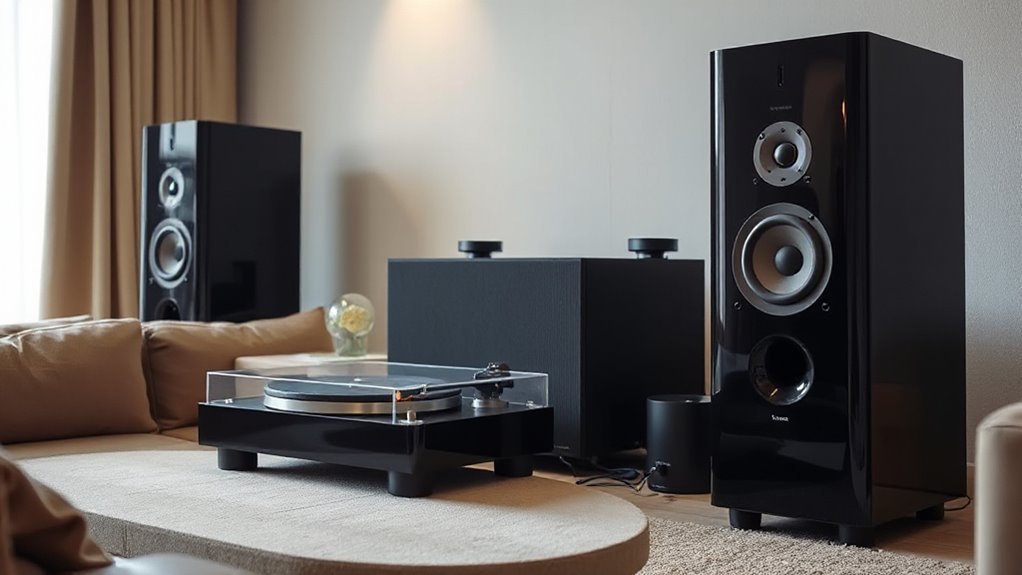
When choosing a home sound system, consider your room size, primary use, and preferred connectivity options. Look for speakers that provide clear sound with good build quality within your budget. If you want easy setup and flexible placement, wireless models may suit you best, but wired options often offer better reliability. Compatibility with your existing devices and future expandability are also key. Keep these factors in mind to create an immersive audio experience, and explore more tips to refine your selection.
Key Takeaways
- Consider room size and setup to choose appropriately powered and sized speakers for optimal sound distribution.
- Focus on primary use, such as movies or music, to select speakers with suitable features like center channels or stereo clarity.
- Decide between wired and wireless options based on convenience, reliability, and room layout.
- Ensure compatibility of the system components, including receiver and input options, for seamless connectivity.
- Prioritize sound quality, build durability, budget, and potential for future expandability to enhance long-term satisfaction.
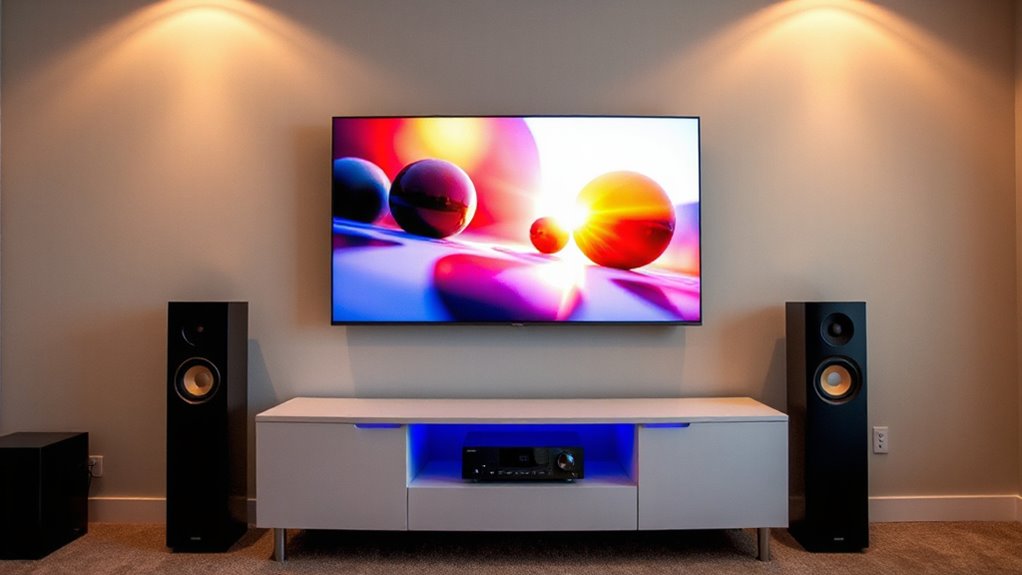
Setting up a home sound system can substantially enhance your entertainment experience, but it’s important to start with a clear plan. Knowing what to look for helps you avoid unnecessary expenses and guarantees you get the best sound quality for your space. First, consider the size of your room. A small room requires a different setup than a large, open space. For smaller rooms, compact speakers with less power are usually sufficient, while larger areas benefit from more powerful speakers or a surround sound system to fill the space with clear, immersive audio.
Next, think about your primary use. Are you aiming for crisp dialogue during movies, booming bass for music, or a balanced mix? Different speakers excel at different tasks. If your main focus is movies, look for a system with a good center channel speaker to anchor dialogue. For music lovers, stereo speakers that deliver clarity and depth are essential. Additionally, consider whether you prefer wired or wireless options. Wireless systems offer convenience and flexibility, allowing you to place speakers anywhere without cluttering your space with wires. However, wired setups often provide more reliable sound quality and less latency.
Choose wired for reliability, wireless for flexibility—match your primary use for the best sound experience.
Pay attention to the compatibility of your components. Ensure your receiver or amplifier can handle the wattage and type of speakers you choose. A mismatch can result in poor sound quality or even damage your equipment. Also, verify the input options available on your devices, such as HDMI, optical, or Bluetooth, so you can connect your TV, streaming devices, or smartphones with ease.
Sound quality is vital, but don’t overlook build quality and durability. Look for speakers made from quality materials that can withstand regular use. Good build quality often correlates with better sound performance and longevity. If possible, listen to the speakers before buying. Hearing the sound firsthand gives you a better sense of clarity, bass response, and overall tone, helping you select the system that matches your preferences.
Finally, consider your budget and future expandability. A higher investment usually translates into better sound and more features, but there are excellent options across price ranges. Think about whether you want a simple setup or a more elaborate system that you can expand later with additional speakers or components. Additionally, keep in mind that immersive soundscapes often require multiple speakers working in harmony. By focusing on these factors—room size, primary use, connectivity, sound quality, and budget—you can choose a home sound system that elevates your entertainment without unnecessary complications.
Frequently Asked Questions
Can I Add Smart Home Integration to My Sound System?
Yes, you can add smart home integration to your sound system. Many modern speakers and receivers support voice assistants like Alexa, Google Assistant, or Siri. You just need to verify your device is compatible and connect it to your home Wi-Fi network. Then, you can control your sound system with voice commands, automate your setup, and integrate it seamlessly into your smart home ecosystem for added convenience.
How Does Room Size Affect Speaker Selection?
Think of your room as a stage for your sound; the size dictates the spotlight. If your space is large, you’ll want speakers with more power and larger drivers to fill the room with clear, balanced sound. For smaller rooms, compact speakers work better, avoiding overwhelming the space. Measure your room, consider acoustics, and select speakers that match the size to guarantee your sound system hits the right note.
What Is the Best Budget-Friendly Home Sound System?
You’ll want a budget-friendly home sound system that offers great sound without breaking the bank. Look for options like the Yamaha YAS-209 or the Vizio SB36512-F6, which deliver impressive audio quality at an affordable price. Consider systems with Bluetooth for easy connectivity, multiple speaker configurations for richer sound, and user-friendly setups. These choices balance cost and performance, making them ideal for improving your home audio experience without overspending.
Are There Wireless Options That Sound as Good as Wired?
Yes, wireless options can sound as good as wired ones. Modern wireless speakers use advanced Bluetooth and Wi-Fi technology to deliver high-quality audio, matching the clarity, depth, and richness of wired systems. You can enjoy seamless, clutter-free setups without compromising sound quality. Look for models with aptX or LDAC support, as they ensure better audio transmission, giving you a wireless experience that rivals traditional wired connections.
How Do I Optimize Sound Quality for Different Genres?
To optimize sound quality for different genres, adjust your system’s equalizer settings to emphasize bass for hip-hop, treble for classical, or vocals for podcasts. Use presets if available, and experiment with speaker placement to enhance clarity. You might also consider adding a subwoofer for richer bass or speakers with adjustable tweeters. Tailoring these settings guarantees each genre sounds its best, providing a personalized listening experience.
Conclusion
Choosing the right home sound system is like planting a seed—you’ll want to nurture it with quality components and thoughtful placement. Pay attention to sound clarity, connectivity options, and room size to guarantee your audio experience blossoms. When you find the perfect setup, it’ll feel like music is flowing through your home, turning every space into a personal concert hall. Trust your ears and instincts—your ideal sound system is waiting to transform your everyday moments into extraordinary memories.