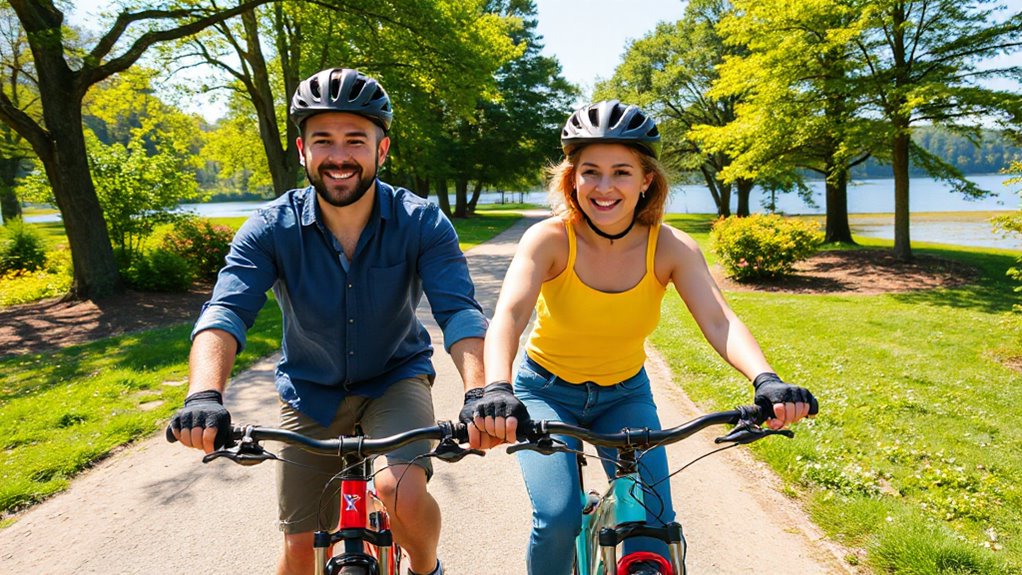

To enjoy tandem biking with your spouse, focus on clear communication and shared effort. Practice in a quiet spot first to build confidence, and use simple signals to coordinate turns and speeds. Adjust seats for comfort, share pedaling evenly, and maintain relaxed body language. Take breaks when needed and wear safety gear. If you’re willing to learn more, you’ll find plenty of tips to make your tandem rides smoother and more fun together.
Key Takeaways
- Establish clear communication signals and cues to coordinate turns, speed, and stops smoothly with your spouse.
- Practice together in a quiet area to build confidence and synchronize riding styles before longer rides.
- Share pedaling efforts evenly, especially on hills, to prevent fatigue and maintain a steady pace.
- Maintain relaxed body language and use gentle gestures for effective non-verbal communication.
- Prioritize safety with helmets, proper gear, and regular breaks to enjoy the ride comfortably and safely.
Tandem biking with your spouse can be a fun and rewarding way to enjoy quality time together, but it also requires coordination and communication. Before hitting the road, make sure both of you are comfortable with the basics of riding a tandem bike. If one of you is new to it, spend some time practicing in a quiet area to build confidence. Properly adjusting the seat height for both riders is essential for comfort and efficiency; you don’t want either of you straining or feeling cramped. Take the time to get these settings right before starting on a longer ride.
Ensure both riders are comfortable and confident by practicing and adjusting seat height before starting your tandem ride.
Once you’re ready, establish clear communication signals. Since tandem bikes often make noise, verbal commands are necessary. Decide on simple cues like “go,” “stop,” “turn left,” and “turn right” to ensure smooth coordination. Always keep an eye on each other’s movements and listen carefully for these signals. It’s helpful to set expectations about riding pace early on, so neither of you feels hurried or held back. Maintaining a steady, comfortable rhythm enhances both safety and enjoyment.
Balancing the weight distribution is another key factor. On a tandem, the front rider (pilot) controls steering, braking, and pedaling, while the rear rider (stoker) provides power and balance. The pilot should communicate when to accelerate, slow down, or change direction, while the stoker should inform the pilot if they need a break or are feeling uncomfortable. Sharing the workload evenly helps prevent fatigue and keeps the ride smooth. When climbing hills, coordinate your efforts: the front rider should set a manageable pace, and the rear rider should contribute enough pedal power to keep momentum going without overexerting.
Pay attention to your body language. A gentle tap on the shoulder or a hand gesture can be an effective non-verbal cue to communicate during the ride. Keep your posture relaxed and avoid sudden movements that might throw off your partner’s balance. Remember, patience is essential—if either of you gets tired or irritable, take a break. Rest stops give you a chance to enjoy the scenery, hydrate, and reconnect, making the experience more enjoyable overall. Additionally, practicing effective communication techniques enhances coordination and reduces misunderstandings during the ride.
Finally, dress appropriately for the ride. Wear comfortable clothing, and don’t forget helmets for safety. Sunglasses and sunscreen can protect you from sun exposure, and water bottles should be within easy reach. With good preparation, open communication, and mutual patience, tandem biking becomes a delightful way to bond and explore together. Embrace the shared experience, and you’ll find that the journey is just as rewarding as reaching your destination.
Top picks for "tips tandem spouse"
Open Amazon search results for this keyword.
As an affiliate, we earn on qualifying purchases.
Frequently Asked Questions
How Do I Choose the Right Tandem Bike Size for Us?
You should choose a tandem bike size based on both of your heights and inseam measurements. Sit on the bike and check if you can comfortably reach the handlebars and pedals without overstretching or feeling cramped. Test ride different sizes if possible, and consult sizing charts from manufacturers. Proper fit guarantees a smooth, enjoyable ride and helps prevent discomfort or injury during your tandem adventures.
What Should We Do if We Get Separated During the Ride?
If you get separated during the ride, stay calm and slow down or stop safely. Use hand signals or call out to your spouse to check in. Keep your phone handy in case you need to reconnect or find help. Agree on a meeting point before starting your ride. Remember, staying calm and communicating clearly helps you both get back together quickly and enjoy your ride safely.
How Can We Improve Our Coordination on the Bike?
To improve your coordination on the bike, communicate clearly and consistently. Use verbal cues or signals to indicate turns, stops, or obstacles ahead. Practice pedaling in sync by matching your cadence and maintaining a steady rhythm. Keep your balance by staying relaxed and centered, and work together to navigate turns smoothly. Regular practice helps you anticipate each other’s movements, making riding more enjoyable and coordinated.
What Safety Gear Is Recommended for Tandem Biking?
You’ll want to gear up with helmets because falling off in style isn’t recommended. Wear bright, reflective clothing to avoid becoming invisible, and consider gloves for grip and comfort. Knee and elbow pads are optional but highly fashionable, especially if you’re prone to dramatic falls. Don’t forget a bell or horn to announce your approach—nothing says “romance” like startling each other mid-ride. Stay safe and enjoy the tandem adventure!
How Do We Handle Disagreements About Pacing or Route?
When disagreements about pacing or route arise, communicate openly and calmly. Share your preferences and listen to your spouse’s perspective. Agree on a compromise that suits both of you, like alternating pace or route choices. Keep the focus on enjoying the ride together, and be flexible. If disagreements persist, consider taking a short break or stopping to reassess your plan, ensuring the experience remains positive and fun for both of you.
Conclusion
Tandem biking with your spouse is like dancing in perfect harmony—each pedal stroke bringing you closer together. Remember, patience and communication are your guiding stars, helping you navigate any bumps along the trail. Embrace the journey with laughter and love, knowing that every shared moment strengthens your bond. So, keep pedaling forward, hand in hand, and let your tandem adventure become a beautiful symphony of partnership and joy that lasts a lifetime.