

To become a better emotional partner, focus on developing emotional intelligence by recognizing your feelings and understanding how they influence your actions. Practice active listening by fully engaging in conversations, showing genuine interest, and avoiding interruptions. Create a safe space for vulnerability, where your partner feels heard and validated without judgment. Consistently show empathy, patience, and care to build trust and connection. Keep exploring these skills to strengthen your emotional bond even further.

Get gifts for the two of you delivered free with Prime
- Fast, free delivery on millions of items
- Prime Video, Amazon Music and more included
- Member-only deals all year
Key Takeaways
- Develop awareness of your own emotions and how they influence your responses.
- Practice active listening by giving full attention and reflecting your partner’s feelings.
- Validate your partner’s emotions without judgment, creating a safe space for vulnerability.
- Show empathy and patience to foster deeper emotional connection and trust.
- Commit to ongoing emotional growth through consistency, understanding, and genuine care.
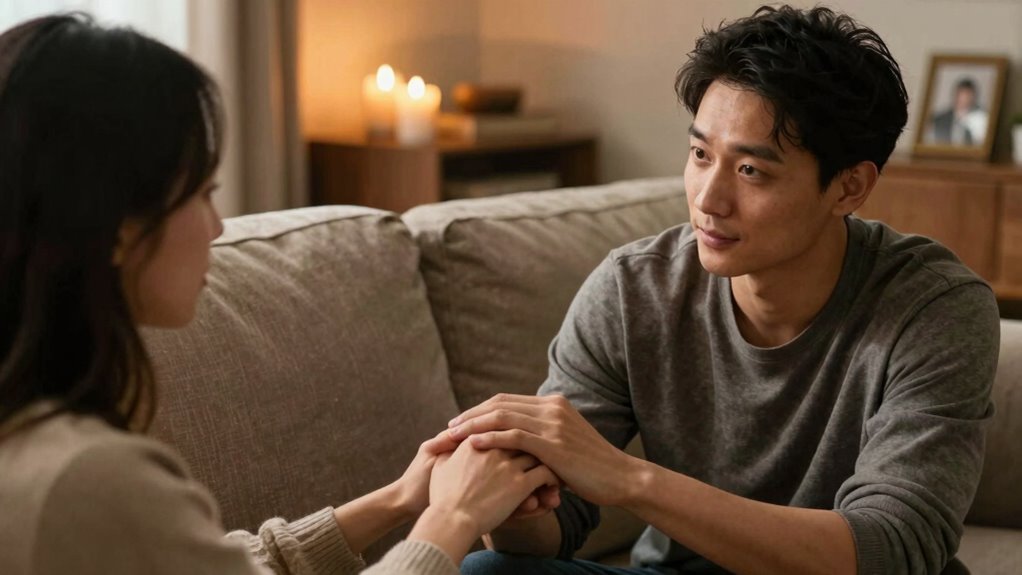
Many men want to be more emotionally supportive partners, but they often don’t know where to start. Improving your emotional connection begins with developing emotional intelligence. This means being aware of your own feelings and understanding how they influence your actions. When you recognize your emotions, you’re better equipped to respond thoughtfully rather than react impulsively. Emotional intelligence also involves sensing your partner’s feelings, which helps you connect on a deeper level. By paying attention to subtle cues—like tone of voice or body language—you can better gauge what your partner needs, even when they don’t directly say it.
Developing emotional intelligence helps you respond thoughtfully and connect deeply with your partner.
Active listening is a vital skill in becoming a more emotionally supportive partner. It’s not just about hearing words; it’s about fully engaging with what your partner is sharing. When your partner opens up, focus on listening without interrupting or immediately offering solutions. Show you’re present by maintaining eye contact, nodding, and giving verbal affirmations like “I understand” or “That must be tough.” Reflect back what you hear to clarify your understanding, such as saying, “It sounds like you’re feeling overwhelmed at work.” This illustrates that you’re genuinely invested in their feelings, which can foster trust and openness. Developing these skills can also help you recognize the importance of consistent emotional support in strengthening your relationship.
Practicing active listening also involves withholding judgment. Even if you don’t immediately agree or understand, acknowledge their feelings without dismissing them. Avoid trying to fix every problem right away; instead, let your partner feel heard and validated. Sometimes, what they need most is simply someone to listen without offering advice. This approach helps your partner feel supported and understood, strengthening your emotional bond. Additionally, understanding how external factors like sleep solutions can influence emotional well-being is an important aspect of supporting your partner holistically. Recognizing that external influences can affect emotional health broadens your capacity for empathy and support.
Building emotional intelligence and honing active listening skills take intentional effort. It means slowing down, paying close attention, and being genuinely curious about your partner’s inner world. When you approach conversations with empathy and patience, you create a safe space for vulnerability. Incorporating knowledge about mental health can also help you better understand your partner’s emotional needs and responses. When you approach conversations with empathy and patience, you create a safe space for vulnerability. Over time, these habits will improve your emotional responsiveness, making your relationship more resilient and fulfilling. Remember, becoming a better emotional partner isn’t about perfection; it’s about showing consistent care and genuine interest. By focusing on your emotional intelligence and practicing active listening, you take meaningful steps toward deepening your connection and becoming the supportive partner your loved one deserves.
emotional intelligence book for men
As an affiliate, we earn on qualifying purchases.
As an affiliate, we earn on qualifying purchases.
Frequently Asked Questions
How Can Men Identify Their Emotional Blind Spots?
You can identify your emotional blind spots by increasing your emotional awareness and paying attention to moments when you feel stuck or avoid certain feelings. Reflect on vulnerability barriers that prevent you from expressing emotions openly. Asking trusted friends or partners for honest feedback helps reveal hidden patterns. Practice mindfulness and journaling to explore your emotional responses, making it easier to recognize and address areas where you might be blocking your true feelings.
What Are Practical Steps to Improve Emotional Communication?
You can deepen your connection by practicing honest emotional expression, sharing your feelings openly and vulnerably. Focus on active listening, giving your partner your full attention without interruptions, and reflecting back what you hear. This shows you value their emotions. Regularly check in with your own feelings and stay patient with yourself. These steps foster trust, understanding, and a more meaningful emotional bond, helping you grow as a supportive partner.
How Does Vulnerability Strengthen Emotional Intimacy?
Vulnerability deepens emotional intimacy by allowing you to build trust and foster genuine connections. When you openly share your feelings, you demonstrate emotional resilience, showing you’re capable of handling sensitive moments. This honesty encourages your partner to do the same, strengthening your bond. As trust builds through vulnerability, your relationship becomes more secure and authentic, creating a safe space where both of you can grow emotionally and support each other deeply.
What Common Mistakes Do Men Make in Emotional Relationships?
You often overlook the importance of emotional intelligence, leading to misunderstandings. Men frequently mistake silence for strength, avoiding conflict resolution instead of addressing issues head-on. Don’t underestimate how crucial active listening and empathy are; they transform your relationship into a fortress of trust. Embracing vulnerability and honing your emotional skills help you connect deeply, preventing common mistakes and nurturing a resilient, loving partnership built on genuine understanding and mutual respect.
How Can Men Manage Emotions Without Feeling Overwhelmed?
You can manage emotions without feeling overwhelmed by building emotional resilience and practicing stress management techniques. Take deep breaths, pause before reacting, and identify your feelings to stay grounded. Regular exercise, mindfulness, and healthy routines help you stay balanced. Remember, it’s okay to seek support when needed. Developing these skills allows you to handle emotions calmly, strengthening your relationships and fostering better understanding and connection with your partner.
active listening training course
As an affiliate, we earn on qualifying purchases.
As an affiliate, we earn on qualifying purchases.
Conclusion
By opening your heart and embracing vulnerability, you build bridges instead of walls, turning emotional connection into a vibrant garden where trust and understanding flourish. Remember, the path to becoming a better emotional partner isn’t a straight line but a winding road filled with small, intentional steps. With each effort, you’re planting seeds of empathy that grow into a lush landscape of love, transforming your relationships into beautiful, enduring works of art.
empathy building exercises for couples
As an affiliate, we earn on qualifying purchases.
As an affiliate, we earn on qualifying purchases.
As an affiliate, we earn on qualifying purchases.
Halloween Picks
halloween
As an affiliate, we earn on qualifying purchases.