

Relationship communication tools come in several formats — structured workbooks, therapy-style programs, communication card decks, and skill-building books — and the right one depends on how much time and effort you and your partner can commit. The CBT Couples Toolbox earns my best overall pick for its 45+ practical exercises rooted in cognitive behavioral techniques, giving couples something actionable rather than abstract advice. Nonviolent Communication stands out as the best foundation-building read, while The Skin Deep Healing Edition is the strongest option for couples who want a low-effort, conversation-based tool instead of a workbook. The main tradeoff in this category is depth versus time investment: intensive 8- and 12-week programs deliver more transformation but demand real commitment, whereas quick daily workbooks fit busy schedules but move slower. Keep reading for the full breakdown, including who each tool suits best and which ones fall short.

Get gifts for the two of you delivered free with Prime
- Fast, free delivery on millions of items
- Prime Video, Amazon Music and more included
- Member-only deals all year
Key Takeaways
- Structured programs (the 8-Week and 12-Week workbooks) outperform casual books for couples in serious conflict, but they demand consistent weekly effort that many couples underestimate.
- Card-based tools like The Skin Deep Healing Edition have the highest completion rates in this category because they remove the homework barrier entirely — but they build conversation skills, not conflict-resolution systems.
- Time-framed formats (20 minutes a day, 10 minutes a day, 12 days) emerged as the most realistic entry point for busy couples, even if their depth is shallower than therapy-style programs.
- Nonviolent Communication is the only pick whose framework transfers beyond the relationship — to workplace, family, and parenting conflicts — making it the best long-term skill investment despite requiring more reading.
- Several workbooks in this roundup overlap heavily in content; the differentiators were exercise quality, scripting examples, and whether both partners actually engage with the material.





| relationship communication tool | Format | Structure | Primary Focus |
|---|---|---|---|
| Communication Skills for Coupl | Paperback book | Reference-style guide, not a workbook | — |
| The CBT Couples Toolbox: Over | Paperback workbook | Modular toolbox, self-directed | — |
| Couples Communication Workbook | Workbook | Day-by-day guided program | — |
| Communication Skills for Coupl | Workbook | Step-by-step sequential workbook | — |
| Communicate Your Feelings | Book (print/digital) | Prescriptive advice, not a workbook | — |
| Love More | Paperback workbook | Guided exercises and written activities | Conflict reduction and communication skills |
| The Skin Deep Healing Edition | 199 conversation cards | — | Healing strained relationships and reconnection |
| Practical At-Home Couples Ther | Workbook | Self-paced | Communication, intimacy, and conflict repair |
| 8-Week Couples Therapy Workboo | Spiral-bound workbook | Step-by-step weekly exercises | Connection, communication, relationship strength |
| Nonviolent Communication: A La | Paperback book | Concept chapters with practice guidance | Compassionate, nonviolent communication framework |
| The Talk Book: with Six Prize- | Book | Tool-based, self-paced (no set schedule) | Repairing communication breakdowns and strengthening relationships |
| 12-Week Relationship Therapy W | Workbook | Sequenced weekly exercises | Communication, conflict resolution, intimacy, and trust rebuilding |
More Details on Our Top Picks
Communication Skills for Couples: Guide to Improve Communication, Resolve Conflict, Deepen Intimacy, Strengthen Marriage, and Create a Healthy Relationship
This guide earns the top spot because it covers the widest range of communication scenarios — conflict resolution, intimacy, and long-term relationship health — without narrowing itself to a single method. Compared with Communicate Your Feelings (Without Starting a Fight), which zeroes in on emotional expression, this book functions as a full-spectrum reference a couple can return to at different stages. It reads more like a field manual than a workbook, which is exactly why it beats exercise-heavy options for couples who want understanding first and drills second. The tradeoff: readers who want structured daily practice, like the Couples Communication Workbook offers, may find the advice here too conceptual to apply without self-discipline. Sparse review data also makes it a bit of a leap of faith compared with more established titles like Love More, Fight Less.
Pros:- Covers the widest range of topics: conflict, intimacy, and long-term relationship health
- Functions as a repeatable reference rather than a one-time read
- Practical strategy focus rather than abstract theory
- Works for both dating couples and married partners
Cons:- Minimal review data makes quality hard to verify before buying
- No structured exercises, so application depends on the couple’s own initiative
- Less established than bestsellers like Love More, Fight Less
Best for: Couples who want a broad, all-purpose communication reference covering conflict, intimacy, and marriage-strengthening in one place
Not ideal for: Couples who need a structured, day-by-day program with exercises — this is more conceptual guidance than guided practice
- Format:Paperback book
- Focus Areas:Communication, conflict resolution, intimacy, marriage
- Approach:Practical strategies and guidance
- Structure:Reference-style guide, not a workbook
- Audience:Couples at any relationship stage
- Exercises Included:Limited; primarily instructional
Our verdict“The strongest pick for couples who want one broad, adaptable communication guide instead of a narrow single-issue fix.”
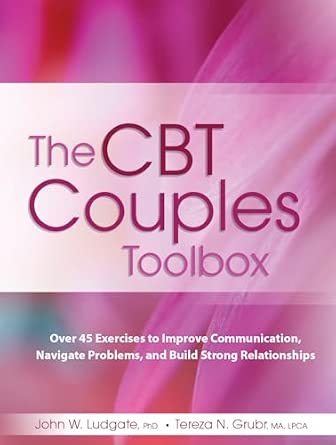
The CBT Couples Toolbox: Over 45 Exercises to Improve Communication, Navigate Problems and Build Strong Relationships
What separates this option is its grounding in cognitive-behavioral therapy — the same framework professional couples counselors use — packaged into more than 45 exercises. While the Couples Communication Workbook offers a tidy 12-day schedule, this toolbox is better suited to couples who want to target specific recurring problems and pick exercises that match them, rather than follow a fixed sequence. The sheer volume is the double-edged sword: compared with the lean 7-Step Workbook, some pairs will feel overwhelmed deciding where to start, and couples in genuine crisis should treat this as a supplement to therapy rather than a substitute. Still, for analytical couples who like understanding why a technique works, it’s the most rigorous pick in this lineup.
Pros:- Evidence-based CBT framework used by actual therapists
- 45+ exercises let couples target their specific issues
- Builds problem-solving skills, not just conversation habits
- Suitable as a supplement to ongoing couples counseling
Cons:- Large exercise library can feel overwhelming without guidance on sequencing
- Not a replacement for professional help in serious relationship situations
- Limited detail available on individual exercise formats before purchase
Best for: Couples who want professionally grounded, evidence-based CBT exercises they can match to specific recurring problems
Not ideal for: Couples in acute crisis who need a therapist first, or those who want a simple linear program — the 45+ exercises require self-direction
- Format:Paperback workbook
- Methodology:Cognitive-behavioral therapy (CBT)
- Exercise Count:45+ exercises
- Focus Areas:Communication, problem navigation, relationship strength
- Structure:Modular toolbox, self-directed
- Therapist-Informed:Yes
Our verdict“The smartest choice for couples who want therapy-grade tools and are willing to put in the self-directed work to use them.”
Couples Communication Workbook: 20 Minutes a Day for 12 Days to Improve Listening, Resolve Conflicts, and Strengthen Your Relationship
This workbook wins on commitment design: a defined 12-day program of 20-minute sessions removes the biggest failure point in couples work — never finishing. Compared with The CBT Couples Toolbox, which requires couples to chart their own path, this format hands you a clear start, middle, and finish line, making it far better for pairs who stall out on open-ended books. The listening emphasis also differentiates it from Communicate Your Feelings, which centers on speaking rather than hearing. The obvious limitation: twelve days is short, and couples with deep-rooted conflict patterns will likely need to repeat the program or graduate to something heavier afterward. It’s a sprint, not a marathon — but for building momentum, nothing in this lineup is easier to actually complete.
Pros:- Fixed 12-day structure creates accountability and a clear finish line
- 20-minute sessions fit easily into busy evenings
- Strong emphasis on listening, an often-neglected skill
- Low intimidation factor for couples new to self-help work
Cons:- Short duration limits depth on serious issues
- Newer title with little review history to gauge results
- Once finished, couples need a follow-up resource to maintain gains
Best for: Couples who struggle to stick with self-help books and want a short, time-boxed program they can realistically finish together
Not ideal for: Couples with entrenched, long-standing conflict patterns — 12 days is too brief for deep-seated issues
- Format:Workbook
- Program Length:12 days
- Daily Time Commitment:20 minutes
- Focus Areas:Listening, conflict resolution, relationship strength
- Structure:Day-by-day guided program
- Difficulty:Beginner-friendly
Our verdict“The best pick for couples who need a completable, low-commitment program that builds real momentum in just under two weeks.”
Communication Skills for Couples Made Simple: 7-Step Workbook to Build Trust, Resolve Conflicts, Master Active Listening, and Create a Fulfilling Relationship in Just 10 Minutes a Day
If even the Couples Communication Workbook‘s 20-minute sessions feel ambitious, this 10-minutes-a-day format is the lowest barrier to entry in the entire roundup. The 7-step framework gives the material more narrative coherence than a grab-bag of exercises — you build skills in sequence rather than sampling randomly — and its focus on trust and active listening makes it a fit for couples repairing after a breach, not just fine-tuning. The tradeoff is depth: compared with The CBT Couples Toolbox, each step gets fairly light treatment, and couples wanting clinical rigor will find it thin. Ten minutes also barely scratches the surface on heated topics, so treat it as a habit-builder rather than a transformation engine. For schedule-crunched partners, though, consistency beats intensity.
Pros:- Smallest daily time commitment of any option in the roundup
- Sequential 7-step structure builds skills logically
- Explicit focus on trust-building and active listening
- Approachable tone for reluctant or skeptical partners
Cons:- 10-minute sessions limit depth on complex or heated issues
- Fewer exercises overall than toolbox-style alternatives
- Limited preview content and little review history
Best for: Time-strapped couples — shift workers, new parents — who can only commit 10 minutes a day but want a coherent skill-building sequence
Not ideal for: Couples wanting clinical depth or intensive work — the 10-minute format keeps every topic at surface level
- Format:Workbook
- Framework:7-step program
- Daily Time Commitment:10 minutes
- Focus Areas:Trust, conflict resolution, active listening
- Structure:Step-by-step sequential workbook
- Difficulty:Beginner-friendly
Our verdict“The right choice when consistency matters more than intensity and 10 minutes a day is realistically all you have.”
Communicate Your Feelings (Without Starting a Fight): What to Say and What Not to Say to Your Partner
Most communication books teach you how to fight better; this one teaches you how to raise difficult feelings without a fight starting at all. That narrow focus is its greatest strength — the scripted ‘say this, not this’ approach gives conflict-avoidant or emotionally guarded partners concrete language instead of vague principles, something broader guides like Communication Skills for Couples don’t provide at this granularity. It pairs naturally with Nonviolent Communication, offering a lighter, more prescriptive complement to that book’s deeper framework. The flip side of narrowness: couples dealing with trust breaches, resentment, or recurring arguments will need more than phrasing advice, and the broader workbooks in this lineup cover those bases better. Think of it as a precision tool, not a complete kit.
Pros:- Concrete ‘what to say / what not to say’ scripts rather than abstract principles
- Directly addresses conflict avoidance, a gap in most couples books
- Immediate, same-day applicability to real conversations
- Approachable for solo reading even if a partner won’t join in
Cons:- Narrow scope — doesn’t address deeper conflict patterns or trust repair
- Prescriptive scripts can feel formulaic if applied rigidly
- Works best alongside a broader resource rather than as a standalone
Best for: Conflict-avoidant or emotionally guarded partners who need exact wording and scripts for raising difficult feelings safely
Not ideal for: Couples working through deep trust issues or entrenched recurring conflict — phrasing advice alone won’t resolve those
- Format:Book (print/digital)
- Approach:Scripted phrasing and do/don’t guidance
- Focus Areas:Emotional expression, conflict prevention
- Structure:Prescriptive advice, not a workbook
- Solo Reading:Yes — works for one partner alone
- Depth:Targeted single-issue focus
Our verdict“A precision pick for partners who know what they feel but freeze when it’s time to say it — pair it with a broader guide for full coverage.”
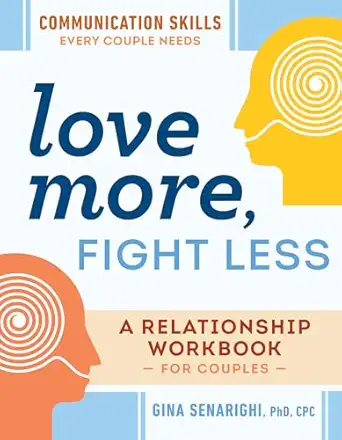
Love More, Fight Less: Communication Skills Every Couple Needs
Most workbooks in this category promise better communication in broad terms; this one narrows the goal to fighting less often and less intensely, which makes it a strong pick for couples stuck in repetitive arguments. Compared with the 8-Week Couples Therapy Workbook, it feels less like a curriculum and more like a toolkit you can dip into when tension flares. That said, the workbook format still demands real commitment — the exercises only work if both partners actually do them, not just read about them. Where the Skin Deep Healing Edition cards prompt conversation through questions, this book teaches structural skills for defusing conflict before it escalates, which is a different mechanism entirely. This pick makes the most sense for couples who fight well below the belt and want tactics, not just talks.
Pros:- Practical, skill-based exercises rather than abstract advice
- Directly targets conflict frequency and intensity
- Accessible workbook format that’s easy to follow
- Suitable for couples at any relationship stage
Cons:- Requires genuine commitment from both partners to complete exercises
- Lighter on deep emotional exploration than card-based or therapy-style alternatives
- Limited supplementary material compared with more structured multi-week programs
Best for: Couples trapped in the same recurring arguments who want concrete de-escalation techniques
Not ideal for: Partners where only one person is willing to do written exercises — the format collapses without buy-in from both sides
- Format:Paperback workbook
- Primary Focus:Conflict reduction and communication skills
- Structure:Guided exercises and written activities
- Time Commitment:Ongoing; works at your own pace
- Intended Users:Couples
- Skill Level:Beginner-friendly
Our verdict“Buy this if recurring fights — not general distance — are the core problem in your relationship.”
The Skin Deep Healing Edition – 199 Question Cards to Heal Strained Relationships
This is the only card-based option in the lineup, and that changes the experience completely. Instead of homework, you get 199 guided questions that spark conversation naturally — a lower barrier to entry than the written workbooks like Love More, Fight Less or the Practical At-Home Couples Therapy Workbook. This option stands out for healing after rupture: the questions are built for strained bonds, covering feelings, memories, and goals rather than generic icebreakers. The tradeoff is depth on the skills side — cards prompt conversations but don’t teach conflict-resolution frameworks the way workbooks do. It also demands emotional willingness; pulling a card that asks about past hurt only works if both people are ready to answer honestly. Compared with a book, though, it’s far easier to get a reluctant partner to the table.
Pros:- Low-pressure format that works for reluctant participants
- 199 questions spanning feelings, memories, and future goals
- Works for couples, friends, and family — not just romantic partners
- Specifically designed for healing damaged relationships
Cons:- Requires genuine emotional openness to be effective
- No skill-building framework — results depend on the conversation itself
- Card-only format may feel repetitive with sustained use
Best for: Couples or family members repairing a strained relationship where a sit-down book would feel like a chore
Not ideal for: Buyers wanting systematic communication training — cards start conversations but don’t teach transferable skills
- Format:199 conversation cards
- Brand:{THE AND}
- Model:{THE AND} Healing Edition
- Included Components:Cards (1 pack)
- Material:Card stock
- Primary Focus:Healing strained relationships and reconnection
- Intended Users:Couples, friends, and family members
- Support:Amazon.com return policy
Our verdict“Choose this when the goal is reconnection through real conversation, not a structured communication curriculum.”
Practical At-Home Couples Therapy Workbook
Of all the workbooks here, this one leans closest to an actual therapy experience at home, targeting honest communication, intimacy repair, and conflict resolution together. Where the 8-Week Couples Therapy Workbook spreads work across a fixed schedule, this model is better suited to couples who want therapy-style depth without the calendar — you move at your own pace through guided exercises. Compared with Nonviolent Communication, it’s dyad-focused rather than a general life philosophy, so everything points back at your specific relationship. The real drawback is vagueness: fewer details on content and structure mean you’re trusting the premise without a preview, and like every workbook here, results require sustained effort. This pick makes the most sense for couples considering counseling who want to try a serious self-directed attempt first.
Pros:- Addresses communication, intimacy, and conflict in one resource
- Therapy-informed approach without therapist cost
- Self-paced format adapts to your schedule
- Guided exercises rather than passive reading
Cons:- Sparse detail on specific content makes it a bit of a leap of faith
- Open-ended structure can lead to abandonment without commitment
- Not a substitute for professional help in serious situations
Best for: Couples on a therapy waitlist or avoiding the cost of counseling who want a serious at-home substitute
Not ideal for: Buyers who want clearly defined structure and timelines — the open-ended format can stall without external accountability
- Format:Workbook
- Primary Focus:Communication, intimacy, and conflict repair
- Approach:Therapy-style guided exercises
- Structure:Self-paced
- Time Commitment:Ongoing; results require sustained effort
- Intended Users:Couples
Our verdict“A reasonable first step for couples who want therapy-style work before paying for the real thing.”
8-Week Couples Therapy Workbook: Essential Strategies to Connect, Improve Communication, and Strengthen Your Relationship
If you’re the type who abandons self-help books by week two, this is the pick designed for you. The eight-week, step-by-step structure builds accountability into the product itself — something the more freeform Practical At-Home Couples Therapy Workbook deliberately lacks. The spiral binding sounds minor but matters: the book lies flat while you write, a practical edge over standard paperbacks like Love More, Fight Less. Compared with the Couples Communication Workbook‘s 12-day sprint, this eight-week arc allows slower, deeper processing rather than quick wins. The tradeoff is commitment: two months is a real investment, and couples with unpredictable schedules may fall behind and quit. This model is better suited to pairs who genuinely finish what they start, or who want the discipline a timeline provides.
Pros:- Clear eight-week roadmap removes decision fatigue
- Spiral-bound format lies flat for easy writing
- Progressive structure builds skills week over week
- Balances communication, connection, and relationship strength
Cons:- Requires sustained commitment across two full months
- Pace is fixed — slower or faster couples may find it mismatched
- Limited public reviews make quality hard to verify in advance
Best for: Motivated couples who want a fixed curriculum with weekly milestones to keep them accountable
Not ideal for: Couples with chaotic schedules or short attention spans — an 8-week commitment is easy to abandon midway
- Format:Spiral-bound workbook
- Program Length:8 weeks
- Primary Focus:Connection, communication, relationship strength
- Structure:Step-by-step weekly exercises
- Binding:Spiral — lies flat for writing
- Intended Users:Couples
Our verdict“The best choice for couples who thrive on structure and will actually finish a timed program.”
Nonviolent Communication: A Language of Life
Every other product in this roundup is couple-specific; this book is the foundational framework underneath all of them. Its observation-feeling-need-request method applies at work, with family, and in your marriage alike, which is why it’s remained the category’s reference text for years. Compared with Love More, Fight Less, it trades couple-specific exercises for a deeper mental model — you learn why conversations go wrong, not just what to say next. That breadth is also the drawback: there are no couples worksheets, no weekly plans, and no prompts to force practice, so partners who want hand-holding will drift back to old habits. It also asks for real practice before results appear. This pick makes the most sense for readers who want to understand communication, then apply it everywhere.
Pros:- Widely regarded framework applicable to all relationships
- Teaches the root causes of communication breakdown, not just scripts
- Builds genuine empathy and listening skills
- Long-track-record classic with broad reader validation
Cons:- No couple-specific exercises or guided structure
- Skills take sustained practice to internalize
- Philosophical tone may frustrate readers wanting quick fixes
Best for: Readers who want a lifelong communication framework that extends beyond their romantic relationship
Not ideal for: Couples wanting a done-with-you workbook with exercises and schedules — this is theory and practice, not a program
- Format:Paperback book
- Primary Focus:Compassionate, nonviolent communication framework
- Scope:All relationships — personal and professional
- Structure:Concept chapters with practice guidance
- Time Commitment:Ongoing practice required for results
- Intended Users:Individuals and couples
Our verdict“Read this first if you want to understand how communication actually works — pair it with a workbook for practice.”
The Talk Book: with Six Prize-Winning Talk Tools That Strengthen Relationships and Repair Communication Breakdowns
Most communication books spread themselves thin across dozens of strategies; The Talk Book takes the opposite approach by limiting itself to six talk tools, each meant to be practiced until it becomes second nature. That narrowness is the whole point: compared with a broad survey like Nonviolent Communication: A Language of Life, which builds an entire philosophy, this book functions more like a pocket toolkit you can reach for mid-argument.
The tradeoff is real, though. Readers who want structured weekly practice will get more from The 12-Week Relationship Therapy Workbook for Couples, because The Talk Book leaves the pacing and homework entirely up to you. Sparse detail on the specific techniques also means you are buying on the strength of the concept rather than verified exercises. Still, for couples who feel overwhelmed by long workbooks, this distilled format is a genuine advantage.
Pros:- Six focused tools are easier to remember and actually use mid-conflict than sprawling frameworks
- Prize-winning approach lends credibility to the method
- Designed specifically for repairing breakdowns, not just preventing them
- Compact scope makes it accessible for partners who resist ‘relationship homework’
Cons:- Very limited detail available on what the six techniques actually involve before buying
- No structured practice schedule, so follow-through depends on the couple alone
- Few published reviews make it harder to verify results compared with better-documented alternatives
Best for: Couples who get overwhelmed by long workbooks and want a small, repeatable set of conversation techniques they can apply immediately during real disagreements
Not ideal for: Couples who need accountability and structure — with no schedule or exercises, progress depends entirely on self-motivation
- Format:Book
- Core Content:Six prize-winning talk tools
- Primary Focus:Repairing communication breakdowns and strengthening relationships
- Structure:Tool-based, self-paced (no set schedule)
- Approach:Practical conversation strategies
- Time Commitment:Flexible; determined by the reader
- Best Use Case:In-the-moment conflict repair
Our verdict“Pick this if you want a short list of conversation tools you can deploy in the heat of a disagreement, and skip it if you need a guided program with weekly exercises.”
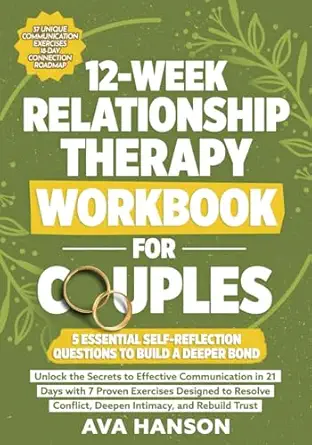
12-Week Relationship Therapy Workbook for Couples
This workbook asks for something most competitors don’t: twelve weeks of sustained effort. Where The Couples Communication Workbook promises results in 12 days at 20 minutes a day, this option bets that deeper problems — broken trust, repeated conflict cycles — cannot be fixed in a sprint. The seven exercises are sequenced to build on each other, moving from communication repair toward intimacy and trust rebuilds.
That longer arc is both its strength and its burden. Compared with The Talk Book, which hands you six tools with no schedule, this workbook provides accountability and progression — but only for couples who will actually stick with it. If one partner is checked out by week three, the book becomes a shelf ornament. There is also little author information available, which makes it harder to vet the credentials behind the method compared with established titles like Nonviolent Communication.
Pros:- Long 12-week timeline allows real behavioral change rather than surface-level tips
- Seven sequenced exercises address trust rebuilding, not just communication mechanics
- Covers conflict resolution and intimacy together instead of treating them separately
- Workbook format creates built-in accountability that passive reading lacks
Cons:- 12 weeks is a serious time commitment many couples will abandon partway through
- No author or credential information provided, making the method hard to vet
- Requires full participation from both partners to work at all
Best for: Committed couples recovering from serious ruptures — trust breaches, recurring conflict patterns — who are willing to work together for a full three months
Not ideal for: Couples wanting quick wins or where only one partner will participate — the 12-week structure collapses without mutual buy-in
- Format:Workbook
- Program Length:12 weeks
- Core Content:7 proven exercises
- Primary Focus:Communication, conflict resolution, intimacy, and trust rebuilding
- Structure:Sequenced weekly exercises
- Participation Required:Both partners
- Best Use Case:Deep repair after trust ruptures or chronic conflict
Our verdict“Choose this if your relationship needs sustained repair work and both partners are all-in; choose a shorter program like the 12-day Couples Communication Workbook if you want faster, lighter results.”

How We Picked
I evaluated these 12 tools against criteria that matter most to real couples: structure and usability (does the tool provide a clear path, or does it dump advice on you?), time commitment (10-minute daily exercises versus multi-week programs), evidence base (tools grounded in CBT or established frameworks like Nonviolent Communication scored higher than generic advice collections), and couple engagement (whether the format encourages both partners to participate or works for one reader alone). I also weighed versatility — how well each tool handles everything from routine communication friction to serious conflict repair.
The ranking logic favors tools that deliver a repeatable system over those that simply describe good communication. That’s why exercise-heavy workbooks and structured programs sit above general-advice books, and why the interactive card deck ranks highly despite its narrower scope: its completion rate is a genuine advantage. Price differences in this category are small, so value came down to depth per dollar rather than sticker price.
Factors to Consider When Choosing Relationship Communication Tools
Before choosing a relationship communication tool, it helps to understand what actually drives results in this category — and where couples commonly go wrong. These are the factors I weighed most heavily, and the ones worth thinking through before you buy.
Match the Format to Your Partner’s Willingness
The single biggest failure point I see is one partner buying a workbook the other never opens. If your partner is skeptical or conflict-averse, a heavy 12-week program will likely sit unread, while a card deck or short daily exercise format lowers the barrier enough to get both people participating. A common mistake is choosing based on how serious your problems are rather than how much buy-in exists — a moderate tool both partners use beats a rigorous program only one completes. Start with the least intimidating format your situation allows, then graduate upward. You can always add a deeper workbook later; you can’t undo a partner’s resistance to being ‘assigned homework.’ This is why I ranked low-effort formats higher for beginners than their content depth alone would justify.
Daily Exercises vs. Weekly Programs
Time-framed tools split into two camps: short daily sessions (10–20 minutes) and weekly or multi-week programs modeled on therapy. Daily formats build habits and fit busy schedules, but each session covers less ground and progress can feel slow. Multi-week programs mirror actual couples therapy structure, with escalating exercises that build on each other — more effective for entrenched patterns, but missing a week or two derails momentum badly. Be honest about your actual schedule, not your ideal one. Couples who travel frequently or share childcare duties often do better with daily formats they can do in fragments. The 8- and 12-week options in this roundup reward consistency almost punitively, which is a feature for disciplined couples and a trap for everyone else.
Evidence-Based Frameworks vs. General Advice
Not all communication advice is equal, and the framework behind a tool predicts its usefulness. Books grounded in cognitive behavioral therapy, the Gottman method, or Nonviolent Communication offer repeatable scripts and named techniques you can apply in the moment of conflict. General advice books — even well-written ones — tend to describe what good communication looks like without giving you a system for producing it under stress. When a fight is escalating, you need a memorized structure (‘When you X, I feel Y, and I need Z’), not a principle you read once. The tradeoff: framework books require more reading and practice upfront. If you want quick wins, scripted phrase books like ‘what to say and what not to say’ formats deliver immediately but may not fix the underlying pattern causing repeated conflicts.
Repair-Focused vs. Growth-Focused Tools
Couples buy these tools for two very different reasons, and mismatching the tool to the goal wastes money. Repair-focused tools — healing question cards, therapy-style workbooks — address existing damage, resentment, or a specific rupture like infidelity or a long-distance strain. Growth-focused tools build listening skills, intimacy, and conflict prevention for relationships that are basically fine but could be better. Using a repair tool on a healthy relationship feels heavy and clinical; using a growth tool on a crisis feels superficial. A common mistake is under-buying — couples in real distress pick a light card deck because it’s less threatening, then conclude that ‘tools don’t work.’ Audit your situation honestly before choosing severity.
Scripted Language and Examples Matter More Than Theory
Across this entire category, the tools that users actually finish and recommend share one trait: they include verbatim scripts and filled-in examples rather than abstract concepts. ‘Practice active listening’ is advice; ‘repeat back what you heard before responding, starting with: What I heard you say is…’ is a tool. When comparing options, check the preview pages for whether exercises give you actual sentences to try, or just prompts to ‘discuss your feelings.’ The difference shows up most during actual arguments, when nobody has the bandwidth to translate theory into words. Tools with scripts also help the less verbally fluent partner participate on equal footing, which reduces the dynamic where one person dominates every conversation about the relationship.
When to Skip Books and Seek a Therapist
No workbook replaces professional help, and knowing that boundary protects both your money and your relationship. Self-guided tools work well for communication friction, recurring arguments, and connection drift — the middle 70% of relationship struggles. They work poorly for active infidelity, contempt, untreated mental health conditions, or any situation involving abuse, where a book can delay real intervention. A reasonable test: if you and your partner can complete three or four exercises together without the session itself turning into a fight, self-guided tools are a sensible first step. If even opening the book triggers conflict, that pattern itself is the signal to bring in a professional. Many couples use these workbooks as a bridge — building skills before therapy or maintaining progress after it ends — which is where they deliver the most lasting value.
Frequently Asked Questions
Can a workbook or book actually improve our communication, or do we need a therapist?
For most couples dealing with recurring arguments, listening breakdowns, or emotional distance, a structured workbook genuinely helps — these tools teach the same skills therapists teach in early sessions, at a fraction of the cost. Where they fall short is when conflict has escalated into contempt, stonewalling, or a specific rupture like an affair, where a neutral third party is needed to keep conversations safe. A useful benchmark: if you can discuss a mildly tense topic together for twenty minutes without it derailing, self-guided tools will likely work for you. Many couples also use workbooks successfully alongside therapy, or as aftercare once sessions end. The honest expectation is that a book changes communication patterns over weeks of practice, not after one reading.
What if my partner won’t do a couples workbook with me?
This is more common than not, and it changes which tool you should buy. Skip the paired workbooks entirely and start with a question card deck like The Skin Deep, which feels like a conversation rather than an assignment — many reluctant partners engage once the format stops resembling therapy. Alternatively, single-reader books like Nonviolent Communication or Communicate Your Feelings can be done solo, and they still shift the dynamic because communication patterns are interactive: when one person stops escalating, the other’s responses change too. Pressuring a resistant partner into homework usually backfires and can turn the workbook itself into a source of conflict. Lead with your own changes, keep the visible effort low, and many partners come around once they see results rather than promises.
Is a longer program (8 or 12 weeks) better than a short daily workbook?
Longer programs deliver deeper change because their exercises build on each other the way therapy sessions do, but only if you actually complete them — which is the catch. Completion data across this category consistently favors shorter commitments, and an abandoned 12-week program helps nobody while a finished 12-day program builds real momentum. Choose the longer format only if both partners have explicitly agreed to the schedule and you have a reliable weekly time slot. If your calendar is unpredictable or your partner is lukewarm, the 10- or 20-minute daily formats are the smarter buy. There’s no penalty for starting small and upgrading later, and skills from a short workbook make a longer program easier to stick with.
Are question cards as effective as workbooks for improving communication?
They solve a different problem, and understanding that distinction prevents disappointment. Card decks excel at reopening conversation, rebuilding emotional intimacy, and surfacing topics couples have stopped discussing — which is why healing-focused decks work well for strained but not broken relationships. They don’t teach conflict-resolution systems, scripts for arguments, or how to de-escalate in the moment, which is what workbooks train. The pragmatic answer is that many couples benefit from both: cards for connection and daily conversation, a workbook for handling conflict. If you can only buy one and your main complaint is that you ‘don’t talk anymore,’ cards are the better fit. If your main complaint is ‘we fight badly,’ a workbook is the only format that addresses it.
What’s the difference between CBT-based tools and general communication advice books?
CBT-based tools operate on the premise that communication problems come from thought patterns — assumptions, catastrophizing, mind-reading — and they give you exercises to identify and interrupt those patterns before they reach your mouth. General advice books describe what good communication looks like: listen actively, use I-statements, validate feelings. The practical difference shows up mid-argument, when a framework gives you a procedure to follow and general advice gives you a principle you can’t access under stress. CBT tools involve more writing and self-reflection, which some partners find too introspective. If past self-help books haven’t stuck for you, a framework-based tool is usually the missing ingredient — but if you just want better phrases for common situations, a scripted advice book delivers faster with less effort.
Conclusion
The right pick here depends less on your budget — prices across this category are low — and more on your commitment level and situation. For best overall, The CBT Couples Toolbox offers the best balance of evidence-based exercises, flexibility, and depth. For best value, the Communication Skills for Couples Made Simple workbook delivers a complete 7-step system in tiny daily sessions at a typical paperback price. For best premium pick, the 12-Week Relationship Therapy Workbook is the most thorough program in the lineup, worth it for couples who are all-in. For beginners, The Skin Deep Healing Edition cards get both partners talking without any homework, while Love More, Fight Less is the gentlest book-format entry point. For specific needs: choose Nonviolent Communication if you want a lifelong skill framework, Communicate Your Feelings if arguments escalate fast and you need scripts immediately, and the 8-Week Couples Therapy Workbook if you want therapy structure without a therapist’s price tag. Whatever you choose, the tool only works if both people open it — start with the format your partner will actually use.
Columbus Day / Indigenous Peoples' Day Picks
long weekend sales
As an affiliate, we earn on qualifying purchases.