The right relationship advice book for couples depends heavily on where your relationship stands right now — thriving couples want to deepen connection, while strained couples need conflict repair they can actually use tonight. My top overall pick is The Seven Principles for Making Marriage Work, because it pairs decades of research with exercises couples can start immediately, striking the best balance between credibility and practicality. Two other standouts: The 5 Love Languages remains the easiest entry point for couples new to self-help, and Fight Right is the strongest choice if conflict itself is the core problem. The main tradeoff in this category is between research-backed depth and lightweight accessibility — the denser books deliver more lasting change but demand more effort, while the workbooks and activity books are easier to stick with but go less deep. Read on for the full breakdown of all 14 titles and who each one suits best.

Get gifts for the two of you delivered free with Prime
- Fast, free delivery on millions of items
- Prime Video, Amazon Music and more included
- Member-only deals all year
Key Takeaways
- Research-backed books with named frameworks (Gottman’s Seven Principles, Hendrix’s Imago method) ranked highest because couples actually finish them — credibility creates commitment to the exercises.
- Workbooks dominated the mid-list: the two 8-week programs (The Two-Pen Relationship Workbook and Relationship Workbook for Couples) are strong for accountability but weaker for couples in active crisis who need faster relief.
- Specialized books beat generalist ones for specific problems — Fight Right for chronic conflict and Rebuilding Trust for betrayal outperformed all-purpose communication guides on those exact issues.
- The 5 Love Languages remains the best gateway book: it is the shortest path to a shared vocabulary, but couples with deeper issues will outgrow it within weeks.
- Activity books like The Couple’s Activity Book ranked lowest as standalones but work well as supplements — fun without a framework rarely changes patterns on its own.
| A Couple’s Guide to Connection: The Relationship Garden Method for Growing Intimacy, Trust, and Emotional Safety |  | Best for Busy Couples | Format: Paperback / Digital | Core Method: Relationship Garden Method | Daily Time Commitment: 10 minutes | VIEW LATEST PRICE | See Our Full Breakdown |
| His Needs, Her Needs: Making Romantic Love Last |  | Best Classic for Long-Married Couples | Format: Paperback, Kindle, Audiobook | Core Framework: 10 emotional needs in marriage | Primary Focus: Sustaining romantic love long-term | VIEW LATEST PRICE | See Our Full Breakdown |
| The Seven Principles for Making Marriage Work: A Practical Guide from the Country’s Foremost Relationship Expert |  | Best Overall | Format: Paperback, Kindle, Audiobook | Core Framework: Seven research-based principles | Evidence Base: Longitudinal studies of thousands of couples | VIEW LATEST PRICE | See Our Full Breakdown |
| The Relationship Equation: A Proven Formula to Heal Your Relationships |  | Best for Individual Self-Work | Format: Paperback / Digital | Core Framework: Formula-based healing approach | Intended Reader: Individual, not couple | VIEW LATEST PRICE | See Our Full Breakdown |
| The Two-Pen Relationship Workbook for Couples: An 8-Week Program Built for Both of You |  | Best Interactive Workbook | Format: Print workbook | Program Length: 8 weeks | Session Length: 15 minutes | VIEW LATEST PRICE | See Our Full Breakdown |
| The Couple’s Activity Book: 70 Interactive Games to Strengthen Your Relationship |  | Best for Playful Couples | Format: Activity book with interactive games | Number of Activities: 70 | Primary Focus: Bonding and communication through play | VIEW LATEST PRICE | See Our Full Breakdown |
| Rebuilding Trust: Guided Therapy Techniques and Activities to Restore Love, Trust, and Intimacy in Your Relationship |  | Best for Healing After a Breach of Trust | Format: Guided techniques and activities | Primary Focus: Rebuilding trust, love, and intimacy | Approach: Therapy-inspired exercises | VIEW LATEST PRICE | See Our Full Breakdown |
| Fight Right: How Successful Couples Turn Conflict Into Connection |  | Best for Conflict Resolution | Format: Advice book with strategies | Primary Focus: Conflict resolution and communication | Core Concept: Turning conflict into connection | VIEW LATEST PRICE | See Our Full Breakdown |
| The 5 Love Languages®: The Secret to Love That Lasts |  | Best Classic for Everyday Couples | Format: Advice book | Primary Focus: Understanding how partners give and receive love | Core Framework: Five love languages | VIEW LATEST PRICE | See Our Full Breakdown |
| Getting the Love You Want: A Guide for Couples, Third Edition |  | Best for Deep Psychological Work | Format: Guide book with couples exercises | Edition: Third edition | Primary Focus: Communication, emotional connection, and conflict resolution | VIEW LATEST PRICE | See Our Full Breakdown |
| Communication Skills for Couples: Guide to Improve Communications, Resolve Conflict, Deepen Intimacy, Strengthen Marriage and Create a Healthy Relationship |  | Best Budget Starter Pick | Format: Paperback | Primary Focus: Communication skills | Secondary Topics: Conflict resolution, intimacy, marriage strengthening | VIEW LATEST PRICE | See Our Full Breakdown |
| Relationship Workbook for Couples: 8-Week Program and Proven Strategies to Rebuild Trust, Resolve Conflict, Improve Communication, and Rekindle Intimacy |  | Best Structured Recovery Program | Format: Workbook (paperback) | Program Length: 8 weeks | Primary Focus: Rebuilding trust and communication | VIEW LATEST PRICE | See Our Full Breakdown |
| Love More, Fight Less: Communication Skills Every Couple Needs | 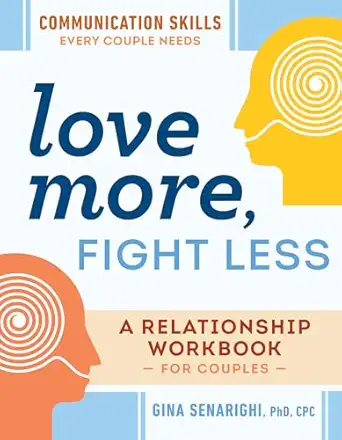 | Best for Frequent Fighters | Format: Paperback workbook | Primary Focus: Conflict reduction and communication | Structure: Skills-based chapters with exercises | VIEW LATEST PRICE | See Our Full Breakdown |
| The Practical Guide to a Healthy Marriage: Step-by-Step Strategies for Lasting Happiness |  | Best for Long-Married Couples | Format: Paperback / digital | Primary Focus: Marriage maintenance | Secondary Topics: Communication, trust-building, self-care | VIEW LATEST PRICE | See Our Full Breakdown |
| relationship advice books for couple | Format | Primary Focus |
|---|---|---|
| A Couple’s Guide to Connection | Paperback / Digital | Intimacy, trust, emotional safety |
| His Needs | Paperback, Kindle, Audiobook | Sustaining romantic love long-term |
| The Seven Principles for Makin | Paperback, Kindle, Audiobook | Marriage stability and conflict management |
| The Relationship Equation: A P | Paperback / Digital | Healing unhealthy relationship patterns |
| The Two-Pen Relationship Workb | Print workbook | Trust, conflict resolution, closeness |
| The Couple’s Activity Book: 70 | Activity book with interactive games | Bonding and communication through play |
| Rebuilding Trust: Guided Thera | Guided techniques and activities | Rebuilding trust, love, and intimacy |
| Fight Right: How Successful Co | Advice book with strategies | Conflict resolution and communication |
| The 5 Love Languages®: The Sec | Advice book | Understanding how partners give and receive love |
| Getting the Love You Want: A G | Guide book with couples exercises | Communication, emotional connection, and conflict resolution |
| Communication Skills for Coupl | Paperback | Communication skills |
| Relationship Workbook for Coup | Workbook (paperback) | Rebuilding trust and communication |
| Love More | Paperback workbook | Conflict reduction and communication |
| The Practical Guide to a Healt | Paperback / digital | Marriage maintenance |
More Details on Our Top Picks
A Couple’s Guide to Connection: The Relationship Garden Method for Growing Intimacy, Trust, and Emotional Safety
Most relationship books ask for a serious time commitment, and that’s exactly where this one carves out its niche. The Relationship Garden Method is built around 10-minute daily exercises, which makes it far more realistic for couples juggling work and kids than a dense read like Getting the Love You Want. Where The Two-Pen Relationship Workbook demands a structured 8-week program, this option works in smaller, more flexible increments — you can dip in and out without losing momentum. The tradeoff is depth: compared with The Seven Principles for Making Marriage Work, the treatment of underlying theory is thin, and couples in serious distress will likely want something heavier. Think of this as maintenance rather than repair.
Pros:- Genuinely low time commitment at 10 minutes a day
- Prioritizes emotional safety, not just communication tactics
- Easy to start without any prior relationship-book background
- Flexible format that fits unpredictable schedules
Cons:- Thin on specific techniques and underlying research
- Not designed for couples facing serious betrayal or chronic conflict
Best for: Busy couples with limited time who want small daily habits that keep emotional connection alive
Not ideal for: Couples in crisis or dealing with deep-seated conflict — the short exercises lack the depth for serious repair work
- Format:Paperback / Digital
- Core Method:Relationship Garden Method
- Daily Time Commitment:10 minutes
- Primary Focus:Intimacy, trust, emotional safety
- Exercise Style:Short daily practices
- Relationship Stage:Maintenance and growth, not crisis repair
Our verdict“Buy this if your relationship is stable but connection has slipped through the cracks of a busy life — skip it if you need intensive repair.”
His Needs, Her Needs: Making Romantic Love Last
This is one of the most established titles in the genre, and its longevity is the pitch: decades of readers have used the 10 emotional needs framework to diagnose why romance fades. Compared with The 5 Love Languages, which compresses a similar idea into five categories, this book goes wider and more granular — useful for couples who found the Love Languages model too simplified. The catch is the title itself: the framework leans on fairly traditional gender roles, which may not resonate with every modern couple the way Fight Right or Gottman’s research-based approach does. It rewards patient reading rather than quick exercises, so it suits couples already committed to the work.
Pros:- Decades of reader validation and refinement
- The 10 emotional needs framework is more detailed than shorter models
- Directly addresses sustaining romance in long-term marriage
- Strong fit for couples who prefer structured diagnosis over vague advice
Cons:- Heteronormative framing that doesn’t fit every couple
- Requires sustained reading — no quick daily exercises like A Couple’s Guide to Connection
Best for: Long-married couples who want a time-tested framework for understanding why romantic feelings faded
Not ideal for: Couples wanting a modern, research-based approach or an interactive workbook format — this is dense reading, not exercises
- Format:Paperback, Kindle, Audiobook
- Core Framework:10 emotional needs in marriage
- Primary Focus:Sustaining romantic love long-term
- Approach:Reflective reading and self-assessment
- Author Background:Marriage counselor with decades of clinical practice
- Relationship Stage:Established marriages
Our verdict“Worth it for established marriages seeking a classic, needs-based diagnosis — less suited to couples wanting contemporary framing or hands-on activities.”
The Seven Principles for Making Marriage Work: A Practical Guide from the Country’s Foremost Relationship Expert
This is the anchor of the list, and for good reason: few relationship books can claim the decades of observational research behind Gottman’s seven principles. Where most titles on this list — including The Relationship Equation and A Couple’s Guide to Connection — offer frameworks without a comparable evidence base, this one is grounded in studies of thousands of real couples. The practical payoff is that the advice identifies specific behaviors that predict divorce, which gives couples a shared vocabulary for problems. The tradeoffs are real: it’s marriage-focused, so unmarried partners get less direct guidance, and readers already steeped in Gottman’s work will find overlaps with his other books. It’s also reading-heavy, with fewer interactive exercises than The Two-Pen Relationship Workbook.
Pros:- Backed by decades of published observational research
- Identifies concrete behaviors that predict marital failure
- Gives couples a shared vocabulary for discussing problems
- Widely recommended by couples therapists
Cons:- Focused exclusively on marriage, not other relationship types
- Denser read with fewer interactive exercises than workbook-style options
Best for: Married couples who want research-backed principles and are willing to read thoughtfully rather than just fill in worksheets
Not ideal for: Dating or cohabiting couples — the framework is explicitly built around marriage research
- Format:Paperback, Kindle, Audiobook
- Core Framework:Seven research-based principles
- Evidence Base:Longitudinal studies of thousands of couples
- Primary Focus:Marriage stability and conflict management
- Includes:Self-assessments and in-book exercises
- Relationship Stage:Married or engaged couples
Our verdict“If you only buy one marriage book, this is the one to buy — the research foundation simply outclasses the competition.”
The Relationship Equation: A Proven Formula to Heal Your Relationships
Unlike everything else in this lineup, this book is written for the individual, not the couple — and that’s both its identity and its limitation. Where The Two-Pen Relationship Workbook requires a willing partner sitting beside you, this option lets one person start the healing process alone, which matters when a partner won’t read a book or attend therapy. Compared with Rebuilding Trust, which targets a specific rupture, this takes a broader formula-based approach to unhealthy patterns. The honest tradeoff: it’s a newer title with little review history, so there’s less community validation than established picks like His Needs, Her Needs. Couples needing joint exercises should look elsewhere — this works best as a solo starting point before partnered work.
Pros:- Lets one partner begin healing without requiring the other’s participation
- Formula-based structure makes progress feel measurable
- Broad enough to apply beyond romantic relationships
- Lower barrier to entry than couples therapy
Cons:- Minimal review history compared with established titles
- Not a shared activity, so it can’t replace couples-based work
- Sparse detail available on specific techniques before purchase
Best for: Individuals whose partner won’t participate in couples books or therapy and want to start relationship work on their own
Not ideal for: Couples seeking a shared workbook experience — this is designed for one reader working solo
- Format:Paperback / Digital
- Core Framework:Formula-based healing approach
- Intended Reader:Individual, not couple
- Primary Focus:Healing unhealthy relationship patterns
- Relationship Stage:Any stage, including post-conflict
- Market Track Record:New release with limited reviews
Our verdict“A reasonable pick if you’re doing this work alone — skip it if you and your partner want to learn side by side.”
The Two-Pen Relationship Workbook for Couples: An 8-Week Program Built for Both of You
The two-pen concept is the whole point: this workbook is literally designed so both partners write in the same book, forcing the kind of side-by-side engagement that passive reading never achieves. Compared with A Couple’s Guide to Connection, which offers quick informal exercises, this is a structured 8-week program with 15-minute sessions — more commitment, but more momentum. It also competes directly with Relationship Workbook for Couples: 8-Week Program, and its differentiator is the shared-physical-book design rather than separate worksheets. The tradeoff is that a program only works if both people show up; if one partner is reluctant, you’re better off with The Relationship Equation for solo work. And with limited available detail on the exercises themselves, buyers are trusting the structure sight-unseen.
Pros:- Shared two-pen format creates genuine joint engagement
- Structured 8-week arc builds momentum week over week
- 15-minute sessions stay manageable for busy schedules
- Targets trust, conflict resolution, and closeness together
Cons:- Requires equal buy-in from both partners to work at all
- Limited published detail on the actual exercise content
- Less depth on theory than research-based reads like The Seven Principles
Best for: Committed couples who want a structured, scheduled program and will genuinely do the exercises together
Not ideal for: Couples where one partner is checked out — an 8-week shared program collapses without full participation
- Format:Print workbook
- Program Length:8 weeks
- Session Length:15 minutes
- Design:Shared two-pen layout for both partners
- Primary Focus:Trust, conflict resolution, closeness
- Exercise Style:Guided written exercises completed side by side
Our verdict“The right choice for couples ready to do the work together on a schedule — a poor fit when one partner isn’t on board.”
The Couple’s Activity Book: 70 Interactive Games to Strengthen Your Relationship
Most relationship advice books ask you to read and reflect; this one asks you to play together. With 70 interactive games, it takes the opposite approach of theory-heavy titles like Getting the Love You Want, which leans on structured psychological concepts. Instead, this option lowers the barrier to entry — couples who find workbooks intimidating or who associate ‘relationship talk’ with dread will appreciate the game format, because connection happens as a byproduct of fun rather than through direct confrontation. Compared with The Two-Pen Relationship Workbook, which demands sustained written effort, this book works in short, low-pressure bursts. The tradeoff is depth: there’s little framework here for understanding why your relationship struggles, so couples facing serious conflict will outgrow it quickly.
Pros:- 70 activities give plenty of variety so the experience never feels repetitive
- Game format makes relationship-building feel fun rather than clinical
- Low barrier to entry for partners who resist traditional self-help reading
- Encourages communication naturally through shared play
Cons:- Lacks the underlying theory and frameworks that explain relationship problems
- Little guidance for couples in serious distress or crisis
- Sparse detail on format and structure may leave buyers unsure what they’re getting
Best for: Couples who avoid heavy self-help books and want a lighthearted, low-effort way to reconnect through play
Not ideal for: Couples dealing with deep conflict or trust issues — the games won’t substitute for the structured therapeutic work in Rebuilding Trust
- Format:Activity book with interactive games
- Number of Activities:70
- Primary Focus:Bonding and communication through play
- Approach:Interactive, exercise-based
- Best Format For:Couples who prefer doing over reading
- Time Commitment:Short, flexible sessions
Our verdict“Choose this if your relationship needs more laughter and shared moments, not more homework.”
Rebuilding Trust: Guided Therapy Techniques and Activities to Restore Love, Trust, and Intimacy in Your Relationship
This is the most targeted pick in the lineup: where Fight Right addresses everyday conflict and The 5 Love Languages covers general connection, this book zero-ins on the specific, painful work of rebuilding after betrayal or broken trust. Its guided therapy techniques mirror what a counselor might assign between sessions, which makes it a strong supplement to — though never a replacement for — professional help. The guided activities demand real effort from both partners, and that’s the central tradeoff: this is not a book one person can read alone and apply unilaterally. Compared with lighter workbooks like Love More, Fight Less, the emotional labor here is heavier, but so is the potential payoff for couples genuinely committed to repair.
Pros:- Therapy-grounded techniques lend credibility and structure to the healing process
- Directly addresses trust repair, a gap in most general relationship books
- Includes guided activities rather than abstract advice alone
- Covers love and intimacy restoration alongside trust, not just damage control
Cons:- Requires committed effort from both partners to be effective
- Emotionally demanding content can feel overwhelming without professional support
- Less useful for couples without a specific trust rupture to repair
Best for: Couples recovering from infidelity, secrecy, or a serious breach of trust who are both willing to actively participate in healing
Not ideal for: Couples where only one partner is engaged, or those simply wanting everyday communication tips — the material is too heavy for casual use
- Format:Guided techniques and activities
- Primary Focus:Rebuilding trust, love, and intimacy
- Approach:Therapy-inspired exercises
- Intended Audience:Couples healing relationship wounds
- Partner Participation:Both partners required
- Difficulty Level:Emotionally intensive
Our verdict“The right choice only if both partners are all-in on repairing a specific betrayal — otherwise it’s more weight than you need.”
Fight Right: How Successful Couples Turn Conflict Into Connection
Every couple fights; what separates lasting couples is how they fight, and that’s this book’s entire thesis. Unlike The 5 Love Languages, which focuses on expressing affection before problems arise, Fight Right meets you in the messy middle — the argument itself. It reframes conflict as a potential source of connection rather than a threat, teaching concrete resolution skills rather than generic ‘communicate better’ advice. Compared with Rebuilding Trust, it’s better suited to ongoing friction than acute betrayal. The honest limitation: these techniques only work if both partners actually practice them, and a partner who refuses to engage with the material will blunt its impact. It also assumes your conflicts are solvable ones — chronic dealbreaker issues fall outside its scope.
Pros:- Reframes conflict as an opportunity rather than a failure
- Provides concrete, actionable resolution techniques rather than vague principles
- Addresses the argument itself, a stage most relationship books skip
- Strengthens overall communication skills as a side benefit
Cons:- Results depend on both partners practicing the techniques
- Assumes solvable conflict — not suited to fundamental incompatibility
- Requires sustained commitment rather than a quick fix
Best for: Couples stuck in repetitive arguments who want practical tools to argue productively instead of avoiding conflict
Not ideal for: Couples in abusive or fundamentally incompatible dynamics — conflict techniques can’t fix a relationship that shouldn’t be salvaged
- Format:Advice book with strategies
- Primary Focus:Conflict resolution and communication
- Core Concept:Turning conflict into connection
- Approach:Practical technique-based
- Best Use Case:Recurring arguments and friction patterns
- Partner Participation:Most effective with both partners engaged
Our verdict“If recurring arguments are your relationship’s biggest stressor, this is the most targeted tool in the roundup.”
The 5 Love Languages®: The Secret to Love That Lasts
This is the most widely recognized title in the entire roundup, and its fame is earned: the five-love-languages framework is simple enough to explain in one conversation yet useful enough to change how partners interpret each other’s behavior daily. Where Getting the Love You Want asks for deeper psychological excavation, this book offers a shared vocabulary couples can use immediately — many readers describe it as the first relationship book both partners actually finished. Compared with Fight Right, it’s preventive rather than remedial: it improves the everyday flow of affection rather than resolving active conflict. The tradeoff is simplicity itself. The framework is broad, occasionally clichéd, and can feel reductive for couples wanting nuanced, research-based depth like Gottman-style analysis.
Pros:- Extremely accessible framework that requires no background knowledge
- Gives couples a shared vocabulary for expressing and interpreting affection
- Broadly appealing, so reluctant partners are likelier to read it
- Applies to everyday interactions, not just crisis moments
Cons:- Framework can feel reductive or overly simplistic for complex relationships
- Popular-psychology basis lacks the research rigor of Gottman-style titles
- Doesn’t address serious conflict or trust repair in any depth
Best for: Couples new to relationship books who want an accessible, conversation-starting framework both partners will actually finish
Not ideal for: Readers wanting clinical depth or evidence-based rigor — the framework is popular psychology, not hard science
- Format:Advice book
- Primary Focus:Understanding how partners give and receive love
- Core Framework:Five love languages
- Approach:Concept-based with practical application
- Recognition:Widely recommended bestseller
- Difficulty Level:Beginner-friendly
Our verdict“The safest first relationship book for any couple — just don’t expect it to solve deep-seated problems.”
Getting the Love You Want: A Guide for Couples, Third Edition
This is the deepest, most therapeutic entry in this batch. Built on Imago relationship theory, the third edition guides couples toward understanding how childhood patterns shape adult romantic conflict — a layer of analysis no other book here attempts. Where The 5 Love Languages gives you a quick vocabulary and The Couple’s Activity Book gives you games, this one asks you to examine why you chose your partner and why old wounds resurface in your marriage. That depth is its greatest strength and its biggest barrier: couples wanting quick tips will find it dense, and the exercises work best when both partners commit to the full process. For couples who’ve tried surface-level advice and still feel stuck, this is the logical next step.
Pros:- Goes beyond symptoms to examine root causes of relational conflict
- Established Imago framework refined across three editions
- Couples actively work through exercises together, not just read passively
- Third edition reflects updated insights and refined guidance
Cons:- Denser and more demanding than accessible titles like The 5 Love Languages
- Requires sustained commitment from both partners across the full program
- Theory-heavy sections may lose readers who prefer practical, immediate tips
Best for: Couples who’ve already tried entry-level advice books and want to understand the deeper roots of their recurring patterns
Not ideal for: Couples seeking quick, lightweight fixes — the psychological depth and exercise commitment will feel like homework
- Format:Guide book with couples exercises
- Edition:Third edition
- Primary Focus:Communication, emotional connection, and conflict resolution
- Core Framework:Imago relationship theory
- Depth Level:Advanced psychological work
- Partner Participation:Both partners, full program
- Time Commitment:Substantial, multi-week process
Our verdict“The pick for couples ready to do real psychological work — skip it if you want light reading.”
Communication Skills for Couples: Guide to Improve Communications, Resolve Conflict, Deepen Intimacy, Strengthen Marriage and Create a Healthy Relationship
Communication Skills for Couples makes the list as the low-commitment entry point for partners who want practical talking strategies without signing up for a multi-week program. Where The Relationship Workbook for Couples asks for eight weeks of structured homework, this guide reads more like a reference you can dip into whenever a specific issue flares up — conflict scripts, intimacy prompts, and communication habits you can apply the same evening.
The tradeoff is depth. Compared with The Seven Principles for Making Marriage Work, which is grounded in decades of clinical research, this title offers breadth over authority, and the absence of customer ratings means you’re buying on promise rather than proven track record. Still, for the price of a takeout lunch, it covers conflict, intimacy, and marriage-strengthening in one slim package — a reasonable first step before investing in heavier workbooks.
Pros:- Practical communication strategies that can be applied immediately
- Covers conflict resolution, intimacy, and marriage-strengthening in one volume
- Casual, dip-in format that doesn’t demand a weekly schedule
- Low-cost entry point for couples new to relationship books
Cons:- No customer reviews or ratings to verify effectiveness
- Content depth and length are unclear compared to established titles
- Lacks the structured exercises that drive change in workbook-style alternatives
Best for: Couples on a budget who want quick, actionable communication tips without committing to a long program
Not ideal for: Couples in serious crisis or those wanting research-backed methods — there’s no clinical foundation or established reader feedback here
- Format:Paperback
- Primary Focus:Communication skills
- Secondary Topics:Conflict resolution, intimacy, marriage strengthening
- Structure:Reference-style guide with strategies
- Program Length:Self-paced, no fixed schedule
- Exercises Included:Yes, informal
- Intended Audience:Dating and married couples
Our verdict“A sensible, inexpensive first buy for couples who want communication help tonight, not an eight-week project.”
Relationship Workbook for Couples: 8-Week Program and Proven Strategies to Rebuild Trust, Resolve Conflict, Improve Communication, and Rekindle Intimacy
This workbook earns its spot as the most structured recovery option in the lineup. Its 8-week program walks couples through trust rebuilding, conflict resolution, and intimacy work in a fixed sequence — a level of scaffolding that Love More, Fight Less doesn’t attempt with its looser collection of exercises. For couples dealing with a breach of trust, that week-by-week progression is the whole point: it turns vague intentions into a calendar.
Compared with Rebuilding Trust: Guided Therapy Techniques, which goes deeper on trust specifically, this option spreads its attention across four goals at once — which means each topic gets less depth. It also demands real commitment; partners who can’t carve out consistent weekly time will stall halfway through. But if both people are genuinely willing to do homework together, this is the pick that most resembles a DIY counseling course.
Pros:- Clear 8-week structure that creates accountability
- Addresses trust, conflict, communication, and intimacy in one arc
- Practical exercises rather than abstract theory
- Feels closer to guided therapy than a casual read
Cons:- Requires sustained commitment across two full months
- Spreads four major topics thinly instead of mastering one
- Little verified reader feedback available given its recent release
Best for: Committed couples recovering from trust issues who want a therapist-style weekly program they can follow together
Not ideal for: Busy or unevenly motivated couples — the 8-week structure collapses if one partner won’t consistently participate
- Format:Workbook (paperback)
- Program Length:8 weeks
- Primary Focus:Rebuilding trust and communication
- Secondary Topics:Conflict resolution, intimacy
- Exercises Included:Yes, weekly structured exercises
- Time Commitment:Weekly sessions over two months
- Intended Audience:Couples in strained relationships
Our verdict“The right choice for couples ready to do weekly homework together, especially where trust needs rebuilding.”
Love More, Fight Less: Communication Skills Every Couple Needs
Love More, Fight Less takes the most targeted angle in this roundup: it’s built specifically for couples whose arguments are the problem. Where The Practical Guide to a Healthy Marriage covers communication, trust, and self-care in general terms, this workbook narrows to the fight itself — de-escalation, listening, and repair skills, backed by exercises that mirror what couples counselors assign in session.
Its position against Fight Right is the interesting comparison: Fight Right explains why conflict unfolds the way it does, while this book is more prescriptive about what to do in the moment. That practicality is a strength and a limitation — readers wanting deeper insight into conflict patterns may find it thin on theory, and the exercises only pay off if both partners actually work through them. For squabbling couples who want tools rather than philosophy, it’s the sharper fit.
Pros:- Tightly focused on conflict and communication skills
- Workbook format with hands-on exercises
- Written in an accessible, session-style approach
- Backed by an established mainstream publisher
Cons:- Results depend on both partners completing the exercises
- Light on the psychology behind conflict patterns
- Narrower scope than full-relationship guides
Best for: Couples who argue often and want concrete, exercise-based tools to fight less destructively
Not ideal for: Readers seeking deep theory on why conflict happens — this is a doing book, not an explaining book
- Format:Paperback workbook
- Primary Focus:Conflict reduction and communication
- Structure:Skills-based chapters with exercises
- Exercises Included:Yes, practical communication drills
- Program Length:Self-paced
- Intended Audience:Couples with frequent conflict
- Publisher:Mainstream trade publisher
Our verdict“The go-to pick for couples stuck in repetitive arguments who want practice, not lectures.”
The Practical Guide to a Healthy Marriage: Step-by-Step Strategies for Lasting Happiness
This guide carves out a niche the flashier titles skip: maintenance rather than repair. Instead of crisis-mode trust rebuilding like the Relationship Workbook for Couples, it assumes a marriage that’s basically functional and offers step-by-step habits — communication routines, trust exercises, and notably, self-care practices — to keep it that way. That self-care angle is genuinely uncommon; most books in this lineup, including Love More, Fight Less, focus entirely on the dyad and ignore the individuals inside it.
The tradeoff is personality. Compared with The 5 Love Languages, which built a cultural movement on one memorable framework, this guide is competent but generic, and the lack of case studies or real couple examples makes the advice feel abstract at times. It also has no established ratings yet, so you’re weighing promise against pedigree. For steady couples wanting a maintenance manual rather than a rescue mission, it does the job without drama.
Pros:- Step-by-step strategies that are easy to follow sequentially
- Unique inclusion of self-care practices alongside couple work
- Maintenance-oriented approach suits stable marriages
- Covers communication and trust-building together
Cons:- Lacks detailed examples or real case studies
- Generic tone with no distinctive framework to anchor the advice
- No ratings or track record to verify effectiveness
Best for: Long-married couples in stable relationships who want a maintenance routine covering communication, trust, and individual self-care
Not ideal for: Couples in active conflict or crisis — there’s no intensive repair work here, and the abstract advice lacks the case examples that struggling pairs need
- Format:Paperback / digital
- Primary Focus:Marriage maintenance
- Secondary Topics:Communication, trust-building, self-care
- Structure:Step-by-step strategy guide
- Exercises Included:Yes, trust and communication practices
- Case Studies:No
- Intended Audience:Established married couples
Our verdict“A solid maintenance manual for contentedly married couples who’d rather prevent problems than solve them.”

How We Picked
I evaluated each book through the lens a real couple would use: does this actually change behavior, or just describe good relationships? That meant weighing four factors. First, evidence base — books grounded in clinical research or established therapy methods (Gottman Institute data, Imago therapy) scored higher than advice built on anecdote. Second, usability — whether a couple could open the book on a Tuesday night and do something concrete with it, including worksheet quality, chapter length, and how much homework the book demands. Third, fit across relationship stages — a book that only works for happy couples or only for couples in crisis lost points for versatility. Fourth, staying power, meaning whether couples are likely to finish it rather than abandon it by week three.
The ranking order follows a simple logic: books that combine credibility with immediate practicality sit at the top, focused single-problem guides fill the middle, and lighter activity or beginner titles sit lower — not because they are bad, but because they serve narrower or shallower needs. Where two books cover the same ground, like the two 8-week workbooks or the two communication skills guides, I ranked the one with the clearer structure and more realistic workload higher.
Factors to Consider When Choosing Relationship Advice Books For Couples
Before choosing, it helps to understand how this category is organized and where couples commonly go wrong. The biggest mistake I see is buying a book for the relationship you wish you had instead of the one you actually have.
Match the Book to Your Actual Problem
Couples overestimate how interchangeable relationship books are, and publishers encourage this by putting similar promises on every cover. A book about deepening intimacy in a stable marriage can feel dismissive to a couple recovering from an affair, while a betrayal-recovery book can feel alarmist to a couple that simply argues about chores. Before buying, name your problem in one sentence — “we fight badly,” “we’ve drifted apart,” “trust is broken” — and buy for that sentence. Generalist books still have a place, but only as a first step when you are not yet sure what is wrong. The couples who get the most from these books are the ones who skipped the wrong purchase entirely, not the ones who read the most pages.
Decide How Much Effort You Can Honestly Commit
This is the tradeoff most buyers underestimate. Workbooks and 8-week programs produce better outcomes because they force repeated practice, but they require both partners to sit down together multiple times a week for two months. If one partner is reluctant — which is common — an ambitious workbook becomes a source of new conflict rather than a fix. In that situation, a readable narrative book that one partner can finish alone and discuss casually often works better as a first move. Be honest about your partner’s willingness before choosing format, because the best program abandoned in week one loses to a modest book actually finished. A useful rule: buy the lighter book first, and upgrade to a structured program only after you have built the habit of talking about it.
In this category, author background predicts quality better than reviews do. Books by clinicians with decades of practice, like Gottman or Hendrix, tend to offer methods that survived contact with thousands of real couples. Be more cautious with books whose main credential is popularity or a social media following — some are excellent, but many recycle familiar advice with new packaging. Also watch for ideological framing: some titles assume rigid gender roles in how they describe needs and conflict, which works beautifully for some couples and alienates others completely. Read the free sample before buying and check whether the author’s worldview matches how you and your partner actually live. A method you disagree with is a method you will not follow.
Newer Editions and Updated Research Matter
Several of the best books in this category are decades old, and that cuts both ways. A third edition of a classic, like the updated Getting the Love You Want, usually reflects what the author learned from later clients, including same-sex couples and modern family structures that earlier editions ignored. Older printings can be cheaper secondhand, but you may get outdated assumptions about gender, marriage, and mental health that undermine trust in the rest of the advice. My advice is to always buy the most recent edition of any book published before 2010, even at a slightly higher price. The savings from a used first edition are not worth reading advice the author has publicly revised.
One Book or Two? The Supplement Strategy
Couples often ask whether to buy one book and work it thoroughly or several books at once. Almost always, one book done completely beats three books sampled, because relationship change comes from repetition, not exposure to ideas. That said, pairing one deep book with one light activity book is a legitimate strategy — the serious book drives change while the lighter one keeps the process enjoyable and gives a reluctant partner a low-pressure entry point. Avoid stacking two heavy programs simultaneously, such as running two 8-week workbooks in parallel; the workload guarantees abandonment. If you buy a second book, make it structurally different from the first: a narrative book plus a workbook, not two workbooks.
When a Book Is Not Enough
Some relationship problems are bigger than any self-help book, and an honest buying guide should say so. If there is ongoing betrayal, addiction, contempt, or any abuse, a couples book is the wrong tool — books work best for communication patterns and disconnection, not safety issues. Similarly, if you and your partner cannot get through a single chapter without a blow-up, that is a signal to involve a couples therapist and use the book as a supplement to therapy rather than a replacement. Many therapists actually assign books like Seven Principles as homework, so buying one before your first session is not wasted money. The right frame is that these books are maintenance and repair tools for relationships that are fundamentally workable. Knowing which situation you are in is the most valuable purchasing decision you can make.
Frequently Asked Questions
Can a relationship book actually help if only one partner reads it?
Yes, but the outcome depends on which book you choose. Narrative-driven books with clear frameworks, like The 5 Love Languages or Getting the Love You Want, can work reasonably well for a solo reader, because one partner changing their behavior often shifts the dynamic on its own. Workbooks and 8-week programs are a different story — they are explicitly built for two people, and doing them alone produces frustration rather than progress. If your partner is skeptical, start with a short, readable book, share one idea at a time, and let their curiosity build before proposing anything structured. Pushing a reluctant partner into a workbook is one of the most common ways these purchases backfire.
Should I buy a classic like The 5 Love Languages or a newer book?
It depends on your goal, because the classics and the newer titles do different jobs. The 5 Love Languages gives you a shared vocabulary in a single weekend read, and that vocabulary is genuinely useful for years — which is why it still sells despite its simplicity. Newer books like Fight Right or the modern workbooks tackle mechanics the classics skip, such as how to argue without damaging the relationship. My honest take is that this is not either/or: the classic makes a better first book, and a newer, more specific title makes a better second book once you know what your actual weak spot is. If you only buy one and your relationship is generally solid, start with the classic. If you are in a rough patch, skip it and buy for the specific problem.
Are couples workbooks worth it, or just filler exercises?
The workbooks in this comparison vary more than any other format, so quality really depends on the specific title. The strong ones, like The Two-Pen Relationship Workbook, earn their price because the prompts are sequenced — each week builds on the last, and the writing exercises force conversations couples would otherwise avoid. The weaker ones recycle generic journaling questions you could find free online, and those are genuinely filler. A good test: preview the table of contents and check whether the program has a clear progression with named skills, or just lists 100 prompts. Also confirm both partners are willing before buying, because a workbook only one person opens is an expensive paperweight.
Which book should I buy if trust has been broken in the relationship?
For betrayal and trust repair specifically, Rebuilding Trust is the most targeted option in this lineup, because it is structured around therapy techniques rather than general communication tips. Getting the Love You Want is a strong follow-up once the acute repair work has started, since it explains why the betrayal pattern formed in the first place. What I would avoid is starting with a lighthearted activity book or a general communication guide — couples in this situation often report those feel trivializing and can set progress back. One caution worth repeating: if the betrayal is ongoing or the relationship feels unsafe, a book should supplement professional help, not replace it. For a workable relationship recovering from a one-time rupture, the right book paired with honest effort does produce real repair.
How much should I expect to spend, and does price predict quality?
In this category, price predicts quality far less than in most product categories. Some of the best-performing titles, including the Gottman book, cost no more than the weakest activity books, because you are paying for printed pages and an author’s method, not manufacturing. Where spending more helps is with structured workbooks and updated editions — the well-designed 8-week programs justify a premium through better prompts and sequencing, and recent editions of classics add revised content worth the extra dollar or two. Under about ten dollars, you are usually getting thin content or recycled listicles. Beyond that threshold, judge by fit for your specific problem rather than price, and use free previews to verify the tone suits both partners before committing.
Conclusion
After comparing all 14 titles, my recommendations map cleanly to buyer type. For best overall, The Seven Principles for Making Marriage Work is the pick — it blends hard research with exercises couples can use the same night, and it works across relationship stages better than anything else here. For best value, The 5 Love Languages delivers the most relationship improvement per dollar and per hour of reading, even if deeper problems will eventually require a second book. For best premium investment, The Two-Pen Relationship Workbook justifies its price with a genuinely structured 8-week program that most couples finish. For beginners, the Couple’s Activity Book is the gentlest possible entry point, ideal when one partner resists anything that feels like therapy. For specific needs: Fight Right for chronic conflict, Rebuilding Trust for betrayal recovery, and Getting the Love You Want for couples who want to understand their long-standing patterns rather than just manage symptoms. Whatever you choose, the deciding factor is not the book — it is picking the one matched to your actual problem and actually doing the work together.
Fall Picks
fall essentials
As an affiliate, we earn on qualifying purchases.