

The best relationship counseling books turn broad advice into conversations and exercises that couples can actually use. My best overall pick is The Seven Principles for Making Marriage Work because it pairs a research-backed framework with practical guidance across communication, friendship, and conflict. Love More, Fight Less is the stronger low-commitment choice for everyday communication, while The Two-Pen Relationship Workbook for Couples is better when both partners want a structured program. The main tradeoffs are reading versus active exercises, broad relationship support versus a narrow goal such as rebuilding trust, and modern flexibility versus more traditional views of partnership. Continue reading for the full breakdown of which book fits each relationship stage and level of commitment.

Get gifts for the two of you delivered free with Prime
- Fast, free delivery on millions of items
- Prime Video, Amazon Music and more included
- Member-only deals all year
Key Takeaways
- The Seven Principles for Making Marriage Work earned the top position because it offers the strongest balance of research grounding, practical application, and relevance beyond a single relationship problem.
- Love More, Fight Less is the better value for couples seeking usable communication tools without committing to an eight-week workbook or a wide-ranging therapy program.
- The Two-Pen Relationship Workbook for Couples stands apart from the solo-reading options because its format asks both partners to participate, making it a better shared project but a poor fit when motivation is one-sided.
- Before You Say "I Do" and Rebuilding Trust outrank broader guides for their specific audiences: couples preparing for marriage and couples repairing a clear breach of trust.
- Love & Respect has the narrowest worldview in the lineup; its gender-based framework may suit readers who share its assumptions, while couples wanting a more flexible model have better options higher in the ranking.




| relationship counseling book | Primary focus | Content type | Intended audience |
|---|---|---|---|
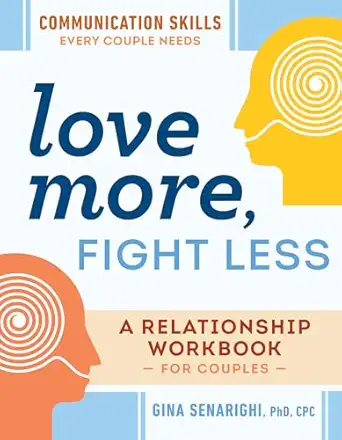
| Love More | Couples communication | Relationship workbook | Couples seeking to strengthen their bond |
| Healthy Communication With You | Healthy partner communication | Relationship communication guide | Partners seeking healthier communication patterns |
| Communicate Your Feelings | Expressing feelings without escalating conflict | Practical relationship guide | Partners seeking better conversation dynamics |
| Love & Respect: The Love She M | Love and respect between spouses | Marriage relationship guide | — |
| The Seven Principles for Makin | Making marriage work | Practical marriage guide | Married couples |
| The Two-Pen Relationship Workb | Trust building | Couples workbook | Couples seeking structured relationship work |
| The Practical Marriage Counsel | Communication improvement | Marriage counseling workbook | Married couples |
| The Practical 30 Day Couples T | Rebuilding trust | Couples therapy workbook | Couples seeking a short structured program |
| Communication Skills for Coupl | Communication skills | Relationship communication guide | Couples and married partners |
| Before You Say "I Do": A Marri | — | Marriage preparation guide | Couples preparing for marriage |
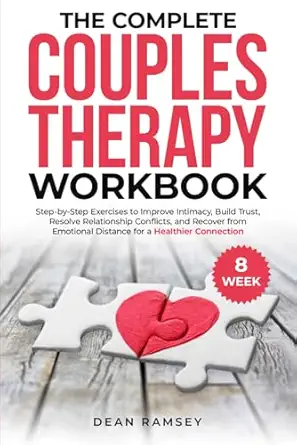
| The Complete Couples Therapy W | Recovery from emotional distance | — | — |
| Relationship Workbook for Coup | — | — | — |
| Reconnect: A Marriage Counseli | — | — | — |
| Couples Therapy Workbook: Stra | — | — | — |
| Rebuilding Trust: Guided Thera | Rebuilding trust | — | — |
More Details on Our Top Picks
Love More, Fight Less: Communication Skills Every Couple Needs
I rank Love More, Fight Less highly for couples who want to practice better communication rather than only read about relationship theory. Unlike Healthy Communication With Your Partner, which centers on empathy and emotional intelligence, this workbook uses exercises to help both partners examine recurring conflict patterns and strengthen understanding. Its action-oriented format gives couples concrete material for shared sessions at home, making it a useful bridge between self-help reading and formal counseling. Compared with The Seven Principles for Making Marriage Work, however, its focus appears narrower and offers less of a broad framework for marriage health. The available product information also says little about its depth or progression. I see it as a strong choice for cooperative couples, but partners facing betrayal, abuse, or entrenched hostility will need more specialized support.
Pros:- Exercises turn communication concepts into shared practice
- Targets conflict resolution and mutual understanding
- Supports couples who want an active workbook format
- Can provide structure for regular relationship check-ins
Cons:- Narrower than books that address the wider foundations of marriage
- Requires consistent participation from both partners
- Available details do not establish how advanced or extensive the exercises are
Best for: Couples who are willing to complete communication exercises together and want a structured way to reduce recurring arguments
Not ideal for: Partners dealing with abuse, severe distrust, or one-sided participation, since a general communication workbook cannot replace specialized professional support
- Content type:Relationship workbook
- Primary focus:Couples communication
- Core method:Practical exercises and guided insights
- Conflict goal:More effective conflict resolution
- Connection goal:Greater understanding and intimacy
- Intended audience:Couples seeking to strengthen their bond
- Use style:Partner-based skill practice
Our verdict“This is my workbook pick for couples who want to rehearse healthier communication together, provided both partners are ready to participate.”
Healthy Communication With Your Partner: Discover the Benefits of Communicating with Emotional Intelligence, Empathy & Effective Listening Skills to Turn Conflict into Connection
Healthy Communication With Your Partner earns its place through a clear emphasis on emotional intelligence, empathy, and active listening. I would choose it for partners whose arguments worsen because each person feels dismissed or misunderstood. Compared with Communicate Your Feelings (Without Starting a Fight), this book appears less centered on scripting one person’s message and more concerned with how both people receive and interpret it. That distinction can help couples turn disagreements into connection instead of simply improving phrasing. The drawback is limited information about the book’s structure, exercises, and depth, so buyers cannot readily judge how much guided practice it contains. It also has a tighter communication focus than The Seven Principles for Making Marriage Work. I would not make it the first choice for couples primarily rebuilding trust after a major breach.
Pros:- Connects communication skills with emotional intelligence
- Places empathy at the center of conflict repair
- Emphasizes effective listening rather than persuasive speaking alone
- Frames conflict as an opportunity for connection
Cons:- Available information does not clarify the amount of guided practice
- Covers a narrower problem set than a full marriage guide
- May be insufficient for relationships affected by major betrayal or unsafe behavior
Best for: Couples whose conflicts are driven by poor listening, low emotional awareness, or feeling unheard during difficult conversations
Not ideal for: Couples seeking a detailed trust-repair program or a broad marriage framework beyond communication
- Content type:Relationship communication guide
- Primary focus:Healthy partner communication
- Core skill:Effective listening
- Emotional framework:Emotional intelligence
- Interaction style:Empathy-led communication
- Conflict goal:Turning conflict into connection
- Intended audience:Partners seeking healthier communication patterns
Our verdict“This makes the most sense for couples who need to listen and respond with greater empathy before tackling wider relationship issues.”
Communicate Your Feelings (Without Starting a Fight): What to Say and What Not to Say to Your Partner
I would place Communicate Your Feelings (Without Starting a Fight) ahead of broader guides for readers who freeze, accuse, or become defensive when discussing emotions. Its what-to-say and what-not-to-say approach promises direct help with phrasing, which makes it more immediately usable than the principle-based Love & Respect. Compared with Healthy Communication With Your Partner, it appears to focus more on expressing a message safely than on building the listener’s empathy and emotional intelligence. That narrower scope is both its advantage and its limit: buyers can target one recurring problem without working through a large counseling program, but they may receive less help with trust, intimacy, or long-standing relational patterns. The available description also leaves the depth and format unclear. I favor it for lower-intensity conflict, not crisis-level relationship repair.
Pros:- Offers a direct focus on expressing feelings safely
- Distinguishes helpful language from counterproductive phrasing
- Links communication choices with emotional wellness
- Targets a common trigger for avoidable arguments
Cons:- Narrower than a full couples-counseling workbook
- Available details do not reveal the depth of its exercises or examples
- Communication scripts alone may not address underlying resentment or distrust
Best for: Readers who struggle to express hurt, needs, or frustration without triggering defensiveness or escalating an argument
Not ideal for: Couples needing extensive work on trust, intimacy, or entrenched conflict patterns beyond conversational phrasing
- Content type:Practical relationship guide
- Primary focus:Expressing feelings without escalating conflict
- Guidance style:What-to-say and what-not-to-say advice
- Core skill:Healthy emotional expression
- Conflict goal:Avoiding unnecessary fights
- Wellness focus:Emotional wellness between partners
- Intended audience:Partners seeking better conversation dynamics
Our verdict“I recommend this to readers who need practical language for emotionally charged talks more than a full relationship-repair program.”
Love & Respect: The Love She Most Desires; The Respect He Desperately Needs
Love & Respect offers the lineup’s most clearly defined relationship lens: wives are framed as seeking love, while husbands are framed as seeking respect. I include it for married couples who identify with that gender-specific framework and want practical guidance on meeting perceived emotional needs. It differs sharply from Love More, Fight Less, which teaches shared communication skills without making its main distinction between husbands and wives. Compared with The Seven Principles for Making Marriage Work, this title also relies on a simpler central premise rather than a wider set of relationship principles. That simplicity can make its advice memorable, but it is also the major drawback. The framing may feel rigid, exclusionary, or inaccurate for same-sex couples, nonbinary partners, and marriages that do not follow traditional roles. I would choose it only when both spouses already find its premise useful.
Pros:- Builds its advice around a clear and memorable central idea
- Encourages attention to a partner’s emotional needs
- Provides practical guidance for strengthening marital bonds
- May resonate strongly with couples who share its traditional framework
Cons:- Gender-specific premise can oversimplify individual emotional needs
- Limited fit for couples outside traditional heterosexual marriage roles
- Offers a narrower framework than multi-principle marriage guides
Best for: Heterosexual married couples who share a traditional view of spousal roles and relate to the book’s love-and-respect distinction
Not ideal for: Same-sex couples, nonbinary partners, or spouses who find gender-based emotional categories restrictive or inaccurate
- Content type:Marriage relationship guide
- Primary focus:Love and respect between spouses
- Relationship context:Marriage
- Core framework:Love for wives and respect for husbands
- Guidance style:Insights paired with practical advice
- Connection goal:Mutual understanding
- Intended outcome:A stronger marital bond
Our verdict“This is a focused choice for traditionally minded spouses who already connect with its gender-based love-and-respect framework.”
The Seven Principles for Making Marriage Work: A Practical Guide from the Country’s Foremost Relationship Expert
I rank The Seven Principles for Making Marriage Work as Best Overall because it offers a broader marriage framework than the communication-only options in this group. Rather than targeting a single conversational habit, its seven-principle structure gives couples multiple ways to examine and strengthen a lasting partnership. That makes it a more versatile starting point than Communicate Your Feelings (Without Starting a Fight), which is better suited to wording difficult emotions, or Healthy Communication With Your Partner, which concentrates on empathy and listening. Breadth brings a tradeoff: readers wanting a workbook-led schedule may prefer Love More, Fight Less, while unmarried or casually dating partners may find the marriage emphasis less relevant. The expert-led framing also asks readers to engage with a full relationship model rather than grab a few quick scripts. I see it as the strongest first purchase for spouses seeking durable, wide-ranging guidance.
Pros:- Covers marriage more broadly than communication-only books
- Organizes guidance around seven memorable principles
- Pairs expert perspective with practical relationship advice
- Works as a strong starting point for long-term marital improvement
Cons:- Marriage-specific framing may be less relevant to dating couples
- Broader scope can feel less direct than a targeted communication guide
- Readers wanting a scheduled workbook program may need more structured exercises
Best for: Married couples who want a broad, principle-based guide for improving friendship, conflict management, and long-term partnership
Not ideal for: Readers seeking only quick conversation scripts or a short, tightly scheduled couples workbook
- Content type:Practical marriage guide
- Primary focus:Making marriage work
- Framework:Seven relationship principles
- Guidance source:Relationship expert perspective
- Approach:Practical, principle-based advice
- Intended audience:Married couples
- Intended outcome:A lasting and loving partnership
Our verdict“This is my best overall choice for married couples who want one broad guide rather than a book limited to a single communication problem.”
The Two-Pen Relationship Workbook for Couples: An 8-Week Program Built for Both of You
I rank The Two-Pen Relationship Workbook for Couples as the best choice for partners who want equal participation rather than one person reading and relaying advice. Its side-by-side written activities turn counseling concepts into shared conversations, while 15-minute exercises keep the workload manageable. Unlike The Practical 30 Day Couples Therapy Workbook, this book spreads the work across eight weeks, giving couples more time to practice between sessions. It is also more participation-focused than Communication Skills for Couples, which takes a conventional advice-led approach. The tradeoff is that the two-pen format requires mutual commitment; it will stall if either partner dislikes writing or feels pressured. Limited information about the individual exercises also makes its depth harder for me to judge. Still, its balanced structure gives both voices room on the page.
Pros:- Side-by-side format encourages equal participation from both partners
- Eight-week structure provides a clear path through the material
- Fifteen-minute exercises fit into busy schedules
- Activities address trust, conflict, and relationship strength
Cons:- Both partners must be willing to write and participate consistently
- Available product information does not reveal the depth or variety of the exercises
- The eight-week schedule may feel slow to couples seeking a shorter intervention
Best for: Couples who can commit to completing short written exercises together over an eight-week period
Not ideal for: Partners who prefer private reflection, audio guidance, or conversation without written assignments
- Content type:Couples workbook
- Program length:8 weeks
- Exercise duration:Approximately 15 minutes
- Participation format:Two partners working side by side
- Method:Interactive written activities
- Primary focus:Trust building
- Additional focus:Conflict resolution
- Intended audience:Couples seeking structured relationship work
Our verdict“I recommend this workbook for couples who want a manageable, collaborative routine and are equally willing to put their thoughts on paper.”
The Practical Marriage Counseling Workbook: Therapy-Based Exercises to Improve Communication, Rebuild Intimacy, and Create a Safe, Loving Relationship That Lasts a Lifetime
The Practical Marriage Counseling Workbook earns its place for married couples trying to repair several connected problems rather than address communication alone. I see its therapy-based exercises as the main distinction: the material targets communication, intimacy, emotional safety, and lasting stability within one workbook. That scope is broader than Communication Skills for Couples, while its marriage-specific framing separates it from The Two-Pen Relationship Workbook for Couples. The drawback is limited transparency. The available information does not state the number of exercises, chapter structure, or supporting therapeutic framework, so I cannot tell how progressive or demanding the program becomes. It may also feel too repair-oriented for newly engaged partners, who are better matched with Before You Say “I Do.” For spouses facing overlapping areas of disconnection, though, the multi-issue focus offers a more unified plan than a narrow communication guide.
Pros:- Combines communication and intimacy work in one resource
- Uses practical exercises described as therapy-based
- Places emotional safety at the center of marriage repair
- Targets lasting relationship habits rather than a single dispute
Cons:- The number and sequence of exercises are not specified
- The underlying therapeutic methods are not identified in the provided information
- Marriage-specific framing may exclude unmarried couples
Best for: Married couples who want guided exercises addressing communication, intimacy, and emotional safety together
Not ideal for: Engaged couples seeking premarital planning or readers who want a clearly documented session-by-session schedule
- Content type:Marriage counseling workbook
- Method:Therapy-based practical exercises
- Intended audience:Married couples
- Primary focus:Communication improvement
- Intimacy focus:Rebuilding closeness
- Relationship goal:A safe, loving marriage
- Program length:Not specified
Our verdict“I would choose this for spouses who need broad relationship repair and value exercises more than a fixed completion schedule.”
The Practical 30 Day Couples Therapy Workbook: Strategies to Rebuild Trust and Improve Communication
I place The Practical 30 Day Couples Therapy Workbook highest for couples who respond well to a deadline and a daily routine. Its 15-minute daily exercises create more immediate momentum than the eight-week schedule in The Two-Pen Relationship Workbook for Couples, while the focus on trust, communication, and intimacy is broader than Communication Skills for Couples. That compact schedule is also the central compromise: 30 consecutive days may be harder to maintain, and couples dealing with serious betrayal may need more time and professional support than a workbook can provide. The description calls its strategies proven, but the available data does not identify the methods or supply reader feedback, limiting independent evaluation. For partners who want clear short-term accountability, the format is appealing; those who prefer slower reflection may find the daily pace too compressed.
Pros:- Thirty-day framework creates a defined finish line
- Daily exercises take about 15 minutes
- Addresses trust, communication, and intimacy together
- Habit-based approach encourages regular relationship attention
Cons:- Daily participation may be difficult to sustain for a full month
- The therapeutic strategies are not identified in the available product details
- A compressed program may not allow enough time for complex trust repair
Best for: Busy couples who want a month-long daily routine for rebuilding trust and improving communication
Not ideal for: Couples facing severe betrayal or high-conflict dynamics that call for individualized professional care
- Content type:Couples therapy workbook
- Program length:30 days
- Daily time commitment:Approximately 15 minutes
- Program format:Daily exercises and habits
- Primary focus:Rebuilding trust
- Communication focus:Improving partner communication
- Intimacy focus:Deepening intimacy
- Intended audience:Couples seeking a short structured program
Our verdict“I recommend this pick for couples who want a focused month of daily work and can reliably protect 15 minutes each day.”
Communication Skills for Couples: Guide to Improve Communications, Resolve Conflict, Deepen Intimacy, Strengthen Marriage and Create a Healthy Relationship
Communication Skills for Couples is my focused pick for readers who see poor communication as the main source of relationship strain. Rather than organizing the work around a calendar, it offers practical communication and conflict guidance that couples can apply when disagreements arise. This makes it more flexible than The Practical 30 Day Couples Therapy Workbook, but less accountable for readers who need scheduled exercises. Its coverage of intimacy and marriage gives the advice a wider purpose, though The Practical Marriage Counseling Workbook appears better suited to couples seeking hands-on work across emotional safety and relationship repair. The main weakness is uncertainty about content depth and author credentials; the supplied information does not show how thoroughly the techniques are explained. I would treat it as a targeted skills guide, not a substitute for therapy or a full counseling course. Its narrower emphasis is useful when communication is the clear priority.
Pros:- Keeps communication improvement at the center of the guidance
- Connects conflict resolution with greater intimacy
- Flexible guide format does not require a daily schedule
- Addresses both marriage strength and broader relationship health
Cons:- No defined exercise schedule or program length is provided
- The available information does not establish content depth
- Author qualifications and therapeutic framework are not supplied
Best for: Couples with recurring misunderstandings who want flexible communication and conflict-resolution guidance without a timed program
Not ideal for: Readers who need a sequenced workbook, documented clinical framework, or intensive support for severe relationship distress
- Content type:Relationship communication guide
- Intended audience:Couples and married partners
- Primary focus:Communication skills
- Conflict focus:Conflict resolution
- Intimacy focus:Deepening intimacy
- Relationship goal:A stronger, healthier relationship
- Program schedule:Not specified
Our verdict“I would pick this for couples who want targeted communication guidance and do not need the accountability of a scheduled workbook.”
Before You Say “I Do”: A Marriage Preparation Guide for Couples
I chose Before You Say “I Do” for couples preparing for marriage rather than repairing an established pattern of disconnection. Its preventive, foundation-building approach sets it apart from The Practical Marriage Counseling Workbook, which concentrates on communication repair, renewed intimacy, and emotional safety within marriage. It also asks for less of a formal program commitment than The Two-Pen Relationship Workbook for Couples. That flexibility suits engaged partners who want discussion prompts and practical guidance without an eight-week schedule. The limitation is a lack of detail about the subjects, edition, and format, making it hard for me to judge how well it addresses finances, family expectations, values, or other common premarital concerns. Couples already dealing with broken trust may find its preparation focus too general. For readers approaching marriage, however, its stage-specific guidance is more relevant than a repair-centered counseling workbook.
Pros:- Tailored to couples preparing for marriage
- Emphasizes building a strong foundation before problems harden
- Offers practical guidance rather than a repair-only framework
- Suitable for partners who do not want a timed workbook
Cons:- Detailed topic coverage is not provided
- Format and edition information are unavailable
- Preparation-oriented advice may be too general for established relationship crises
Best for: Engaged or seriously committed couples who want practical conversations before marriage
Not ideal for: Long-married couples seeking intensive exercises for betrayal, emotional distance, or entrenched conflict
- Content type:Marriage preparation guide
- Intended audience:Couples preparing for marriage
- Relationship stage:Premarital
- Guidance style:Practical advice
- Primary purpose:Building a strong marital foundation
- Program schedule:Not specified
Our verdict“I recommend this guide for couples who want to discuss marriage expectations before the wedding rather than repair a relationship already in crisis.”
The Complete Couples Therapy Workbook: Step-by-step exercises to Improve Intimacy, Build Trust, Resolve Relationship Conflicts, and Recover from Emotional Distance for a Healthier Connection
I rank The Complete Couples Therapy Workbook as the strongest choice here for partners who feel disconnected but still want to work together. Its step-by-step exercise format covers intimacy, trust, and conflict, giving it a wider repair focus than Rebuilding Trust, which centers more narrowly on healing damaged trust. Compared with The Practical 30 Day Couples Therapy Workbook, this option does not advertise a fixed deadline, so couples can move at a pace that matches the difficulty of each discussion. That flexibility also creates its main weakness: no defined completion schedule means stalled progress is more likely. The supplied product information offers little detail about exercise depth or therapeutic framework, and the work depends on honest participation from both partners. I would place it above less structured communication guides when emotional distance is the main concern.
Pros:- Step-by-step activities give couples a practical starting point
- Addresses trust, intimacy, conflict, and emotional distance together
- Flexible pacing can accommodate difficult conversations
- Designed for active participation by both partners
Cons:- No stated timeline may make it easier to lose momentum
- Available information does not identify the therapeutic framework or exercise depth
- Progress relies heavily on sustained effort from both partners
Best for: Long-term couples experiencing emotional distance who can complete structured exercises together at their own pace
Not ideal for: Couples wanting a fixed weekly schedule or partners unwilling to participate equally in written and conversational exercises
- Format:Couples therapy workbook
- Structure:Step-by-step exercises
- Primary focus:Recovery from emotional distance
- Additional topics:Intimacy, trust, and conflict resolution
- Participation model:Joint couple activities
- Program duration:Not specified
- ASIN:B0DR2MM3LL
Our verdict“I recommend this workbook for mutually committed couples who need a broad, paced route back from emotional distance.”
Relationship Workbook for Couples: 8-Week Program and Proven Strategies to Rebuild Trust, Resolve Conflict, Improve Communication, and Rekindle Intimacy
Relationship Workbook for Couples earns its place through a clearly defined eight-week program, making it easier to schedule sessions and measure forward movement. That gives it an accountability advantage over The Complete Couples Therapy Workbook, which offers step-by-step work without a stated finish line. Its coverage of trust, conflict, communication, and intimacy also suits couples facing several connected problems rather than one isolated disagreement. The closest rival is The Two-Pen Relationship Workbook for Couples, another eight-week choice, but that book expressly emphasizes participation from both people; the supplied information for this pick does not describe an equivalent two-person mechanism. I see the fixed schedule as both strength and constraint. Eight weeks demands consistency, while the limited product detail leaves the depth and basis of its “proven” strategies unclear. Buyers who prefer open-ended pacing may find the structure too rigid.
Pros:- Eight-week framework creates a clear finish line
- Covers several linked relationship problems in one program
- Practical exercises turn broad goals into scheduled work
- Structured pacing can support accountability
Cons:- The fixed eight-week commitment may be difficult to maintain
- Supplied details do not explain the therapeutic basis of the strategies
- No clearly described mechanism for balancing participation between partners
Best for: Schedule-oriented couples who want a defined two-month plan covering communication, trust, conflict, and intimacy
Not ideal for: Couples with unpredictable schedules or buyers who want clearly documented therapy methods before committing
- Format:Relationship workbook
- Program length:8 weeks
- Method:Strategies and practical exercises
- Trust goal:Rebuilding trust
- Communication goal:Conflict resolution and improved communication
- Intimacy goal:Rekindling intimacy
- ASIN:B0DW985LFT
Our verdict“I would choose this for couples who work best with deadlines and want a broad relationship program laid out across eight weeks.”
Reconnect: A Marriage Counseling Workbook: Guided Conversations & Exercises for a Long-Lasting Relationship
I would pick Reconnect: A Marriage Counseling Workbook for married partners who need help starting productive conversations, not just reading communication advice separately. Its combination of guided dialogue and shared exercises gives it a more conversational identity than Communication Skills for Couples, while its long-term relationship framing feels less deadline-driven than Relationship Workbook for Couples and its eight-week program. That makes Reconnect approachable for ongoing maintenance as well as repairing a fading connection. The tradeoff is a lack of disclosed detail: the supplied information does not show how many exercises are included, how sessions progress, or which counseling methods shape them. Its marriage-specific framing may also feel less inclusive to unmarried partners. I rank it behind broader therapy workbooks for couples facing layered trust or intimacy problems, but ahead of general advice books for partners who benefit from prompts.
Pros:- Guided prompts can reduce the friction of starting hard conversations
- Pairs conversation work with practical couple exercises
- Well matched to long-term relationship maintenance
- Shared activities encourage participation from both spouses
Cons:- Supplied information does not reveal exercise count or progression
- Marriage-centered wording may not suit every couple
- Less targeted than books devoted specifically to trust repair
Best for: Married or long-term partners who communicate more easily when given specific prompts and shared discussion exercises
Not ideal for: Unmarried couples seeking inclusive language or buyers who need a detailed, time-bound recovery program
- Format:Marriage counseling workbook
- Activity types:Guided conversations and exercises
- Primary goal:Reconnection
- Relationship focus:Long-lasting partnerships
- Intended users:Couples and married partners
- Program duration:Not specified
- ASIN:0593689887
Our verdict“I recommend Reconnect to long-term partners who want conversation prompts more than a rigid repair schedule.”
Couples Therapy Workbook: Strategies to Connect, Restore Love and Trust, Improve Communication, Intimacy, and Validation
Couples Therapy Workbook stands apart by naming validation alongside communication, trust, and intimacy. I see that emphasis as useful for partners whose fights are fueled by feeling dismissed or misunderstood. Communicate Your Feelings (Without Starting a Fight) is more tightly focused on wording during conflict, while this workbook reaches beyond conversation scripts toward restoring affection and connection. Compared with Rebuilding Trust, it also addresses a wider set of everyday relationship needs rather than centering the entire process on trust repair. Breadth is the compromise: the supplied description does not reveal how deeply any topic is covered, so couples with a specific betrayal or entrenched conflict pattern may want a more specialized guide. There is also no stated schedule to sustain momentum. I rank this as the best validation-focused choice, especially when emotional acknowledgment is missing but the relationship needs work in several areas.
Pros:- Explicitly treats emotional validation as a relationship skill
- Connects communication work with trust and intimacy
- Broader scope than a conflict-script guide
- Practical workbook format supports active discussion
Cons:- Topic breadth may limit depth in any single area
- No stated sequence or completion schedule
- Available details do not identify the underlying therapy approach
Best for: Couples whose recurring conflicts involve feeling unheard, dismissed, or emotionally unrecognized
Not ideal for: Partners recovering from a major breach of trust who need a narrowly focused, staged healing plan
- Format:Couples therapy workbook
- Method:Strategies, exercises, and guidance
- Distinctive topic:Emotional validation
- Communication focus:Improving partner communication
- Connection focus:Restoring love, trust, and intimacy
- Program duration:Not specified
- ASIN:B0BRMT2928
Our verdict“I would choose this for couples who need to feel heard as much as they need better conflict skills.”
Rebuilding Trust: Guided Therapy Techniques and Activities to Restore Love, Trust, and Intimacy in Your Relationship
I rank Rebuilding Trust as the most focused option for couples healing after trust has been damaged. Its guided therapy techniques and activities connect trust repair with restoring love and intimacy, giving partners practical work rather than broad encouragement. The Complete Couples Therapy Workbook covers conflict and emotional distance more widely; this book makes more sense when a specific breach of trust is the central problem. Couples Therapy Workbook also includes trust, but spreads its attention across communication, validation, and connection. That narrower scope is valuable for targeted repair, yet it may feel repetitive or incomplete for couples whose main difficulty is everyday conflict. The supplied data does not identify a timeline, technique sequence, or formal therapeutic model, which limits advance evaluation. I would also treat it as a self-guided aid, not a substitute for professional help when there is abuse, coercion, or an acute relationship crisis.
Pros:- Maintains a clear focus on trust repair
- Combines guided techniques with practical activities
- Links restored trust with love and intimacy
- More targeted than broad all-purpose couples workbooks
Cons:- Narrow focus may not address wider conflict patterns
- No stated timeline or sequence for the activities
- Supplied information does not name the therapeutic model
Best for: Couples addressing a defined breach of trust who want guided activities tied to emotional and intimate repair
Not ideal for: Couples dealing with active abuse, coercion, acute crisis, or primarily communication-based disagreements
- Format:Relationship therapy guide
- Method:Guided techniques and activities
- Primary focus:Rebuilding trust
- Emotional goal:Restoring love
- Intimacy goal:Strengthening intimacy
- Program duration:Not specified
- ASIN:0593435591
Our verdict“I recommend this focused guide when damaged trust is the relationship’s main barrier and both partners are ready to work on repair.”

How We Picked
I ranked these books by clarity of purpose, quality of the counseling framework, and how readily a couple could turn the material into changed behavior. I gave more weight to books that connect communication, conflict, trust, and intimacy without reducing every disagreement to one simple cause. I also compared whether each title offers concrete scripts, guided questions, repeatable exercises, or a defined program rather than relying mainly on encouragement. The highest positions went to books with a clear audience and usable method, not merely the broadest list of promised outcomes.
I then weighed time commitment, the need for participation from both partners, emotional difficulty, and the risk that a framework might feel rigid or dated. Accessible communication guides scored well for beginners, but they ranked below deeper programs when their scope was too narrow for recurring relationship patterns. Workbooks gained ground when their structure supported steady practice, yet they lost ground if completing them seemed likely to become another source of pressure. I assigned specialist roles based on the problem each book addresses best, which is why Before You Say "I Do" leads for premarital preparation and Rebuilding Trust leads for betrayal recovery rather than competing for the overall spot.
Factors to Consider When Choosing Relationship Counseling Books
I would choose a relationship book by matching its method to the couple’s actual problem, not by selecting the title with the biggest promises. The most useful distinction in this roundup is between skill-building guides, shared workbooks, and books aimed at one defined relationship stage or rupture.
Start With the Relationship Problem You Can Name
I recommend identifying the main repeating problem before comparing authors or formats. A couple who struggles to express frustration needs communication scripts, while a couple dealing with betrayal needs a framework that addresses accountability, boundaries, and the slow return of trust. Choosing a broad marriage guide for a specific rupture can leave both partners feeling that the hardest issue has been sidestepped. The reverse mistake also happens: a crisis-focused workbook may feel unnecessarily heavy when the real need is better listening during ordinary disagreements. If several problems overlap, I would prioritize the one causing the most emotional distance or instability. That choice narrows the field more effectively than selecting a book because its subtitle lists every possible benefit.
Choose Between Reading and Doing
A conventional guide can explain patterns quickly, but a workbook asks the couple to practice new responses and record what happens. I favor a reading-led book when one or both partners are skeptical, short on time, or new to relationship work. A structured workbook makes more sense when the couple already agrees on the goal and can reserve regular time without treating the exercises like homework imposed by one person. The common mistake is buying an ambitious program because it appears more serious, then abandoning it after the opening sessions. Completion matters less than repeatable use; one exercise that changes a weekly argument can be more valuable than ten unfinished chapters. Couples who dislike writing can also adapt prompts into spoken check-ins rather than rejecting a useful framework outright.
Match the Book to Both Partners’ Commitment
Some books work well as private learning tools, while others depend on active participation from both people. I would not choose a paired workbook if one partner has clearly refused scheduled exercises, since the empty pages can magnify resentment. In that situation, an individual reader may gain more from a concise communication guide that teaches calmer requests, boundaries, and listening habits. A shared program becomes more valuable when both partners want equal space and need a neutral structure to keep one voice from dominating. Couples should agree on session length, the right to pause, and which topics are off-limits outside the exercise before they begin. That small agreement makes the book feel like a shared resource rather than an assignment.
Relationship books often carry assumptions about gender, marriage, faith, sexuality, and household roles, even when those assumptions are not prominent in the title. I recommend sampling the framework before buying when a book presents different emotional needs as fixed traits of men and women. Such a model may feel affirming to couples who share that worldview, but it may distort conflicts in relationships that do not follow traditional roles. A flexible framework should leave room for personality, culture, power differences, and changing responsibilities. Readers should also watch for advice that treats harmony as more important than personal safety or consent. The best fit is a book whose core language both partners can accept without having to translate every lesson.
Pay for Structure, Not Page Count
A higher price makes sense when the book provides a well-designed sequence, reusable worksheets, clear session goals, or space for both partners to respond. Extra pages alone do not create extra value, especially when several chapters repeat the same principle in slightly different language. I would pay more for a guided program when a couple wants an alternative to assembling prompts from several shorter books. A focused paperback can still offer better value when the need is a single skill, such as stating feelings without escalating an argument. Digital editions may be convenient for reading, but print is often easier when partners need to write separately or refer to one page during a discussion. The useful comparison is cost per completed exercise, not cost per page.
Know When a Book Is Not Enough
I see relationship counseling books as tools for education and guided conversation, not substitutes for professional care in every situation. A book cannot provide real-time mediation when discussions repeatedly become threatening, coercive, or emotionally overwhelming. Active abuse, fear, stalking, forced sexual contact, or control over money and movement calls for specialized support focused on safety rather than joint exercises. Couples facing addiction, severe depression, trauma symptoms, or an affair with ongoing deception may also need a qualified clinician alongside any reading. Even in lower-risk situations, therapy is the better next step when the same exercise repeatedly ends in shutdown or escalation. The right book should create more clarity and safer dialogue; if it produces the opposite, I would stop using it together.
Frequently Asked Questions
Should We Read the Same Book Together or Buy Separate Copies?
I recommend one shared copy for a conventional guide if both partners are comfortable discussing passages as they go. Separate copies are better for a workbook when each person needs private writing space before comparing answers. A format such as The Two-Pen Relationship Workbook for Couples is designed around visible participation, so its shared structure may remove the need for duplicate books. Couples should never pressure each other to reveal every private note, since reflection can lose value when it feels monitored. The deciding factor is whether sharing a copy supports conversation or quietly turns reading into supervision.
Can a Relationship Counseling Book Replace Couples Therapy?
A book can be enough for mild communication problems, preventive work, or couples who want a vocabulary for recurring disagreements. It cannot observe tone, interrupt a damaging exchange, or tailor an exercise to trauma, culture, and power differences the way a skilled therapist can. I would treat a book as a first-line resource when both partners feel safe and can repair disagreements without intimidation. Therapy is the stronger choice when there is fear, coercion, repeated betrayal, or rapid escalation. Many couples can also combine the two by using a book between sessions and discussing difficult exercises with their clinician.
Which Book Type Is Best for an Unmarried or Engaged Couple?
Engaged couples usually gain more from a premarital guide than from a book written mainly for repairing years of resentment. Before You Say "I Do" is the clearest fit in this lineup because its purpose is preparation rather than crisis response. I would look for prompts covering expectations about money, family, children, faith, sex, careers, and conflict habits. Unmarried couples who are not planning a wedding may prefer a general communication book that does not assume marriage is the only goal. The best choice is the one that helps both people compare expectations before those differences become fixed disputes.
What If My Partner Refuses to Read or Complete Exercises?
I would choose a book that still offers useful individual skills rather than buying a program built entirely around paired worksheets. One person can improve how requests are phrased, recognize escalation patterns, set boundaries, and listen without immediately defending. That effort cannot create mutual accountability on its own, and the reader should not take responsibility for repairing the entire relationship. A concise option such as Communicate Your Feelings (Without Starting a Fight) is more workable here than an eight-week shared course. If refusal is paired with ridicule, intimidation, or punishment for raising concerns, outside support is more appropriate than repeated invitations to read together.
Should I Choose a Communication Book or a Trust-Rebuilding Workbook?
I would choose a communication book when the core problem is how partners speak, listen, and handle ordinary conflict. A trust-rebuilding workbook is better after lying, infidelity, broken agreements, or another event that has changed whether one partner feels emotionally safe. Communication tools may make those discussions calmer, but they do not replace accountability or a clear repair plan. Rebuilding Trust is the more focused option in this lineup for that kind of rupture, while Love More, Fight Less better suits recurring conflict without a central betrayal. When both problems are present, start with safety and accountability, then add general communication practice.
Conclusion
For most couples, my best overall recommendation is The Seven Principles for Making Marriage Work because it combines a credible framework with broad usefulness across friendship, communication, and conflict. For value and a lighter commitment, I would choose Love More, Fight Less; beginners who mainly need language for tense conversations should start with Communicate Your Feelings (Without Starting a Fight). My premium, depth-first workbook pick is The Complete Couples Therapy Workbook, while couples who want equal participation should choose The Two-Pen Relationship Workbook for Couples. For specific needs, Before You Say "I Do" is the strongest premarital option, and Rebuilding Trust is the better match after betrayal or broken agreements. The right final choice depends less on the longest feature list than on whether both partners can accept the framework and follow its process consistently.
Columbus Day / Indigenous Peoples' Day Picks
long weekend sales
As an affiliate, we earn on qualifying purchases.