

Understanding your attachment style helps you see how trust, intimacy, and emotional support influence your relationships and self-esteem. If you tend to worry about rejection, you might have an anxious style, while emotional distance suggests avoidant tendencies. Childhood experiences shape these patterns, affecting how you connect today. Recognizing these styles empowers you to develop healthier bonds and boost confidence. Continuing to explore this area reveals ways to foster secure attachments and emotional well-being.
Key Takeaways
- Recognizing attachment styles helps women understand relationship patterns and emotional needs.
- Secure attachment fosters trust, confidence, and healthier connections for women.
- Insecure attachment styles (anxious, avoidant, disorganized) can impact women’s self-esteem and intimacy.
- Addressing early childhood experiences and seeking therapy can promote secure attachments.
- Awareness of attachment styles supports women’s mental health and long-term relationship satisfaction.
Exploring Secure Attachment and Its Benefits for Women

Secure attachment is a highly beneficial style for women because it fosters trust, emotional closeness, and effective communication in relationships. When you develop secure attachment, you’re better equipped to navigate challenges through emotional resilience, maintaining stability even during stressful times. Attachment therapy can help strengthen this style by addressing past wounds and building healthier patterns. Women with secure attachment tend to have higher self-esteem and more satisfying relationships because they openly share their needs and feelings without fear of rejection. This attachment style encourages mutual understanding and support, creating a safe space for emotional expression. Additionally, understanding attachment styles can help women recognize their own patterns and foster personal growth. As a result, you experience deeper intimacy and long-term relationship satisfaction, laying a strong foundation for personal growth and emotional well-being.
Recognizing Anxious Attachment and Its Impact on Relationships

Recognizing anxious attachment in relationships is essential because it often manifests through persistent worries about rejection and a constant need for reassurance. You might notice yourself:
- Constantly seeking validation from your partner.
- Overanalyzing their words and actions for signs of rejection.
- Feeling uneasy when emotional independence is encouraged.
- Struggling with attachment avoidance, fearing emotional closeness.
These behaviors stem from a fear of abandonment and difficulty trusting intimacy. Anxious attachment can cause emotional highs and lows, making stability hard to achieve. It’s important to distinguish between healthy emotional independence and clinginess fueled by attachment anxiety. Understanding performance tuning laws and principles can help you address underlying fears, fostering healthier connections and reducing the impact of anxious attachment on your relationships.
Understanding Avoidant Attachment and Emotional Boundaries

If you have an avoidant attachment style, you might use emotional distance strategies to protect yourself from closeness. Setting boundaries can feel challenging, as you often prioritize independence over intimacy. Understanding these patterns helps you recognize how they influence your relationships and emotional boundaries. Exploring dog names can also reflect your personality traits and preferences, offering insight into your individual style.
Emotional Distance Strategies
Understanding avoidant attachment involves recognizing how some women instinctively create emotional distance as a way to protect themselves from vulnerability. You might do this by setting firm emotional boundaries or withdrawing when intimacy feels overwhelming. This strategy helps you manage attachment avoidance but can also limit deep connection. Imagine these tactics:
- Keeping conversations superficial to avoid revealing true feelings
- Refraining from sharing personal struggles to maintain control
- Staying emotionally detached during conflicts
- Limiting physical or emotional closeness to preserve independence
These behaviors serve as emotional distance strategies, shielding you from potential hurt. Additionally, understanding the horsepower of electric dirt bikes can provide insight into how much energy and effort you can allocate to managing emotional boundaries and relationships. Recognizing this pattern allows you to understand how attachment avoidance shapes your approach to emotional boundaries and relationships.
Boundary Setting Challenges
Setting boundaries is a common challenge for women with avoidant attachment styles, especially when emotional distance has become a protective habit. You may struggle with boundary awareness, finding it difficult to recognize when your emotional independence is compromised or when others’ needs push past your comfort zone. This can lead to avoiding intimacy or withdrawing instead of asserting your limits. Building healthier boundaries requires understanding your emotional signals and practicing self-awareness. It’s important to distinguish between healthy independence and emotional detachment. Recognizing warning signs of disengagement can help you identify when you’re pulling away too much. By developing boundary awareness, you can protect your emotional well-being without shutting others out entirely. Overcoming boundary setting challenges involves balancing your need for independence with openness, allowing genuine connections to form while maintaining your sense of safety.
The Roots and Effects of Disorganized Attachment in Women

Disorganized attachment in women often stems from childhood trauma, which creates confusing feelings around trust and intimacy. This style can lead to significant barriers in forming healthy relationships and trusting others. Inadequate maintenance of emotional health can exacerbate these issues, making recovery more challenging. Fortunately, understanding these roots opens the door to healing through specific recovery strategies.
Childhood Trauma Origins
Childhood trauma plays a significant role in the development of disorganized attachment in women, often stemming from unpredictable or frightening experiences with caregivers. These experiences, like sudden outbursts or neglect, create confusion and fear, making it difficult to trust or feel safe. Over time, this can lead to deep-seated insecurities and emotional chaos. Imagine:
- A caregiver’s unpredictable mood swings, leaving you unsure of what to expect.
- Moments of childhood neglect, where your needs were ignored or dismissed.
- Frequent frightening encounters, such as harsh punishments or emotional withdrawal.
- Feelings of abandonment during critical moments of development.
- The impact of Western media on shaping perceptions of holidays and social norms, which can influence emotional development and social interactions later in life.
Attachment therapy can help address these roots, but unresolved childhood neglect often leaves lasting scars, impacting your ability to form secure relationships.
Trust and Intimacy Barriers
Trauma and unpredictability during early life often create deep trust and intimacy barriers for women with disorganized attachment. You may struggle with attachment and independence, feeling torn between craving closeness and fearing vulnerability. This internal conflict makes trusting others difficult, as your past experiences can lead to confusion about emotional safety. As a result, emotional resilience might be compromised, causing you to feel overwhelmed by intimacy or push others away to protect yourself. These barriers hinder forming deep connections, leaving you unsure how to balance closeness with personal boundaries. Recognizing these patterns is essential, as they stem from early trauma and influence current relationship dynamics. Developing awareness helps you gradually work through trust issues, although it requires patience and a commitment to healing.
Healing and Recovery Strategies
Understanding the roots of disorganized attachment involves recognizing how early life experiences shape your emotional responses and relationship patterns. To heal, you can focus on strategies that address these deep-seated issues:
- Seek therapy, like trauma-informed or attachment-focused counseling, to explore childhood experiences and parenting styles that influenced you.
- Practice self-awareness through journaling or mindfulness to identify emotional triggers linked to disorganized attachment.
- Develop healthy boundaries and communication skills to rebuild trust and intimacy gradually.
- Prioritize your career development by building confidence and independence, which fosters a sense of security and self-esteem.
- Educating yourself about tableware and its cultural significance can also serve as a metaphor for understanding the importance of nurturing and establishing healthy environments in your relationships.
These steps help you create a stable foundation, encouraging healthier relationships and personal growth despite past challenges.
How Attachment Styles Influence Self-Esteem and Well-Being

Attachment styles directly shape your self-esteem and overall well-being, influencing how you view yourself and interact with others. For example, secure attachment boosts confidence, while anxious attachment may cause self-doubt. Your attachment style also impacts areas like attachment and career, where confidence and trust in colleagues matter. Social media use can amplify insecurities if your attachment style is insecure, leading to comparison or validation seeking. Here’s a quick overview:
| Attachment Style | Self-Esteem Impact | Well-Being Effect |
|---|---|---|
| Secure | High self-esteem, resilient | Greater happiness and stability |
| Anxious | Lower self-esteem, self-critical | Increased stress, emotional swings |
| Avoidant | Detached self-view, reluctance to trust | Loneliness, emotional suppression |
| Disorganized | Fluctuating self-image, confusion | Psychological distress, instability |
Additionally, developing awareness of your attachment style can promote mental health and foster healthier relationships.
The Role of Early Childhood Experiences in Shaping Attachment
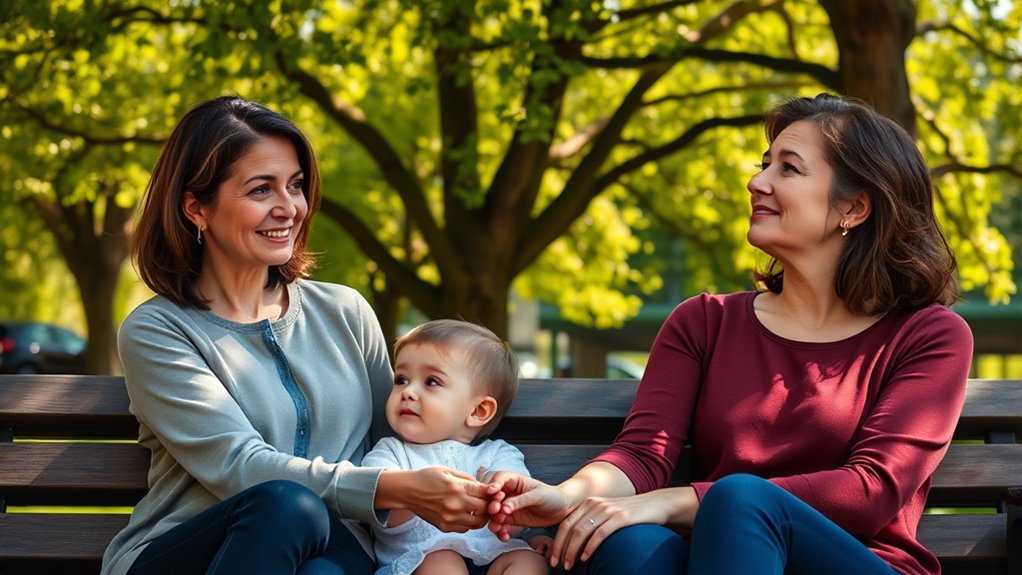
Early childhood experiences with caregivers play a pivotal role in shaping your attachment style as an adult. Your parental influence and childhood memories create a foundation for how you connect with others later in life. Imagine:
Early childhood bonds shape your adult relationships and emotional trust.
- A mother soothing a crying baby, fostering trust and security.
- A caregiver gently guiding a toddler through new experiences, encouraging independence.
- A parent consistently available during times of distress, reinforcing reliability.
- Childhood memories of warmth or neglect shaping your sense of safety and trust.
These moments, whether nurturing or neglectful, influence how you view intimacy, trust, and emotional closeness today. Your early experiences set the stage for your attachment style, shaping how you relate to others and perceive relationships in adulthood.
Strategies for Developing Secure Attachments and Healthy Relationships

Building secure attachments and fostering healthy relationships requires intentional effort and self-awareness. One effective strategy is engaging in attachment therapy, which helps you understand and reframe past relationship patterns. Developing emotional resilience is also essential; it allows you to manage setbacks and build trust over time. Practice open communication, expressing your needs honestly and listening actively to your partner. Setting healthy boundaries protects your emotional well-being and encourages mutual respect. Cultivating self-compassion boosts your self-esteem and reduces attachment anxiety. Incorporating essential oils for emotional balance, such as lavender or frankincense, into your self-care routine can also support your journey toward trust and stability. Consistently working on these areas helps create a secure base, making it easier to form deep, trusting connections. Remember, developing secure attachments is a process, and patience, along with self-awareness, plays a key role in achieving healthier relationships.
Frequently Asked Questions
How Can Women Improve Insecure Attachment Styles in Adulthood?
To improve insecure attachment styles, you should focus on developing emotional regulation and increasing self-awareness. Practice mindfulness to stay present and manage intense feelings, which helps reduce anxiety or avoidance. Reflect on your relationship patterns to understand triggers and underlying beliefs. Seeking therapy can guide you through healing past wounds and building healthier attachment behaviors, leading to more secure connections and better emotional stability in your relationships.
Are Attachment Styles Fixed or Can They Change Over Time?
Attachment styles aren’t fixed; they can change over time with effort, reflecting attachment flexibility and personality evolution. You can develop healthier patterns through self-awareness, therapy, and building secure relationships. By understanding your attachment style, you actively work toward emotional growth and resilience. Remember, change takes time, but with commitment, you can shift towards more secure attachment traits, improving your relationships and overall well-being.
What Role Do Cultural Factors Play in Women’s Attachment Styles?
Cultural factors, like norms and gender expectations, shape your attachment style by influencing how you experience and express emotions. If your culture emphasizes independence, you might develop avoidant tendencies, while cultures valuing emotional closeness foster secure attachment. Gender expectations can also affect trust and intimacy, leading women to adopt specific attachment behaviors. Recognizing these cultural influences helps you understand your relationship patterns and work towards healthier emotional connections.
How Does Attachment Style Influence Women’s Mental Health Beyond Relationships?
Your attachment style directly affects your mental health beyond relationships by shaping your emotional resilience and self-awareness. If you have a secure style, you’re more likely to bounce back from stress and recognize your emotional needs. Conversely, anxious or avoidant styles can lower your self-esteem and increase vulnerability to anxiety or depression. Developing awareness of your attachment patterns helps you build healthier coping mechanisms and strengthen your overall psychological well-being.
Can Therapy Effectively Transform Disorganized Attachment in Women?
You can turn over a new leaf with therapy, as it offers hope for transforming disorganized attachment. Attachment therapy and emotional healing help women address past trauma and develop healthier relationship patterns. While change takes time, consistent effort can rewire deep-seated behaviors and foster trust. Keep in mind, healing is a journey, and with patience, you can strengthen your emotional foundation and build more secure connections.
Conclusion
Understanding your attachment style empowers you to build healthier relationships and boost your well-being. Recognizing patterns from your past helps you make conscious choices and foster secure connections. Are you ready to embrace growth and nurture the relationships you deserve? Remember, your attachment style doesn’t define your future—your willingness to understand and change it does. Take the first step today toward healing and genuine connection.