

To use mattresses effectively in a relationship, choose a size and firmness that suit both of your sleep preferences, and test options before buying. Communicate openly about sleep habits and comfort needs, and consider using separate blankets or a dual-zone mattress for better support. Keep routines consistent, create a relaxing environment, and address any underlying stressors to enhance sleep quality. If you continue exploring, you’ll find more smart tips for a peaceful shared sleep space.

Get gifts for the two of you delivered free — and shop member deals
- Fast, free delivery on millions of items
- Access to Prime Big Deal Days deals on October 6–7
- Prime Video, Amazon Music and more included
Key Takeaways
- Choose a mattress size and firmness that accommodate both partners’ comfort preferences.
- Use separate blankets or bedding to minimize disturbance from movement and temperature differences.
- Communicate openly about sleep habits, routines, and comfort needs for better sleep harmony.
- Consider dual-zone firmness or adjustable mattresses to meet individual support requirements.
- Maintain consistent sleep schedules and create a relaxing environment to enhance shared sleep quality.
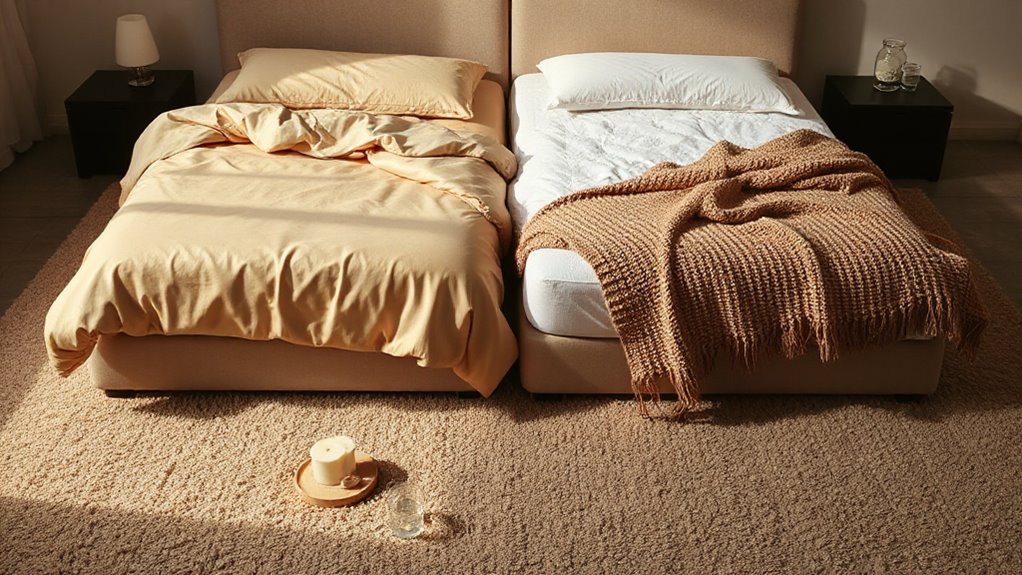
Sharing a mattress in a relationship can be both rewarding and challenging, especially if you’re not sure how to make it work for both partners. It’s natural for two people to have different sleep habits, preferences, and comfort needs. The key is finding a balance that allows both of you to rest well and feel connected without sacrificing your individual comfort. One of the first things to consider is choosing the right mattress. Opt for a size that gives each of you enough space to move freely—consider a queen or king if you tend to toss and turn a lot. The mattress should also align with your preferred firmness. Some people sleep better on a softer surface, while others need more support. Don’t be afraid to test out different options before buying; many stores allow trial periods so you can find what truly works for both of you.
Communication plays a vital role in making shared sleep arrangements successful. Talk openly about your sleep habits, such as whether you’re a light or heavy sleeper, if you tend to kick or move around, or if you prefer a cooler or warmer sleeping environment. Being honest about these preferences helps in selecting bedding, pillows, and sleep routines that accommodate both partners. It’s also worth discussing bedtime routines—whether you like to read, watch TV, or keep lights on—so you can create a comfortable environment that minimizes disruptions. Sometimes, small adjustments like using separate blankets or investing in a mattress with dual-zone firmness can make a big difference. Separate blankets allow each partner to control their own side’s temperature and weight, reducing the chances of sleep disturbances caused by movement or preferences.
In addition, understanding the importance of somatic therapy techniques for emotional well-being can be beneficial if sleep issues are related to stress or trauma; addressing these underlying factors can improve overall sleep quality.
Finally, prioritize establishing good sleep habits together. Stick to consistent bedtimes and wake-up times to help your bodies sync. Avoid heavy meals, caffeine, or screens before bed, as these can interfere with sleep quality. If one of you has a different schedule or sleep pattern, consider a mattress with motion isolation—so movement doesn’t disturb the other. Remember, sharing a mattress isn’t just about physical comfort; it’s about fostering a sense of partnership and respect for each other’s needs. Be patient and willing to make adjustments, and don’t hesitate to explore different sleep accessories or routines that can enhance your shared sleep experience. When both partners feel heard and comfortable, sleeping together can strengthen your relationship rather than strain it.
queen size adjustable firmness mattress
As an affiliate, we earn on qualifying purchases.
As an affiliate, we earn on qualifying purchases.
Frequently Asked Questions
How Can Couples Address Differing Mattress Firmness Preferences Effectively?
You can address differing mattress firmness preferences by having open conversations with your partner. Try visiting stores together to test different options, and consider a split mattress or mattress topper to satisfy both needs. Communicate honestly about comfort levels and be willing to compromise. Remember, prioritizing mutual comfort helps strengthen your relationship and guarantees both of you get restful sleep.
What Are the Best Mattress Types for Couples With Different Sleep Needs?
You’ll want a mattress that’s versatile enough to satisfy both of your needs. Hybrid mattresses combine the support of innerspring with the plush comfort of foam, making them perfect for couples with different sleep preferences. Memory foam contours to your body, reducing motion transfer, while adjustable beds let you customize firmness on each side. By choosing a flexible, adaptable mattress, you can create a sleep sanctuary that feels like a five-star hotel for both of you.
How Do I Choose a Mattress That Minimizes Motion Transfer?
To choose a mattress that minimizes motion transfer, look for models with memory foam or latex layers, as they absorb movement better than traditional innerspring beds. Avoid mattresses with bouncy coils, which can transfer motion easily. Test the mattress by moving around on it before buying, and consider a hybrid with a foam top layer for extra motion isolation. This way, you’ll sleep soundly even if your partner moves during the night.
What Mattress Features Help Reduce Partner Disturbance During Sleep?
Think of your mattress as a calm pond; you want gentle ripples, not stormy waves. Look for a mattress with pocketed coils or memory foam, which absorb your partner’s movements like a soft sponge. These features isolate motion, making sure you’re not jolted awake by their tossing and turning. A medium-firm feel often strikes the perfect balance between support and motion absorption, helping both of you drift into peaceful sleep.
How Often Should Couples Replace Their Mattress for Optimal Sleep Quality?
You should replace your mattress every 7 to 10 years to guarantee ideal sleep quality. Over time, mattresses lose support and become less comfortable, which can cause discomfort and affect your health. If you notice sagging, persistent aches, or restless nights, it’s time for a new one. Regularly upgrading your mattress helps you wake up refreshed and reduces sleep disturbances, making your nights more restful.
As an affiliate, we earn on qualifying purchases.
Conclusion
Remember, your mattress is the stage where intimacy unfolds like a tender dance, each night weaving closer bonds. By choosing the right mattress, maintaining comfort, and communicating openly, you set the scene for love to flourish. Think of it as tending a garden—nurture it, and it will blossom beautifully. So, invest in your sleep space, and watch your relationship grow stronger, one restful night at a time. Your perfect harmony starts with a good mattress.
As an affiliate, we earn on qualifying purchases.
As an affiliate, we earn on qualifying purchases.
Fall Picks
fall essentials
As an affiliate, we earn on qualifying purchases.