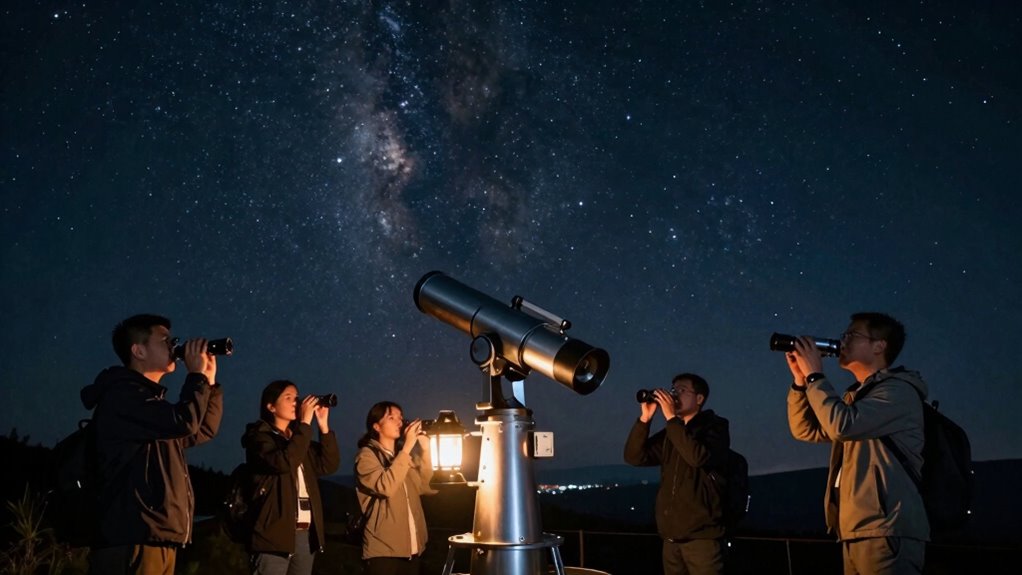

Telescopes turn quiet nights into shared experiences by bringing people together to marvel at celestial wonders. When you invite friends or fellow enthusiasts to look through a telescope, you create moments of awe and curiosity that bond everyone. Respectful etiquette and proper maintenance guarantee everyone enjoys the view, while sharing fascinating facts sparks interest. This collective wonder transforms solitary stargazing into memorable community moments, making the universe feel closer — and there’s much more to discover if you keep exploring.
Key Takeaways
- Telescopes facilitate group observation, transforming solitary stargazing into communal exploration.
- Sharing telescope views sparks curiosity and conversations among friends and enthusiasts.
- Proper maintenance ensures clear, enjoyable views that encourage collective discovery.
- Explaining celestial phenomena enhances group engagement and learning during stargazing sessions.
- Respectful etiquette and a welcoming atmosphere foster a sense of community around shared wonder.
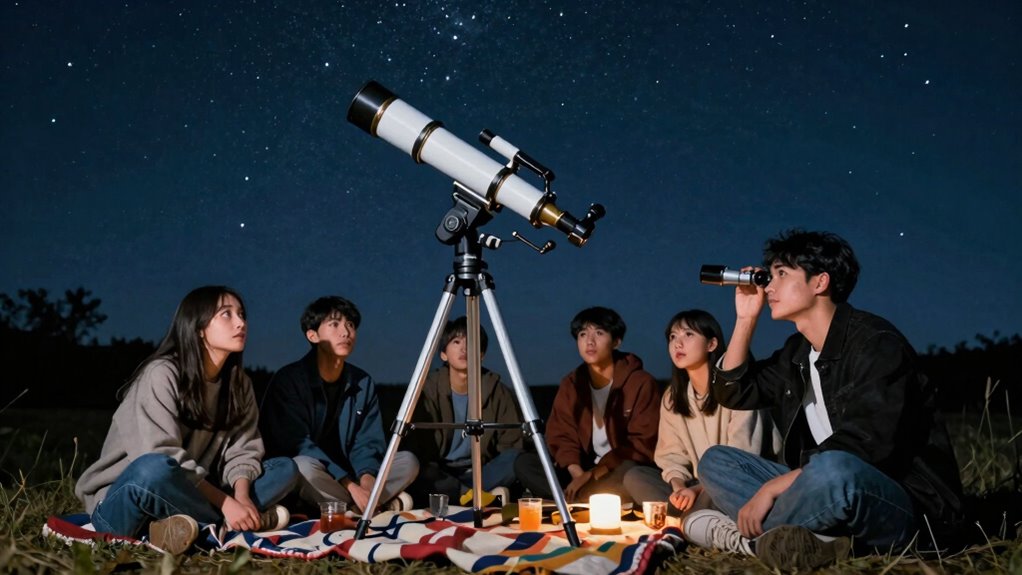
Have you ever looked through a telescope and felt a sense of wonder that’s hard to match? The vastness of the night sky suddenly becomes intimate, revealing distant galaxies, shimmering stars, and celestial wonders that spark curiosity. Sharing this experience with others transforms a quiet night into a memorable event. When you invite friends or fellow enthusiasts to look through your telescope, you create a space for connection and discovery. But to ensure everyone enjoys the experience, it’s essential to follow good stargazing etiquette. Respect others’ turns, keep noise levels down, and be patient. Remember, everyone’s here to marvel at the universe, so creating a welcoming atmosphere encourages shared fascination. Proper stargazing etiquette also involves avoiding bright lights or flashlights that can ruin night vision, ensuring everyone can see the sky clearly. It’s about fostering respect for the group’s experience and maintaining the tranquility that makes stargazing so special.
Equally important is telescope maintenance. A well-maintained telescope guarantees clear views and smooth operation, making the experience more enjoyable for everyone involved. Before heading out, check your equipment—clean the lenses gently with proper supplies, and ensure the mount is stable. Regularly calibrate and align your telescope so it’s ready to track objects accurately. This effort minimizes frustration and maximizes the time spent exploring the night sky. When sharing your telescope, teach others basic maintenance tips, like how to focus properly or how to handle the equipment carefully. Handling your telescope gently and storing it safely after use prolongs its lifespan and keeps it ready for future shared adventures. Proper maintenance also involves keeping the optical elements free of dust and smudges, which can obscure images and diminish the wonder of celestial sights. Additionally, understanding the importance of biodiversity in ecosystems can inspire a deeper appreciation for the universe’s interconnectedness, fostering a holistic sense of wonder. Recognizing the interconnectedness of celestial bodies and ecosystems can deepen your overall appreciation for the universe’s complexity and beauty. To enhance the experience, consider learning about astronomical phenomena so you can better understand what you’re observing and share interesting facts with fellow stargazers. Exploring these phenomena can also deepen your understanding of the universe’s dynamics, making the experience even more engaging.
Ultimately, the magic of turning quiet nights into shared experiences lies in your approach. Respect the night and your fellow stargazers through good etiquette, while keeping your equipment in top shape through diligent maintenance. These steps ensure everyone can enjoy the beauty of the cosmos, fostering a sense of community and curiosity that turns solitary stargazing into a collective journey of discovery. When you combine patience, respect, and care for your gear, you create a welcoming environment where the universe feels just a little closer, and the quiet of the night turns into a chorus of shared awe.

Celticbird Telescope for Adults High Powered, 80mm Aperture 600mm AZ Mount Refractor Telescope for Kids Beginners – Portable Telescopes for Adults Astronomy with Backpack, Phone Adapter, Moon Filter
- Optical Aperture: 80mm aperture for bright images
- Focal Length: 600mm focal length for clear viewing
- Light Transmission: Multi-coated optical lens for better light
As an affiliate, we earn on qualifying purchases.
As an affiliate, we earn on qualifying purchases.
Frequently Asked Questions
How Do Telescopes Enhance Social Interactions During Stargazing Events?
You enhance social interactions during stargazing events by sharing the wonder of galaxy clusters and lunar eclipses through your telescope. As you point out these celestial sights, you invite others to observe and discuss, creating a sense of community. The shared experience sparks curiosity and conversation, turning quiet nights into lively gatherings. Your telescope becomes a bridge that connects people and deepens their appreciation for the universe.
What Safety Precautions Should Be Taken When Using Telescopes Outdoors?
When using telescopes outdoors, prioritize ocular safety by never looking directly at the sun and always using proper filters. Weather preparedness is essential—check forecasts and dress appropriately for cold or damp conditions to avoid discomfort or damage. Secure your equipment on stable ground to prevent accidents, and keep your lens caps handy when not in use. These precautions guarantee a safe, enjoyable stargazing experience shared with others.
Can Telescopes Be Used Effectively in Urban Light-Polluted Areas?
Yes, you can still enjoy urban astronomy with a telescope, despite light pollution. Use a telescope with a larger aperture to gather more light and improve visibility of celestial objects. Find the darkest spot possible away from streetlights, and consider using light pollution filters. These tools help you see planets, bright stars, and some deep-sky objects, turning your urban nights into memorable shared experiences despite the challenges of light pollution.
How Do Different Types of Telescopes Compare for Group Viewing?
Imagine you’re hosting a stargazing night with friends, and you choose between a Dobsonian and a refractor telescope. The Dobsonian offers excellent optical clarity and easy mount stability, making it ideal for group viewing of deep-sky objects. Refractors, while providing sharp images, tend to be more portable but may be less stable on uneven ground. Your choice depends on your focus—deep-sky or planetary observation—and ease of use.
What Beginner Tips Help Maximize Shared Stargazing Experiences?
To maximize your shared stargazing, start with simple celestial navigation to identify constellations and planets, making the experience engaging for everyone. Keep your telescope well-maintained by cleaning lenses and checking alignment regularly, ensuring clear views. Invite others to help with setup and sharing observations, fostering a collaborative atmosphere. These tips make your nights more enjoyable, memorable, and inclusive, turning quiet moments into shared adventures under the stars.

1920 Antique Brass Spyglass Telescope 15-inch with Premium Leather Case, Collapsible 15x Clear Vision, Vintage Pirate & Explorer Collectible for Sailing, Birdwatching, Home & Ship Decor | Super7One
- High-Quality Optics: Clear, long-distance viewing with focus mechanism
- Versatile Use: Ideal for birdwatching, stargazing, sailing, and decor
- Perfect Gift Choice: Great for adventurers, collectors, and special occasions
As an affiliate, we earn on qualifying purchases.
As an affiliate, we earn on qualifying purchases.
Conclusion
So, when you look through a telescope, you’re not just gazing at distant stars—you’re revealing the universe itself. It’s like holding a tiny, cosmic spaceship in your hands, capable of transforming quiet nights into epic, unforgettable adventures. With each glimpse, you become part of something much bigger than yourself, connecting with countless others who’ve marveled at the cosmos for centuries. In those moments, the universe isn’t just out there—it’s right in your very eyes, waiting to be shared.
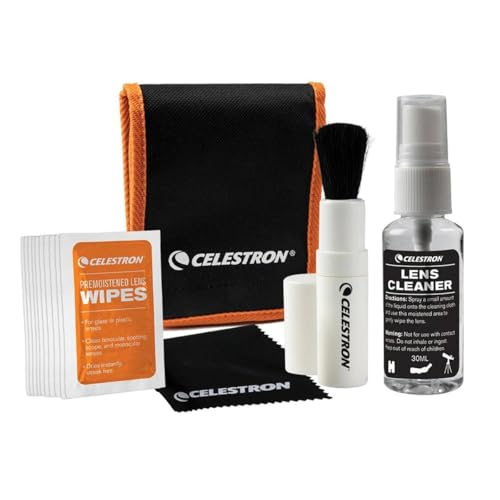
Celestron Lens Cleaning Kit for Telescopes, Binoculars & Cameras
- Universal lens cleaning kit: For telescopes, binoculars, cameras
- Streak-free cleaning: Ensures clear, spotless lenses
- Complete cleaning set: Includes 10 wipes, fluid, cloth, brush
As an affiliate, we earn on qualifying purchases.
As an affiliate, we earn on qualifying purchases.

Celestron SkyMaster 15×70 Astronomy Binoculars for Stargazing and Deep-Sky
- Powerful Magnification: 15x magnification for detailed viewing
- Large Objective Lenses: 70mm lenses for bright images
- Tripod Compatible: Includes ¼”-20 adapter for stability
As an affiliate, we earn on qualifying purchases.
As an affiliate, we earn on qualifying purchases.