
TL;DR

Get gifts for the two of you delivered free — and shop member deals
- Fast, free delivery on millions of items
- Access to Prime Big Deal Days deals on October 6–7
- Prime Video, Amazon Music and more included
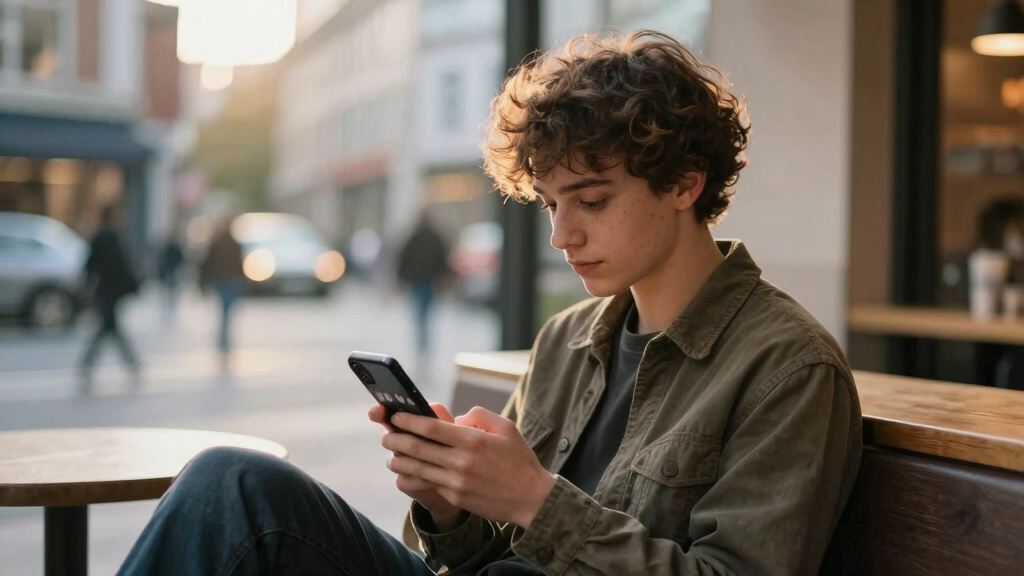
A new study shows that roughly 1% of social media users drive the culture — debates, trends, and outrage — while 90% remain silent. This challenges assumptions about online public opinion and influence.
New research reveals that approximately 1% of social media users generate the majority of debates, trends, and outrage, while the remaining 90% observe in silence. This finding challenges common perceptions of online public opinion and influence, highlighting a disproportionate contribution by a small minority.
The study, based on analysis of social media activity patterns, shows that the visible culture — including viral debates, trending topics, and influencer-driven outrage — is predominantly created by a tiny fraction of users. According to the research, this 1% actively shapes what appears to be the dominant narrative online, while the vast majority of users remain passive observers.
Experts caution that this skewed representation means the social media landscape may not accurately reflect the beliefs or opinions of the broader user base. An anonymous researcher explained that “the picture we see of online public opinion is profoundly distorted because it is driven by a small, highly active minority.”
While the findings are based on recent data analysis, it remains unclear how this dynamic influences real-world perceptions or policymaking, and whether platform algorithms amplify this imbalance.
Implications of Minority-Driven Online Culture
This research matters because it suggests that the visible social media environment is largely shaped by a small, vocal minority, which may distort perceptions of public opinion and influence. It raises questions about the authenticity of online debates and the impact of influencer-driven trends on broader societal discourse. For policymakers, marketers, and platform designers, understanding this imbalance is crucial to addressing issues like misinformation, polarization, and the true scope of user engagement.
As an affiliate, we earn on qualifying purchases.
Previous studies have noted the uneven distribution of activity on social media platforms, often described as a “90-9-1” rule, where 1% of users create most content, 9% engage occasionally, and 90% observe passively. The recent research confirms and quantifies this phenomenon, emphasizing that the “visible” culture — the debates and trends that dominate feeds — is primarily driven by the smallest segment.
This pattern has been discussed in academic circles and among platform analysts, but the new data underscores its significance in shaping societal perceptions of online consensus and influence. The findings arrive amid ongoing debates about platform responsibility and content moderation.
“the picture we see of online public opinion is profoundly distorted because it is driven by a small, highly active minority”
— an anonymous researcher
As an affiliate, we earn on qualifying purchases.
Unclear Impact on Broader Society
It is not yet clear how much this minority-driven culture influences real-world attitudes, voting behavior, or policy decisions. The extent to which passive observers are affected by the debates they rarely participate in remains uncertain, as does the potential for these dynamics to change over time.
social media trend tracking software
As an affiliate, we earn on qualifying purchases.
As an affiliate, we earn on qualifying purchases.
Future Research and Platform Responses
Researchers plan to further analyze how algorithms may amplify minority voices and whether platform design changes could encourage broader participation. Social media companies might also face increased scrutiny regarding the visibility of passive users and the authenticity of online discourse. Monitoring these developments will be key to understanding the evolving digital landscape.
content moderation tools for platforms
As an affiliate, we earn on qualifying purchases.
As an affiliate, we earn on qualifying purchases.
Key Questions
Why does only 1% of users generate most social media debates?
This pattern reflects a common online dynamic where a small, highly active minority produces the majority of content and engagement, while most users remain passive observers.
Does this mean social media opinions are not representative?
Yes, the study suggests that the visible culture on social media is largely shaped by a small minority, which may not accurately reflect the views of the broader user base.
How might this influence public perception and policy?
If policymakers and the public base opinions on the visible online debates, they might overestimate the consensus or intensity of certain issues, potentially skewing decision-making.
Will social media platforms change to address this imbalance?
It remains to be seen. Researchers and regulators are examining ways to encourage broader participation and reduce the influence of a small minority in shaping online culture.
Source: rss
Fall Picks
fall essentials
As an affiliate, we earn on qualifying purchases.