
TL;DR

Get gifts for the two of you delivered free with Prime
- Fast, free delivery on millions of items
- Prime Video, Amazon Music and more included
- Member-only deals all year
An EdSource analysis found that 45% of California K-12 students—more than 2.6 million—attend schools where 5% or less of student areas are covered by tree canopy. Heat exposure is also expanding: nearly 4,900 public schools were in areas rated high or severe heat risk on Oct. 5, almost twice the number on Aug. 10. Districts and advocates are adding shade and greenery, but funding and the scale of the need remain challenges.
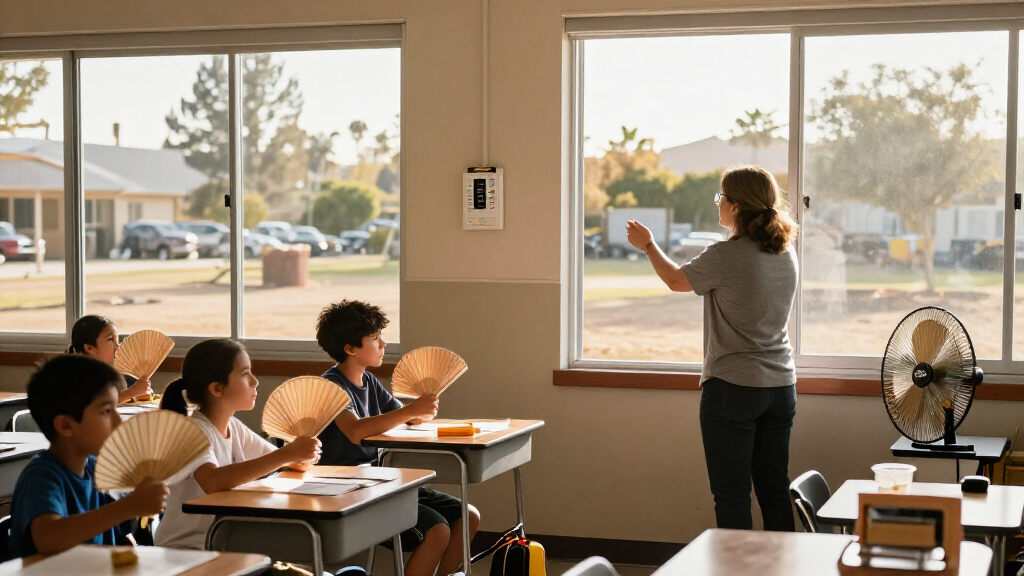
Nearly half of California’s K-12 students attend schools where tree canopy covers 5% or less of the areas students use, while thousands of campuses faced high or severe heat risk during an October heat wave, according to an EdSource analysis. The findings highlight a gap between rising heat exposure and the shade available on school grounds, as districts pursue tree-planting and other cooling measures.
The analysis found that more than 2.6 million students attend schools with little tree cover in student zones. The median canopy coverage in those areas is 6.4%, according to a report by Green Schoolyards America. EdSource found that 44% of public schools had 5% or less canopy in student areas, 45% had 6% to 15%, and about 11% had more than 15%.
The location of trees also affects how much shade students can use. Less than half of school tree canopy is accessible to students, while about 55% of trees and greenery are around perimeters, entrances or parking lots, according to the report. On Oct. 5, when a heat wave pushed temperatures close to 100 degrees in parts of Los Angeles and the Bay Area, about 4,900 public schools were in areas rated high or severe heat risk by the state. That was almost double the number on Aug. 10, the report said.
Some districts and state programs are changing campuses. At Parkway Elementary in Sacramento, a 2024 project with Green Schoolyards America transformed 15,000 square feet of schoolyard, adding 58 trees and 44 shrubs as well as support for teachers and tree care. Gov. Gavin Newsom also announced campus transformations at 215 schools through CalFire’s Green Schoolyards Grant Program, according to the report.
Heat Risk Meets Sparse Schoolyard Shade
School campuses are where children spend much of the day, and limited shade can make outdoor activities harder during hot weather. The report says districts have already reduced outdoor time and adjusted physical activities during summer sessions; experts are concerned that hotter conditions are extending into fall, when schools are fully in session. The Oct. 5 heat-risk snapshot shows how quickly the number of affected campuses can change across the school calendar.
Tree cover is one part of adapting, not a stand-alone answer. UCLA urban planning and geography professor Kelly Turner told EdSource that shade, air conditioning, swimming pools, changes to recess timing and water breaks can all help reduce heat stress. Planting and maintaining trees takes time, while other interventions may be needed to protect students during immediate heat events. The report also notes that school systems often lack funding for basic safety upgrades, making larger campus changes difficult.
Greener schoolyards may offer benefits beyond cooling. Advocates say natural spaces can create more opportunities for play, learning and socializing, and may support student well-being and behavior. Those benefits are presented as potential gains, not measured outcomes for every school in the analysis.
outdoor shade canopy for schoolyards
As an affiliate, we earn on qualifying purchases.
As an affiliate, we earn on qualifying purchases.
A Statewide Canopy Gap
California’s average summer temperatures have increased by roughly 3% since 1896, with more than half of that rise occurring since the 1970s, according to the Scripps Institution of Oceanography as cited by EdSource. The report also analyzed CalHeat scores, which assess heat risk. On Aug. 10, the week many students returned to school, about 2,600 public schools—more than a quarter of the state’s campuses—were in areas rated high heat risk. Nearly 60% of those schools were elementary schools; Los Angeles, Fresno and San Bernardino counties had the largest percentages of schools in such areas.
Schoolyard greening efforts are underway in different parts of the state, including projects at Washington Elementary in Berkeley and 122nd Street Elementary in Los Angeles. At Parkway Elementary, Sacramento City Unified sustainability manager Chamberlain Segrest said the project began with shade as its aim, then developed into a broader campus effort. Advocates have suggested that many schools target 30% shade or green space, though the supplied report does not say that target has been adopted statewide.
““We specifically need more trees where the need is the greatest, where the places the schools are in (are) the hottest environments and have the least capacity to change that themselves financially.””
— Sharon Gamson Danks, CEO and founder of Green Schoolyards America
As an affiliate, we earn on qualifying purchases.
Funding and Campus Plans Remain Unclear
The analysis describes canopy coverage and heat-risk snapshots, but the supplied report does not specify the year for the Aug. 10 and Oct. 5 observations. It also does not establish how many schools have since changed their shade coverage or how many of the announced projects are complete. The figures describe exposure and tree cover; they do not show how many students experienced heat illness or measure the effectiveness of particular interventions.
The report does not give a statewide cost estimate for reaching the suggested shade or green-space levels, or identify secured funding for every campus that may need upgrades. It is also unclear how quickly newly planted trees will provide usable shade. The analysis identifies geographic patterns, but the supplied material does not give school-by-school plans or timelines for the highest-risk areas.
As an affiliate, we earn on qualifying purchases.
Districts Face Near-Term Heat Decisions
During hot weather, districts can adjust recess and outdoor activity schedules, provide water breaks and use existing shade or air-conditioned spaces, measures Turner identified as short-term options. Longer-term work includes planting trees in student-use areas, maintaining them as they grow, and making campus infrastructure changes. The report does not provide a statewide timetable for those steps.
Further reporting and updated school data will be needed to show whether campuses in the highest-risk areas receive funding and whether new shade reaches students where they spend time. For families, the immediate practical question is how their school responds during heat alerts; the broader policy question is whether districts can sustain both short-term protections and longer-term campus improvements.
As an affiliate, we earn on qualifying purchases.
Key Questions
How many California students attend schools with very little tree cover?
EdSource found that more than 2.6 million K-12 students, or 45% of the state’s students, attend schools where tree canopy covers 5% or less of student-use areas.
How many schools faced high or severe heat risk in October?
About 4,900 public schools were in areas rated high or severe heat risk on Oct. 5, according to the analysis. That was almost double the number recorded on Aug. 10.
What are schools doing to reduce heat exposure?
Reported approaches include adding trees and other greenery, using shade and air conditioning, shifting recess times, providing water breaks and adjusting physical activities. The report does not say every school uses all of these measures.
Do the findings show that students are getting sick from heat?
No. The analysis reports school tree-canopy coverage and the number of campuses in heat-risk areas. It does not report student heat-illness figures or measure the health effects of specific projects.
Are all the reported schoolyard projects complete?
The report describes a 2024 transformation at Parkway Elementary and says the governor announced projects at 215 schools through a state grant program. The supplied material does not give completion dates for all the announced school projects.
Source: rss
Halloween Picks
halloween
As an affiliate, we earn on qualifying purchases.