
TL;DR

Get gifts for the two of you delivered free with Prime
- Fast, free delivery on millions of items
- Prime Video, Amazon Music and more included
- Member-only deals all year
A Motherly first-person essay, updated Oct. 21, 2026, describes a parent who organized her son’s birthday but felt too occupied with logistics to enjoy it. The writer says sharing planning with her husband, making tasks visible, and letting some extras go helped her be more present, though the account is personal rather than research evidence.
In a first-person essay updated Oct. 21, 2026, a parent describes planning her son Oliver’s eighth birthday so carefully that she spent much of the celebration managing the schedule instead of enjoying it with him. The Motherly account focuses on the invisible work behind family memories and the writer’s efforts to share that work with her husband and children.
The writer says the family’s birthday traditions included breakfast in bed, presents, dinner with relatives, cake and a moment when guests shared what they loved about Oliver. In the weeks beforehand, she handled food planning, shopping, gifts, decorations, cake arrangements and coordination with relatives, while also keeping up with work and daily family responsibilities.
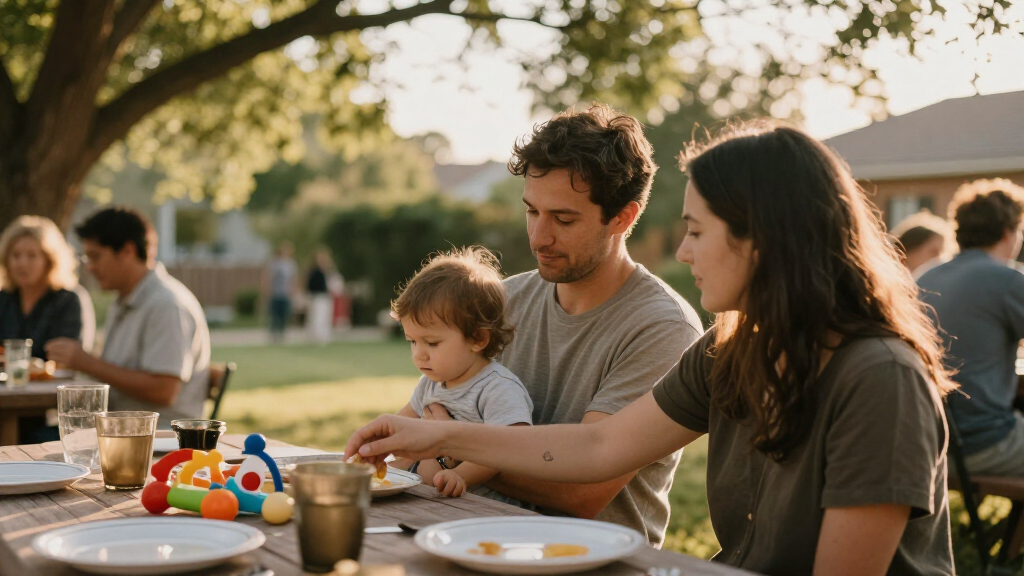
Although the celebration largely went as planned and Oliver was thrilled, the writer recalls leaving the children and grandparents as they played to clear dinner, set up dessert, find candles, gather everyone and take pictures. Afterward, she looked at photos that captured the gathering but said she could not recall feeling present with her son during the evening. The essay presents this as her own experience, not as a measured finding about parents generally.
The writer says she and her husband now divide preparation according to their interests and skills, discuss responsibilities before busy events and use a shared list to keep tasks visible. She also describes ordering food, asking others to bring dessert or dropping an extra task when it would add work without improving the occasion. She says these habits developed over years and that she still sometimes slips into what she calls “cruise-director mode.”
The Labor Behind Family Celebrations
The account highlights a tension many families may recognize: creating a memorable event takes planning, but the person coordinating it can become occupied with tasks while others experience the gathering. The writer’s example makes the distinction concrete: the birthday looked successful in photographs, yet she felt she had missed much of it in real time.
Her proposed changes shift the focus from simply doing less to sharing responsibility and making it explicit. A shared plan can help other family members take on tasks rather than relying on one person to remember every detail and direct the event. The essay also treats simplification as a legitimate option: some traditions can remain meaningful without every planned touch being completed.
These are the writer’s reflections and recommendations, not evidence that a particular app or planning method will work for every household. The broader relevance is practical: readers can use the story to think about who carries routine and occasion-specific work, and whether the work is leaving enough room to take part in the event itself.
Popular right now

Vitamix Touch & Go Advance 32-Ounce Bar Blender, White

Sony WH-1000XM5 Premium Noise Cancelling Wireless Headphones – Midnight Blue

Apple AirPods Pro 3 Wireless Earbuds with Active Noise Cancellation
As an affiliate, we earn on qualifying purchases.
From Birthday Planning to Presence
The essay begins with Oliver’s approaching eighth birthday, an event the family intended to keep familiar rather than extravagant. Its details matter because the work came from ordinary recurring traditions, not from a large or unusual production. The writer says each custom required preparation, even though the rituals themselves were simple.
She connects the birthday to other family activities, including holidays, vacations and weekend outings, which also involve advance planning. The writer identifies herself as the founder of Jam, a family organization and calendar app, and says she has spent time thinking about how to manage household mental load. That connection is relevant to her perspective; the essay does not provide independent testing or evidence of the app’s effectiveness.
Rather than claiming she solved the problem by deciding to be more present, the writer describes a gradual change in how the family plans. She says her children now take part in some discussions as they have grown older, and she also places value on unplanned moments, such as a quiet morning or extra time at bedtime.
What the Personal Account Shows
The report is a first-person account, and it does not establish how common this experience is among parents or whether the writer’s approach produces the same results for other families. It includes no survey data, outside expert comment or comparison of different ways of dividing household labor.
The writer says shared planning tools help her family, but the essay does not independently evaluate Jam or show that an app alone reduces mental load. It is also not clear how responsibilities are divided across all aspects of the household or how the approach may change as family needs change. Readers should understand the suggested strategies as the author’s own experience, not a universal prescription.
How the Family Plans Ahead
The writer says she and her husband continue to review plans before birthdays, trips and other busy days, deciding who will handle each task. Their children are increasingly included in those conversations. The account does not announce a new event or a formal program; its next step is the family’s continued use of shared planning and selective delegation.
For readers, the practical questions raised by the story are who holds the plans in mind, which tasks can be shared and whether each extra detail is worth the time it requires. The writer’s account suggests that some family memories may also come from ordinary, unplanned time, rather than from a perfectly organized occasion.
Key Questions
What is the Motherly story about?
It is a first-person essay about a parent who organized her son’s birthday but felt occupied with logistics instead of being present for much of the celebration.
What changes did the writer make?
She says she and her husband began dividing planning tasks, discussing the event plan ahead of time, using a shared list and delegating or dropping some extras.
Does the essay say every family should use an app?
No. The writer mentions a shared family organization app as one tool her household uses, but the account does not independently establish that an app is necessary or effective for every family.
Does the writer say she has fully solved the problem?
No. She says it took years to develop different habits and that she still sometimes slips into managing the event rather than participating in it.
Source: rss