

Your attachment style developed early in life influences how you connect with others, shaping trust, intimacy, and emotional regulation. If you have a secure style, you’re more likely to build healthy, trusting relationships. Insecure styles, like anxious or avoidant, can cause misunderstandings, conflicts, and emotional distance. Recognizing your attachment patterns helps you understand relationship behaviors and foster healthier bonds. Exploring how attachment styles impact relationships can provide insights to improve your emotional connections.
Key Takeaways
- Secure attachment promotes healthy communication, trust, and intimacy in relationships.
- Insecure attachment styles can lead to conflicts, mistrust, and difficulty with emotional closeness.
- Recognizing attachment patterns helps individuals address relationship challenges and foster stronger bonds.
- Attachment styles influence how partners handle conflict, support, and vulnerability.
- Improving attachment security enhances relationship satisfaction and emotional well-being.

Love More, Fight Less: Communication Skills Every Couple Needs: A Relationship Workbook for Couples
As an affiliate, we earn on qualifying purchases.
Understanding Attachment Styles and Their Origins

Understanding attachment styles begins with recognizing that they are patterns of bonding formed early in life, primarily through interactions with caregivers. These early experiences shape how you relate to others later, influencing trust, intimacy, and emotional regulation. Attachment in therapy helps uncover these patterns, allowing you to understand their origins and how they impact your adult relationships. These styles also extend beyond personal life, affecting attachment in the workplace—how you build trust with colleagues or handle conflicts. Recognizing your attachment style gives you insight into your behaviors and reactions, empowering you to develop healthier relationships both professionally and personally. By exploring these roots, you can work towards secure attachment, enhancing your emotional well-being and relational satisfaction. Understanding attachment patterns can be a valuable step toward fostering healthier connections.

The Talk Book: with six prize-winning talk tools that strengthen relationships and repair communication breakdowns
As an affiliate, we earn on qualifying purchases.
The Prevalence of Different Attachment Patterns in Adults

You might be surprised to learn that a significant portion of adults, around 38% to 60%, have a secure attachment style. In contrast, about 20% each tend to be anxious or avoidant, with some variations across demographics. Understanding these patterns helps explain how attachment influences relationships and individual well-being. Implementing mindful decluttering strategies can also foster healthier relationship dynamics by reducing stress and promoting emotional clarity.
Common Attachment Distributions
Among adults, attachment patterns vary widely, with certain styles being more common than others. About 38% to 60% report having a secure attachment, highlighting its prevalence. In contrast, anxious and avoidant styles each account for roughly 20%, indicating they are less frequent but still significant. Understanding these distributions helps you recognize how attachment influences therapy and parenting approaches. For example, those with secure attachment are more likely to develop healthy relationships and respond well to attachment-focused therapy. Meanwhile, individuals with insecure patterns may need targeted support to improve emotional regulation and relational skills. Recognizing the commonality of these attachment styles allows you to better appreciate their impact on adult social and romantic interactions, shaping how you approach relationship-building and personal growth. Additionally, exploring different personality traits can provide further insight into individual relationship behaviors and needs.
Demographic Variations
Research shows that the prevalence of attachment styles varies across different demographic groups. Cultural influences play a significant role in shaping attachment patterns, with some cultures emphasizing emotional closeness and others promoting independence. Socioeconomic factors also impact attachment, as individuals from higher socioeconomic backgrounds often experience more stable caregiving environments, leading to more secure attachment. Conversely, those facing economic hardship may encounter stressors that increase insecure attachment patterns, such as anxious or avoidant styles. Age and life experiences further influence these patterns; older adults tend to report more secure attachments, possibly due to life stability. Additionally, diverse designs in caregiving environments can contribute to variations in attachment styles across communities. Understanding these demographic variations helps you recognize that attachment styles are shaped by complex social and cultural contexts, affecting relationship behaviors and emotional well-being across different groups.

Communicate Your Feelings (Without Starting a Fight): What to Say and What Not to Say to Your Partner
As an affiliate, we earn on qualifying purchases.
How Attachment Styles Shape Romantic Relationships

Attachment styles play an essential role in shaping romantic relationships by influencing how individuals connect, communicate, and respond to their partners. Your attachment style affects how you approach intimacy and trust, determining whether you feel secure sharing your feelings or withdraw when vulnerable. Recognizing your cookie categories can help you understand the underlying factors that influence your relationship behaviors.
Consider these key ways attachment influences your relationship:
- Attachment and intimacy: Secure attachment fosters openness, while insecure styles may create barriers to emotional closeness.
- Attachment and trust: Trust develops more easily with secure attachment, whereas insecure styles can lead to suspicion or fear of betrayal.
- Relationship dynamics: Your attachment style shapes how you handle conflicts, support, and closeness, impacting overall relationship satisfaction.
Understanding these patterns helps you navigate challenges and cultivate healthier, more fulfilling romantic connections.
The Transmission of Attachment Styles Across Generations
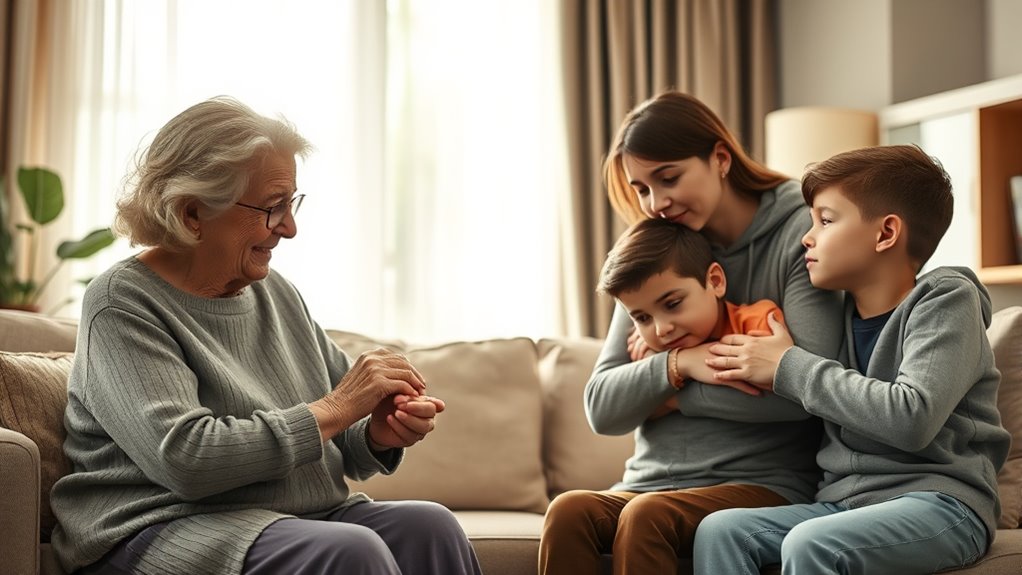
Your early interactions with caregivers heavily influence your attachment style and can be passed down to the next generation. Parental influence patterns often shape whether someone develops secure or insecure attachment behaviors. While these patterns tend to persist, experiences and intentional efforts can lead to meaningful changes over time. Incorporating essential oils for attachment may support emotional well-being and foster healthier relational patterns.
Parental Influence Patterns
Parents play a crucial role in shaping their children’s attachment styles through their interactions, emotional responses, and caregiving behaviors. Your parental influence directly impacts childhood bonding, which sets the foundation for future relationships. Factors that affect this transmission include:
- Consistency and responsiveness during caregiving, fostering feelings of safety and trust.
- Emotional availability, enabling children to develop secure attachments.
- Modeling behaviors that demonstrate healthy emotional regulation and intimacy.
- The use of effective skincare routines, such as glycolic acid exfoliation, can reflect a parent’s attention to health and self-care, indirectly influencing a child’s understanding of self-worth and personal grooming.
Early Life Shaping
Early life experiences play a crucial role in shaping the attachment styles you carry into adulthood. Childhood trauma, such as neglect or inconsistent caregiving, can lead to insecure attachment patterns, making it harder to trust or form close bonds. Conversely, positive early interactions foster emotional resilience, enabling you to manage relationship challenges better. When caregivers respond sensitively, you learn to regulate emotions and develop a secure base. However, if early experiences involve trauma or emotional neglect, these patterns may be transmitted across generations, influencing how you connect with others. Understanding this transmission highlights the importance of early life shaping in attachment development, emphasizing that your initial environment profoundly impacts your future relationship behaviors and emotional well-being. For example, growth conditions during childhood can significantly influence your ability to form healthy relationships later in life.
Potential for Change
While attachment styles are often transmitted across generations, they are not fixed and can change with effort and experience. Your self-awareness plays a pivotal role in this process. By recognizing your attachment patterns, you open the door to meaningful change.
Consider these approaches:
- Therapy techniques like EMDR or attachment-based therapy can help reframe past experiences and foster secure behaviors.
- Cultivating self-awareness allows you to identify and challenge automatic responses rooted in your attachment style.
- Consistently practicing emotional regulation and seeking supportive relationships can reinforce healthier patterns over time.
The Role of Attachment in Psychological Health and Resilience

Attachment styles play an essential role in shaping your psychological health and resilience. Your attachment style influences how you handle stress, setbacks, and emotional challenges. Secure attachment fosters better emotional resilience because you feel confident in seeking support and managing difficult feelings. Conversely, insecure styles like anxious or avoidant attachment can weaken your mental health by increasing vulnerability to anxiety, depression, and relationship conflicts. Attachment and mental health are deeply connected; a secure attachment provides a stable foundation for emotional regulation, helping you bounce back from adversity. Recognizing your attachment pattern allows you to develop healthier coping strategies, which enhances resilience. Understanding attachment styles can guide you in fostering healthier relationships and improving your overall well-being. Ultimately, cultivating a secure attachment style can improve your overall psychological well-being and your capacity to navigate life’s inevitable struggles.
Impact of Attachment Styles on Social Interactions and Networks

Your attachment style directly influences how you interact with others and build social networks. Secure individuals tend to foster trust, leading to healthier social media behavior and stronger support networks. Conversely, avoidant attachment may cause you to withdraw, preferring solitude and limiting social connections. Anxious attachment can result in clinginess or dependency, impacting the quality of your interactions. Consider these points:
- Attachment and trust shape your comfort in forming close bonds and sharing online.
- Social media behavior reflects attachment styles, with secure types engaging positively and insecure types displaying anxiety or avoidance.
- Your style influences the size and strength of your social support networks, affecting resilience and emotional well-being.
- Understanding attachment theory can help you recognize patterns in your social interactions and work towards healthier relationships.
Frequently Asked Questions
Can Attachment Styles Change Over a Person’s Lifetime?
Yes, your attachment style can change over your lifetime. Through new experiences, relationships, and intentional effort, you can influence your attachment style evolution. Lifelong attachment changes are possible, especially if you work on emotional regulation, communication, and trust. While early life influences your initial attachment pattern, growth and self-awareness can help you develop a more secure attachment style, leading to healthier relationships and better psychological well-being.
How Do Childhood Experiences Influence Adult Attachment Styles?
Your childhood experiences, especially early bonding with caregivers, shape your adult attachment styles. If you experienced consistent love and emotional support, you’re more likely to develop secure attachment. Conversely, inconsistent or neglectful care can lead to insecure styles like anxious or avoidant. These early interactions influence your emotional regulation skills, affecting how you connect and trust others in adult relationships. Your past truly molds your approach to intimacy and connection today.
Are Attachment Styles Different Across Cultures?
You might think attachment styles are universal, but cultural differences shape attachment variations. In some societies, independence and emotional restraint foster avoidant styles, while others emphasize closeness, promoting secure attachments. These cultural norms influence how people form bonds and express emotions. So, your attachment style isn’t fixed; it varies across cultures, reflecting different social expectations and values that mold your relational patterns and emotional connections.
What Are Effective Ways to Develop a Secure Attachment?
To develop a secure attachment, focus on improving emotional regulation and trust building. Practice mindfulness to manage your emotions effectively, which helps you respond calmly in relationships. Be consistent and honest, showing others they can rely on you, fostering trust. Engage in open communication, listen actively, and set healthy boundaries. Over time, these efforts strengthen your attachment style, making your relationships more secure and fulfilling.
Do Attachment Styles Affect Parenting Behaviors?
Parenting patterns profoundly influence your child’s future, shaped by your attachment style. If you’re securely attached, you likely practice nurturing, nurturing, and consistent parenting strategies, fostering positive emotional responses. Conversely, insecure attachment may lead to reactive, resistant, or withdrawn behaviors, affecting your ability to respond empathetically. Your attachment style impacts how you handle parenting challenges, influencing your emotional responses and, ultimately, your child’s emotional development and security.
Conclusion
Understanding your attachment style gives you powerful insight into your relationships and emotional well-being. Remember, “A chain is only as strong as its weakest link,” so recognizing and working through attachment patterns can strengthen your connections and resilience. By becoming aware, you can foster healthier relationships and break free from patterns that no longer serve you. Embrace this journey—your future connections depend on the understanding you build today.