
TL;DR

Get gifts for the two of you delivered free with Prime
- Fast, free delivery on millions of items
- Prime Video, Amazon Music and more included
- Member-only deals all year
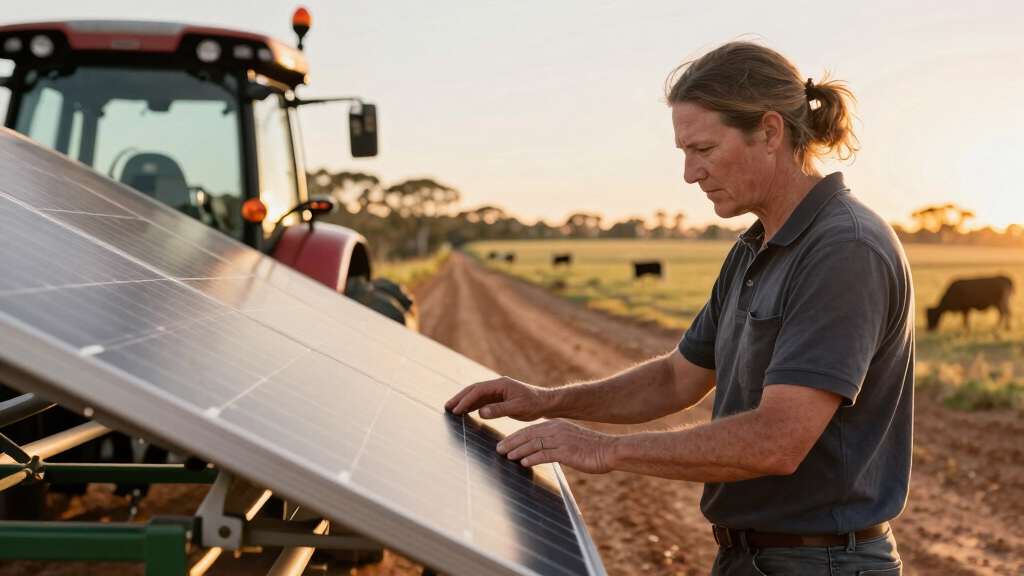
Australian farmers are advocating for increased support and policy reforms to transition to electric and renewable energy systems on farms. A new report highlights the potential for cost savings and greater resilience through electrification, especially in irrigation and stationary equipment.
Australian farmers are calling for government policy reforms to support the rapid adoption of electric and renewable energy systems on farms, aiming to reduce reliance on imported diesel and enhance energy security. The push follows a new report by Farmers for Climate Action that highlights the economic and resilience benefits of electrification for the agricultural sector.
The report, titled Energy Sovereignty for Regional Australia, emphasizes that fuel price hikes and supply disruptions have exposed vulnerabilities in the sector’s dependence on imported diesel. It advocates for policy measures such as capping the Fuel Tax Credit Scheme at $50 million per claimant to incentivize electrification while protecting farmers. The report notes that farmers are already electrifying irrigation and water pumps, with some heavy trucks now running on electric power.
Case studies within the report demonstrate significant potential cost savings: a 6,000-hectare seeding operation could reduce fuel energy use from 320 MWh to approximately 110 MWh by switching to electric tractors, with solar PV and battery storage providing the necessary power. The report suggests that initial electrification should focus on stationary, short-range tasks like irrigation, refrigeration, and workshops, before moving to mobile machinery as technology matures.
Implications of Electrification for Farm Costs and Resilience
The push for on-farm electrification is significant because it addresses both economic and strategic vulnerabilities. Reducing diesel dependency can lower operational costs, especially amid rising fuel prices, and improve resilience against supply disruptions. It also aligns with broader climate goals by supporting the transition to cleaner energy sources, which is critical for Australia’s agricultural sustainability and energy sovereignty.
As an affiliate, we earn on qualifying purchases.
Growing Adoption of Renewable Technologies in Australian Agriculture
Australian farmers have historically been early adopters of renewable energy, with some using remote area power supply units and solar pumps. The new report builds on this trend, highlighting ongoing projects and the potential for further electrification. Industry leaders and farmers see electrification as a key pathway to lower costs and increased resilience, especially as global markets develop more electric machinery options. Policy support and technological advancements are seen as essential to accelerate this transition.
“Why would we rely on imported diesel we can’t control when, with sensible shifts, we can help build the systems to get us to electric machines running on cheap, clean energy powered by the Aussie sun?”
— Verity Morgan-Schmidt, FCA CEO
solar-powered irrigation systems
As an affiliate, we earn on qualifying purchases.
As an affiliate, we earn on qualifying purchases.
Unclear Timeline and Policy Implementation Details
It remains unclear how quickly government policies will be enacted and how effectively they will support farmers in transitioning to electrification. Specific funding mechanisms, timelines for policy reforms, and the pace of technological deployment are still being developed and have not yet been confirmed.
As an affiliate, we earn on qualifying purchases.
Next Steps for Policy and Technology Adoption
Farmers and industry groups are expected to engage with policymakers to advocate for reforms based on the report’s recommendations. Further pilot projects and technological developments are anticipated to demonstrate the feasibility and benefits of electrification, potentially shaping future policy frameworks. Monitoring how government responds and allocates support will be critical in the coming months.
battery storage for farm renewable energy
As an affiliate, we earn on qualifying purchases.
As an affiliate, we earn on qualifying purchases.
Key Questions
What specific policy reforms are being proposed?
The report calls for capping the Fuel Tax Credit Scheme at $50 million per claimant to incentivize electrification and support transition costs, alongside broader reforms to facilitate on-farm renewable energy investments.
Which types of farm equipment are most likely to be electrified first?
Stationary and short‑range tasks such as irrigation pumps, water systems, refrigeration, sheds, and workshops are identified as initial targets for electrification, with mobile machinery following as technology matures.
How much could farmers save by switching to electric equipment?
The report estimates that a large seeding operation could reduce fuel energy consumption from 320 MWh to about 110 MWh, translating into significant cost savings over time.
What barriers currently prevent wider adoption?
Barriers include policy gaps, upfront costs, and limited availability of mature electric machinery for heavy mobile equipment. The report advocates for policy reforms and technological support to overcome these hurdles.
When might we see broader implementation of electric farm machinery?
The report suggests that lighter and medium machinery could become mainstream in the early 2030s, with heavier and long-haul equipment following as markets and technologies develop.
Source: PV Magazine
Halloween Picks
halloween
As an affiliate, we earn on qualifying purchases.