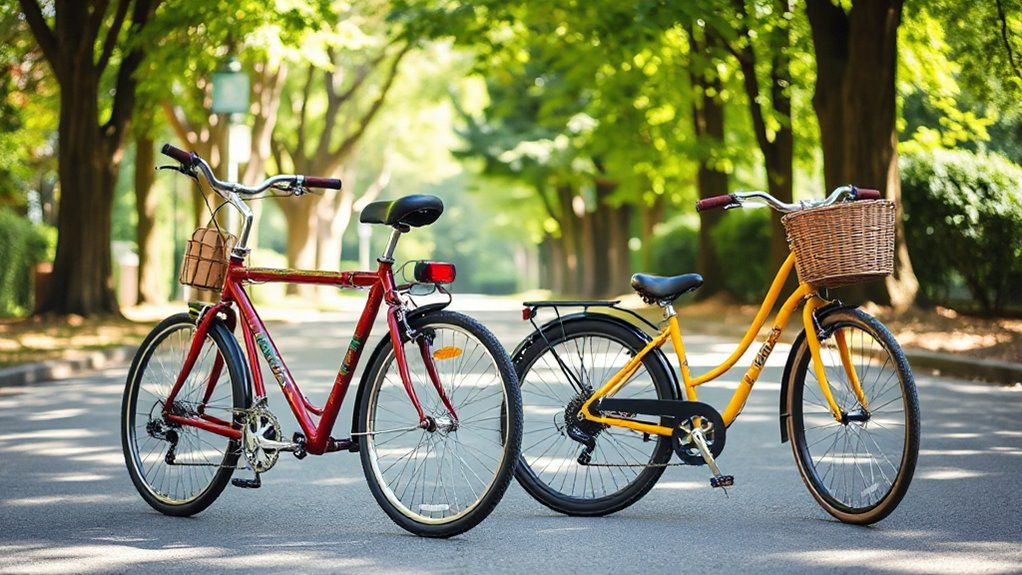
If you want to prioritize teamwork and shared experiences, tandem bikes are a great choice because they require coordination and foster closeness. However, if you value independence, control, and flexibility, two separate bikes let each rider choose their pace and route. Tandems work well for short, flat rides, while separate bikes suit longer or hillier journeys. To discover which option best fits your cycling style and needs, keep exploring the differences.
Key Takeaways
- Tandem bikes promote teamwork and bonding, while separate bikes offer individual control and independence.
- Tandems are ideal for short, flat rides; separate bikes suit longer, hilly terrains and diverse pacing needs.
- Tandem bikes are bulkier and harder to transport, whereas separate bikes are easier to store and carry.
- Riding a tandem encourages constant communication and shared experience; separate bikes allow social flexibility and independence.
- Tandem bikes require coordination and synchronization, while separate bikes enable independent effort and route choices.

When choosing between tandem bikes and two separate bikes, you need to contemplate how you plan to ride and what experience you want. If you’re looking for a shared adventure that emphasizes teamwork and connection, a tandem bike might be your best choice. You and your riding partner sit one behind the other, which means you’ll need to coordinate your pedaling, steering, and braking. This setup can foster a sense of unity, as you work together to propel forward, and it’s especially beneficial if one rider is less experienced or has physical limitations. On the other hand, if independence and individual control matter more to you, two separate bikes will serve you better. With separate bikes, each person can choose their own speed, style, and direction, making it easier to explore different routes or stop whenever you want without affecting the other rider.
The decision also hinges on the kind of terrain and distance you plan to cover. For short, leisurely rides on flat paths, a tandem bike can be a delightful option, allowing you to stay close and chat easily. Its streamlined design reduces wind resistance, potentially making pedaling more efficient for a team. However, on longer trips or hilly terrains, separate bikes can give each rider the flexibility to adjust their effort level independently, preventing fatigue and frustration. You won’t feel tethered to your partner’s pace, which can be vital if one of you prefers a more relaxed ride or wants to push harder.
Another aspect to consider is convenience and storage. Tandem bikes tend to be bulkier and less common, making them harder to find and transport. They often require special racks or vehicles to carry, and their size can make maneuvering through crowded areas tricky. Separate bikes are usually easier to store, transport, and rent, especially if you’re traveling or planning to rent bikes from a local shop. Plus, with two individual bikes, it’s simpler to park or pack up at the end of your ride without worrying about fitting a single large frame into your vehicle. Additionally, the high stability of two separate bikes can provide a safer experience for riders of varying skill levels.
Finally, think about social interaction and shared experience. Riding a tandem can be a bonding activity, forcing you to communicate and synchronize your efforts constantly. It’s a unique way to connect, especially if you’re riding with someone you want to share a close experience with. Conversely, riding separate bikes allows for more social flexibility—you can ride alongside each other at your own pace, take breaks independently, and even split up if your interests diverge during the ride. Your choice ultimately depends on whether you prioritize closeness and teamwork or independence and flexibility in your cycling experience.
Frequently Asked Questions
What Are the Maintenance Differences Between Tandem and Separate Bikes?
You’ll find that tandem bikes require more maintenance because both riders share components like the chain, gears, and brakes, which wear out faster. You’ll need to regularly check and lubricate the chain and guarantee both sets of brakes and gears are synchronized. With separate bikes, maintenance is simpler and more straightforward, focusing on individual components. Overall, tandem bikes demand more attention and occasional adjustments to keep them running smoothly.
How Do Tandem Bikes Affect Cycling Speed Compared to Individual Bikes?
Tandem bikes can increase your cycling speed because you and your partner work together, sharing the workload and reducing wind resistance. With coordinated pedaling and streamlined design, you often go faster than on individual bikes, especially on flat terrains. However, your speed may decrease in tricky terrains or steep climbs, where coordination and power distribution matter more. Overall, tandem bikes can boost your efficiency and speed when riding smoothly as a team.
Are Tandem Bikes Suitable for All Rider Skill Levels?
Like riding a tandem, cycling with a tandem bike isn’t for everyone. They suit experienced riders who can coordinate smoothly, but beginners might find them challenging. If you’re comfortable communicating and syncing your pace, you’ll enjoy the teamwork. However, if you prefer solo control or are new to cycling, starting with separate bikes is smarter. Choose based on your confidence and comfort level, ensuring safety and fun on your rides.
What Safety Precautions Are Essential for Tandem Biking?
You should always wear helmets and make sure both bikes are in good condition before riding. Communicate clearly with your partner about turns, signals, and pace to prevent accidents. Keep a safe distance from other cyclists and stay alert to your surroundings. Practice braking and steering together in a safe environment first. These precautions help you stay safe, enjoy the ride, and prevent injuries during tandem biking.
How Does Cost Compare Between Tandem Bikes and Two Separate Bikes?
Tandem bikes generally cost more than two separate bikes, often ranging from $500 to over $2,000, depending on quality and features. Two separate bikes tend to be less expensive, with prices starting around $200 each. Keep in mind, tandem bikes may require additional accessories or maintenance, which can add to the overall cost. If budget is a concern, buying two individual bikes might be the more economical choice.
Conclusion
Ultimately, whether you choose a tandem bike or two separate ones, it’s about finding what suits your rhythm and style. Sometimes, sharing a ride on a tandem can feel like a dance—closer, more connected—while solo rides offer independence and space to breathe. Whichever path you take, remember that each journey brings its own joys and gentle lessons. Embrace the option that whispers to your soul, and let your adventures unfold naturally, one pedal stroke at a time.