TL;DR

Get gifts for the two of you delivered free with Prime
- Fast, free delivery on millions of items
- Prime Video, Amazon Music and more included
- Member-only deals all year
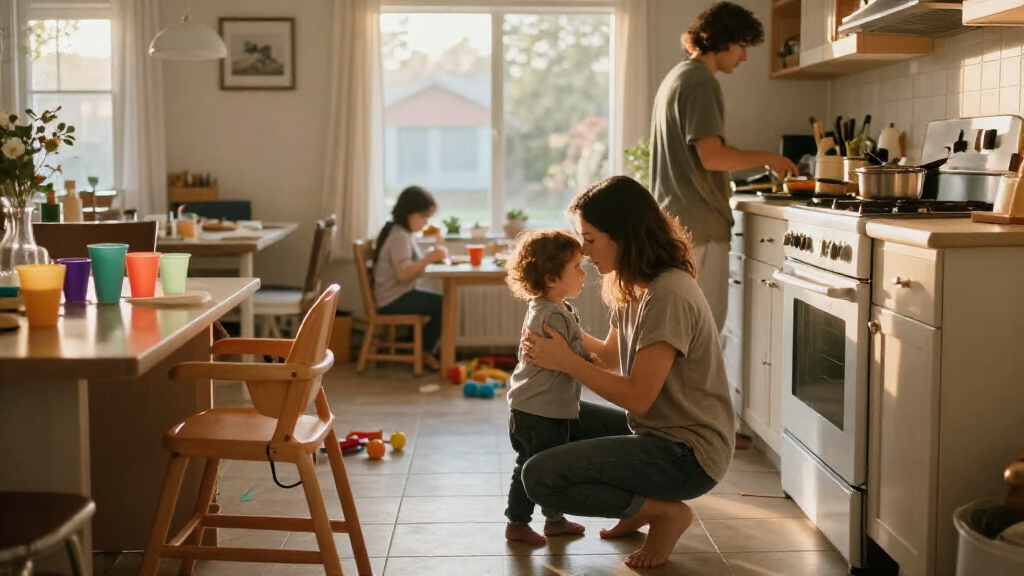
Bolde published an essay describing seven old-fashioned rules that some millennial parents may find themselves using after vowing to parent differently from their Boomer parents. The piece is based on illustrative scenarios and cited parenting commentary, not survey data establishing how common these practices are.
Bolde has published an essay describing how millennial parents who hoped to break from their Boomer parents’ approach may find themselves repeating some familiar household rules. The piece outlines seven examples, from asking children to find their own activity when bored to setting limits around snacks and chores; it presents personal-style scenarios, not evidence that these rules are widespread among millennial families.
The article’s central point is that parents may reject the tone or rigidity of rules from their own childhoods while later adopting similar boundaries for practical reasons. Its examples include telling a bored child to find something to do, closing the kitchen before dinner, requiring chores before a visit with friends, and serving one meal rather than preparing separate dishes. It also describes parents encouraging children to go outside and play.
Two further examples concern household expectations and children’s independence: cleaning up a room before leaving home and accepting that dinner is what the parent has prepared. In each scenario, the essay frames the rule as a response to a recurring family difficulty, such as children grazing before dinner, chores going undone or parents feeling responsible for planning every stretch of a child’s day.
The source also cites parenting commentary. It attributes to educator Jen Lumanlan the observation that parents may fall back on responses learned in childhood, particularly under stress. It refers to psychologist Jeffrey Bernstein writing that parents raised with strict discipline may react by offering too little structure. These are attributed viewpoints within the essay, not findings presented with study data.
How Household Boundaries Reappear
The essay speaks to a familiar parenting tension: adults may want to avoid the harsher or less responsive parts of their upbringing while still needing routines and limits at home. Its examples suggest that similar rules can serve different purposes depending on how parents explain and enforce them. A meal boundary, for instance, may be intended to reduce food waste and repeated cooking rather than punish a child for disliking dinner.
That distinction matters for readers because the piece does not argue that returning to an old rule automatically means repeating the parenting style behind it. A parent can set a limit while listening to a child, explaining the reason and adjusting for individual needs. The scenarios may prompt reflection, but the article offers no evidence that these approaches work for every family or that millennial parents as a group have adopted them.
Popular right now

Sony WH-1000XM6 Wireless Noise-Canceling Over-Ear Headphones, Blue, Bundle

Dyson Car+Boat Cordless Handheld Vacuum

KitchenAid Artisan 5-Quart Tilt-Head Stand Mixer, Almond Cream
As an affiliate, we earn on qualifying purchases.
The Seven Rules in the Essay
The source is a lifestyle essay, not a reported survey or research study. It uses second-person vignettes to portray parents revising their expectations after daily pressures make certain boundaries seem useful. The examples include allowing children to experience boredom, limiting snacks before meals, putting chores ahead of leisure, serving a shared dinner, encouraging outdoor activity, asking children to keep their rooms in order and expecting them to eat the meal prepared.
The author contrasts these scenarios with an imagined intention to parent differently: more engagement, more choice and less reliance on commands remembered from childhood. The essay’s claim is qualified by its format: it describes patterns that some parents may recognize, but provides no sample size, prevalence estimate or comparative data. The supplied material also does not give a publication date.
“Parents often default to the responses they absorbed in childhood, especially under stress.”
— Jen Lumanlan, educator, as quoted in the Bolde essay
How Common These Rules Are
The source does not establish how many millennial parents use these rules, whether the examples reflect a broader generational trend or how children respond to them. It provides no survey, study methods or comparison with Boomers’ parenting practices. The supplied report also gives no publication date, and the cited commentary is not accompanied by links or additional research details in the provided material.
It is also unclear how the rules would be adapted to different children and households. A child’s eating needs, health, schedule, age and temperament can affect whether a particular boundary is appropriate. The essay’s anecdotes should not be read as universal parenting guidance or proof that a specific rule produces a particular outcome.
What Readers Can Take From It
The source describes no planned follow-up, research release or policy development. For now, the development is the publication of a seven-example lifestyle essay. Readers can distinguish its personal scenarios from its attributed parenting commentary and assess whether a household rule meets their own family’s needs.
Any broader conclusion about how millennial parents raise children would require evidence beyond these anecdotes, such as a clearly described survey or study. Until then, the article offers a set of recognizable situations rather than a measured account of a generational shift.
Key Questions
What is the Bolde article about?
It describes seven household rules that some millennial parents may use after rejecting similar rules in their own childhoods, including limits on snacks, chores before outings and going outside to play.
Does the article show that most millennial parents use these rules?
No. The source provides anecdotal scenarios, not survey data, and does not estimate how common any of the rules are.
Which experts does the essay cite?
It cites educator Jen Lumanlan on parents falling back on childhood responses under stress, and psychologist Jeffrey Bernstein on some parents responding to strict upbringings with too little structure.
Does repeating a rule mean repeating the same parenting style?
Not necessarily. The essay distinguishes between a familiar boundary and the reasons or manner behind it, but it does not test how different approaches affect children.
Source: bolde.com