
TL;DR

Get gifts for the two of you delivered free with Prime
- Fast, free delivery on millions of items
- Prime Video, Amazon Music and more included
- Member-only deals all year
BYD has announced a full liability guarantee for its city-driving ADAS system, God’s Eye, leading to increased usage and improved safety. The move impacts insurance costs and shifts responsibility onto BYD, signaling a new approach to autonomous vehicle safety and liability.
BYD has announced a full liability guarantee for its city-driving ADAS system, God’s Eye, which has led to a 50% increase in city usage and a substantial boost in autonomous driving safety. This move signals a significant shift in BYD’s approach to vehicle responsibility and safety, impacting insurance models and consumer adoption.
Last month, BYD introduced a guarantee that fully covers damages resulting from accidents while using its LiDAR-equipped God’s Eye system in urban environments. This guarantee applies to vehicles with the latest 5.0 software or those updated via OTA, and it assumes full liability for city driving accidents, a departure from traditional insurance models. Following this announcement, city usage of God’s Eye increased by 50%, indicating greater driver trust and system reliance in dense traffic conditions.
BYD’s over 3 million vehicles equipped with God’s Eye now have a 50.91% usage rate overall, with a notable rise in urban driving. The company’s approach involves offering its own insurance, underwritten by BYD Insurance, which reported 2.87 billion RMB in revenue in 2025. The company’s direct sales model and telematics-driven risk management contribute to lower premiums and reduced claim costs, with a 2025 insurance expense ratio of 5.21%, well below industry averages. Data shows that accidents involving God’s Eye-equipped vehicles, particularly serious ones, are significantly fewer—airbag deployments and minor parking accidents are reduced to fractions of those in human-driven vehicles—highlighting safety improvements.
Impact of Responsibility Shift on Safety and Insurance
BYD’s move to assume full liability for city driving accidents with God’s Eye increases driver confidence and system usage, potentially accelerating adoption of autonomous features. The safety improvements, evidenced by fewer accidents and injuries, could lead to lower insurance costs and influence industry standards. This approach also positions BYD as a leader in responsible autonomous driving, potentially reshaping how liability and insurance are managed in the EV and AV sectors.
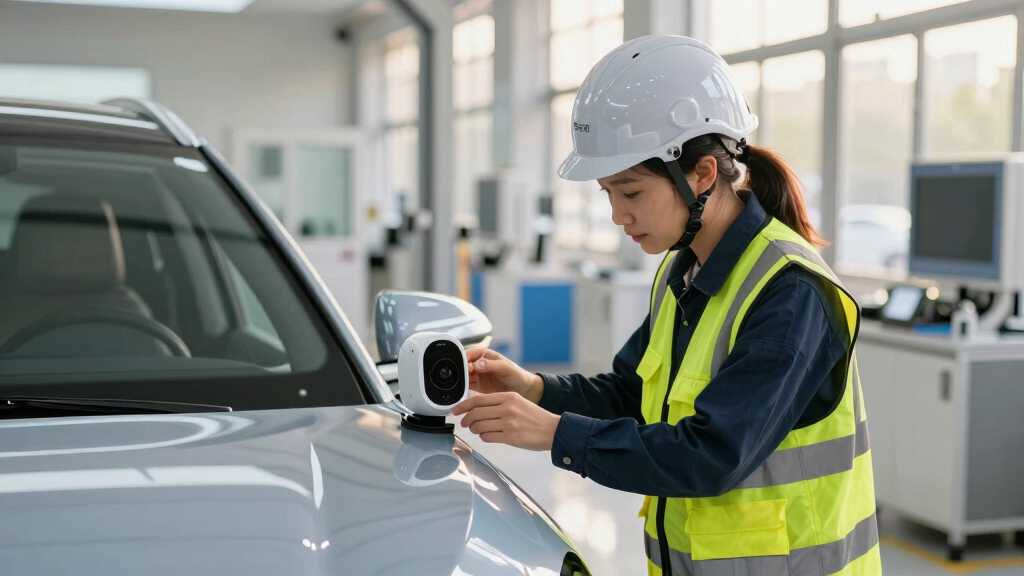
LiDAR-based ADAS system for cars
As an affiliate, we earn on qualifying purchases.
As an affiliate, we earn on qualifying purchases.
BYD’s Autonomous Driving and Insurance Strategy Background
In 2023, BYD announced a damage guarantee for urban driving using its LiDAR-based God’s Eye system, which has since been adopted by over 3 million vehicles. The company’s focus on safety and liability is part of its broader strategy to promote autonomous driving while controlling costs through direct insurance offerings. The recent increase in city driving usage follows the company’s efforts to build consumer trust and improve safety metrics, including a significant reduction in serious accidents compared to human drivers. This shift reflects a broader trend among automakers to integrate responsibility and safety directly into their business models, leveraging data and technology to reduce claims and premiums.
“Serious accidents during God’s Eye use, based on airbag deployment data, are now one-sixth of those in human-driven vehicles, surpassing expectations for safety.”
— Yang Dongsheng, Senior Vice President of BYD
urban driving autonomous vehicle safety kit
As an affiliate, we earn on qualifying purchases.
As an affiliate, we earn on qualifying purchases.
Unresolved Aspects of Liability and Safety Impact
It remains unclear how insurance claims will be processed in detail, and whether other automakers will adopt similar liability models. The long-term safety effects and consumer acceptance are still being evaluated, and data on accident reductions is ongoing. Additionally, the broader industry response and regulatory implications are yet to be determined.
BYD God’s Eye vehicle safety system
As an affiliate, we earn on qualifying purchases.
As an affiliate, we earn on qualifying purchases.
Future Developments in Autonomous Safety & Insurance
BYD is expected to continue expanding God’s Eye usage, possibly integrating it into more models and markets. The company will likely monitor accident data and adjust its safety protocols and insurance offerings accordingly. Industry observers anticipate that other automakers may follow suit if BYD’s approach proves successful, potentially leading to new standards in autonomous vehicle liability and insurance. Regulatory bodies may also scrutinize and shape the evolving liability framework for autonomous systems.
vehicle accident liability insurance for EVs
As an affiliate, we earn on qualifying purchases.
As an affiliate, we earn on qualifying purchases.
Key Questions
How does BYD’s full liability guarantee differ from traditional insurance?
Unlike traditional insurance that pays for damages, BYD’s guarantee assumes full liability for accidents during city driving, directly covering damages and claims through BYD’s own insurance system.
Will this increase the safety of autonomous vehicles?
Preliminary data suggests that accidents involving God’s Eye are significantly fewer and less severe, indicating improved safety, though long-term effects are still being studied.
What does this mean for consumers buying BYD vehicles?
Consumers may benefit from lower insurance premiums and increased confidence in autonomous driving features, especially in urban environments.
Could other automakers adopt similar liability models?
It is possible if BYD’s approach proves effective, but regulatory approval and industry standards will influence wider adoption.
What are the potential risks of BYD’s liability approach?
Potential risks include increased financial exposure for BYD in case of accidents and regulatory scrutiny over liability and safety standards.
Source: CleanTechnica
Halloween Picks
halloween
As an affiliate, we earn on qualifying purchases.