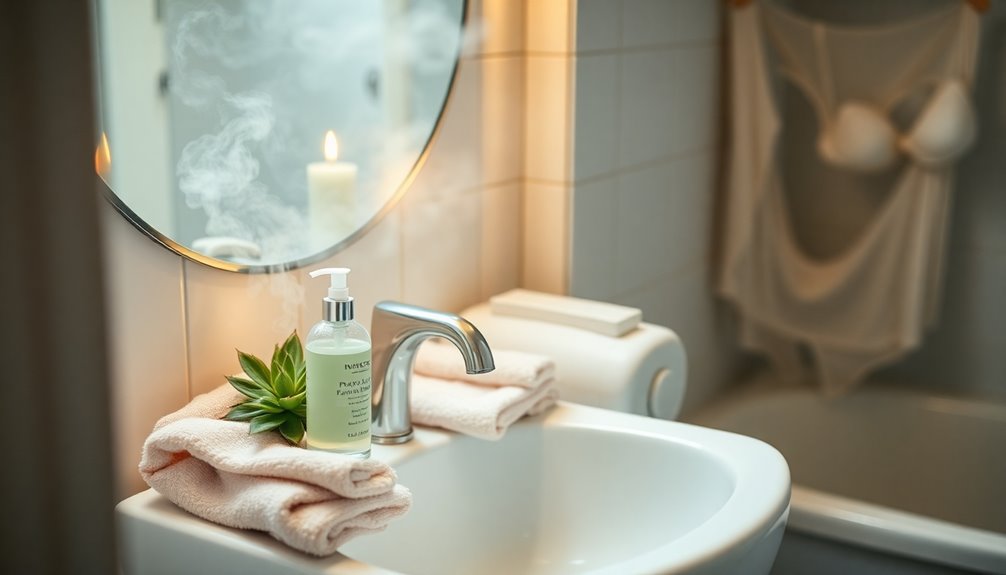

To safely use your home sauna, start by thoroughly understanding the controls and safety features, and stick to recommended session durations of 10-15 minutes. Stay hydrated by drinking water before, during, and after sessions, and avoid alcohol or medications that affect your body’s heat regulation. Always monitor how you feel and exit if you experience discomfort. Ensuring your sauna environment is safe and well-maintained is key—continue exploring these tips to maximize your safety.
Key Takeaways
- Read the user manual thoroughly and understand all controls, safety features, and recommended session durations.
- Start with short sessions of 10-15 minutes, gradually increasing as your body adapts.
- Stay well-hydrated before, during, and after use; avoid alcohol and medications that impair temperature regulation.
- Ensure the sauna is in a safe, dry location with easy-to-open doors and controls within reach.
- Consult a healthcare professional if you have health conditions or are pregnant before using a home sauna.
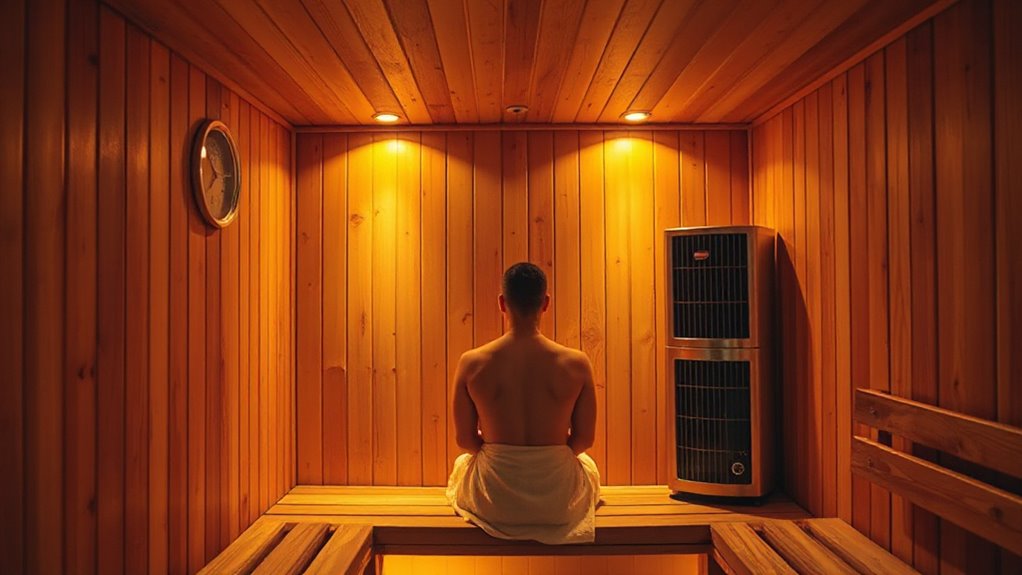
Using a home sauna can be a relaxing and healthful experience, but it’s important to prioritize safety to prevent accidents or health issues. Before you even step inside, make sure you understand your sauna’s specific guidelines and safety features. Read the user manual thoroughly, and familiarize yourself with the controls, temperature limits, and recommended usage times. This knowledge helps you avoid settings that could be too hot or sessions that last too long, both of which can pose health risks.
Always start with a brief warm-up session if you’re new to saunas. Begin with shorter durations, like 10 to 15 minutes, and gradually increase your time as your body adjusts. Pay close attention to how you feel during your session. If you start feeling dizzy, lightheaded, nauseous, or uncomfortable, it’s vital to exit immediately and cool down. Never push yourself to stay longer than you’re comfortable, because prolonged exposure to high heat can lead to dehydration, heat exhaustion, or heat stroke.
Start with brief sessions, increase gradually, and listen to your body to stay safe in the sauna.
Hydration is essential before, during, and after your sauna session. Drink plenty of water to replenish fluids lost through sweating. Avoid alcohol or medications that can impair your ability to regulate body temperature, as these can increase your risk of dehydration or adverse reactions to heat. Keep a bottle of water nearby so you can sip as needed, and don’t forget to hydrate afterwards as well, since your body continues to lose fluids even after you leave the sauna.
Another safety tip is to listen to your body and be mindful of any health conditions that might make sauna use risky. If you have cardiovascular issues, high blood pressure, respiratory problems, or are pregnant, consult your healthcare provider before using a home sauna. These conditions can be aggravated by high temperatures, and your doctor might recommend specific precautions or advise against sauna use altogether.
To prevent accidents, always verify the sauna is in a safe, dry location and that the door or entrance is easy to open from the inside. Never leave children unattended inside the sauna, and always supervise anyone with health concerns. Keep the controls within easy reach so you can quickly adjust the temperature or turn off the sauna if needed. Finally, maintain regular cleaning and inspection of your sauna to prevent mold, bacteria, or electrical issues that could compromise safety. Additionally, being aware of the Free Floating nature of some sauna models can help you understand potential safety features or risks associated with different designs.
Frequently Asked Questions
Can Children Safely Use a Home Sauna?
Children should not use a home sauna without strict supervision and medical approval. Their bodies are more sensitive to heat, which can cause dehydration, overheating, or burns. If you’re considering letting a child use the sauna, consult a healthcare professional first. Always keep the temperature low, limit the duration, and watch closely for any signs of discomfort. Prioritizing their safety is essential to prevent potential health risks.
What Should I Do if I Feel Dizzy?
If you feel dizzy, immediately exit the sauna and sit or lie down in a cool area. Drink plenty of water to rehydrate and help your body recover. Take slow, deep breaths to increase oxygen intake. Avoid standing up too quickly to prevent fainting. If dizziness persists or worsens, seek medical attention promptly. Always listen to your body and don’t ignore warning signs during sauna use.
Are There Any Health Conditions That Prevent Sauna Use?
You should avoid sauna use if you have heart disease, low blood pressure, or respiratory issues, as these conditions can worsen with heat exposure. Studies show that up to 20% of individuals with cardiovascular problems experience adverse effects in hot environments. Always consult your doctor before trying a sauna, especially if you have any chronic health conditions. Your health safety comes first, so don’t take risks if your doctor advises against it.
How Long Is Too Long to Stay in the Sauna?
You shouldn’t stay in a sauna for more than 15-20 minutes at a time. Prolonged exposure can lead to dehydration, dizziness, or overheating. Listen to your body—if you start feeling lightheaded, nauseous, or uncomfortable, it’s time to leave. Make sure to hydrate before and after your session, and avoid staying longer than your comfort allows. Always follow the manufacturer’s guidelines for safe sauna use.
Is It Safe to Use Essential Oils in a Home Sauna?
Imagine the soothing scent of eucalyptus filling your sauna as you breathe deeply. Yes, it’s generally safe to use essential oils in your home sauna, but you should dilute them properly and use only a few drops. Avoid placing oils directly on the hot stones to prevent flare-ups. Always guarantee good ventilation and listen to your body—if you feel lightheaded, exit immediately.
Conclusion
Remember, safety should always come first when enjoying your home sauna. Stay hydrated, limit your sessions, and listen to your body. Did you know that over 80% of sauna accidents happen because of dehydration or overheating? By following these simple tips, you can relax and reap the benefits safely. Keep these practices in mind, and you’ll enjoy your sauna experience without worries. Your well-being makes every session more enjoyable and beneficial.