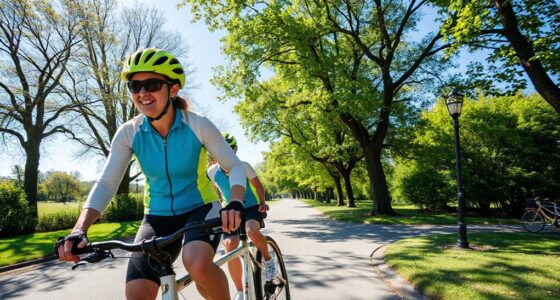

To ride a tandem bike without conflict, start by clearly assigning roles and setting expectations from the beginning. Communicate openly using simple signals and keep eye contact to stay coordinated. Respect each other’s pace and be flexible when needed, supporting patience and understanding. Stay aware of your environment, signaling early for turns and obstacles. Maintaining a respectful, calm attitude helps create a fun, smooth experience—stick around to discover more tips for a peaceful tandem ride.
Key Takeaways
- Establish clear roles for the captain and stoker before starting to prevent confusion.
- Maintain open, simple communication signals for turns, stops, and breaks throughout the ride.
- Agree on pacing and be flexible to adjust speed or rest as needed for comfort.
- Stay aware of the environment and coordinate movements smoothly to avoid hazards.
- Cultivate patience, respect, and positive attitude to foster teamwork and prevent conflicts.
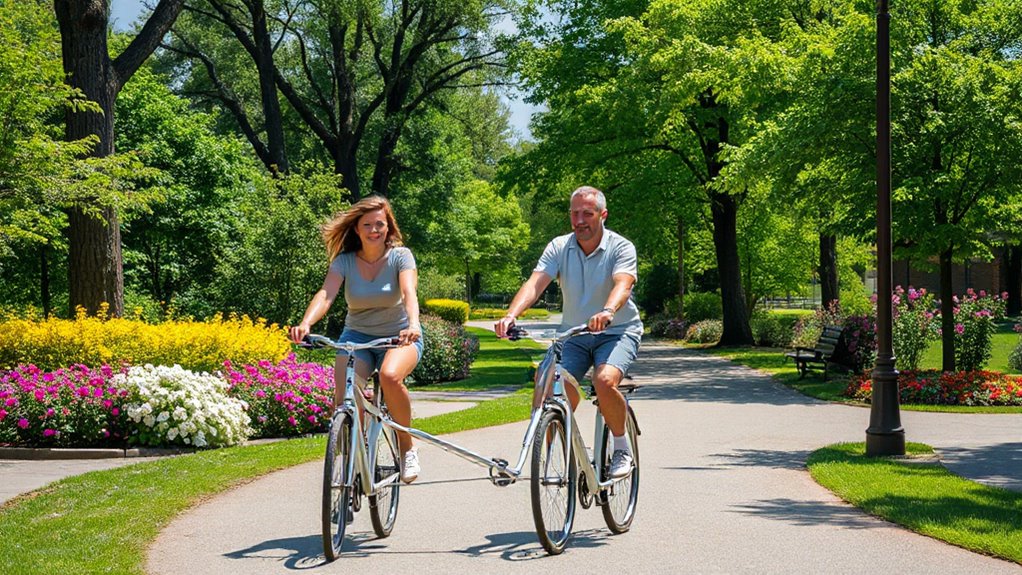
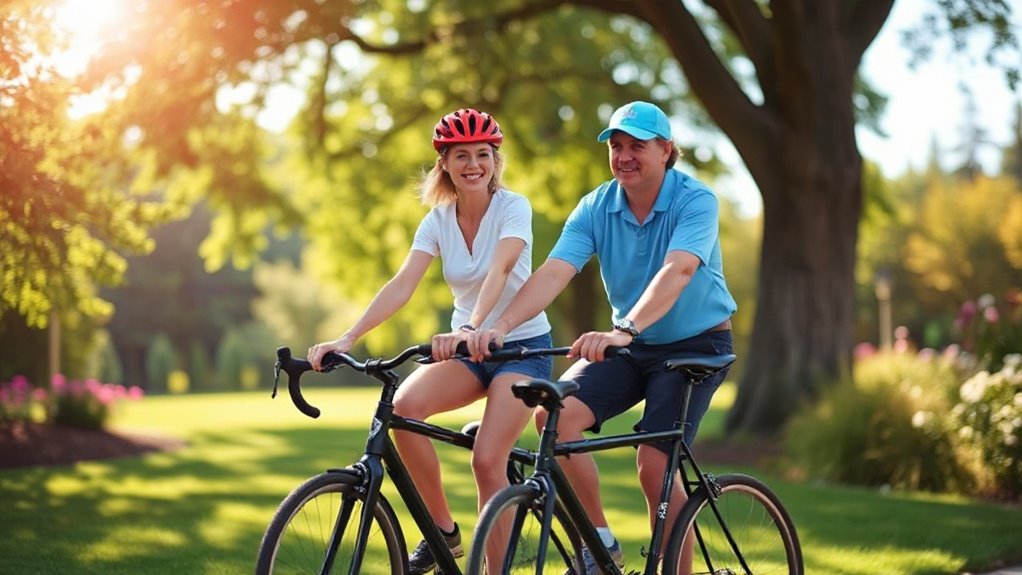
Riding a tandem bike can be a fun and rewarding experience, but it requires coordination and communication between both riders. To guarantee a smooth ride without conflict, you need to establish a clear understanding of roles from the start. Decide who will steer and who will pedal, and make sure both of you are comfortable with those responsibilities. This clarity helps prevent confusion and makes riding more enjoyable. Before you set out, take a moment to discuss your goals for the ride—whether it’s a leisurely cruise or a more intense workout—so both of you have aligned expectations.
Communication during the ride is essential. Use simple, consistent signals to indicate turns, stops, or if you need a break. For example, you might agree on a hand signal to indicate a turn or a tap on the shoulder to slow down or stop. Keep talking to each other, especially in busy or challenging sections. Verbal cues help you stay coordinated and prevent sudden surprises that can lead to conflict or accidents. Make eye contact when possible, so you’re both aware of each other’s intentions, and listen carefully to each other’s feedback.
Pacing is another critical factor. Respect each other’s tempo and avoid rushing or pushing too hard. If one rider needs to slow down or take a break, communicate openly and make adjustments together. Don’t let frustration build up if your pace isn’t perfectly synchronized at first—practice and patience are key. During the ride, stay aware of each other’s comfort levels. If one of you feels tired or uneasy, stop for a moment, hydrate, and discuss how to proceed. Riding as a team means supporting each other’s needs and being flexible.
Keep an eye on your surroundings and anticipate changes in terrain or traffic. This proactive approach helps prevent last-minute maneuvers that could cause conflict or unsafe situations. When turning, coordinate your movements smoothly—lean into turns together and signal early so both of you can prepare. Staying in sync with each other’s movements helps maintain balance and prevents sudden jerks or miscommunications.
Finally, cultivate a positive attitude and patience. Mistakes happen, and misunderstandings can occur, but a calm, respectful approach keeps the experience enjoyable. Celebrate your teamwork and the shared effort to enjoy the ride. With clear communication, mutual respect, and patience, you’ll find riding a tandem bike can strengthen your connection and create memorable adventures without conflict.
Top picks for "ride tandem bike"
Open Amazon search results for this keyword.
As an affiliate, we earn on qualifying purchases.
Frequently Asked Questions
How Do I Choose the Right Tandem Bike Size?
You choose the right tandem bike size by considering your and your partner’s height and inseam measurements. Make certain both of you can comfortably reach the handlebars and pedals without stretching or feeling cramped. Test ride different sizes if possible, and check the frame’s length and standover height. A properly fitted tandem bike helps you ride smoothly and enjoy the experience without discomfort or strain.
What Should I Wear for Comfortable Tandem Riding?
You should wear comfortable, breathable clothing that won’t pinch or chafe during your tandem ride. Think lightweight shirts, padded shorts, and sturdy shoes with good grip. Avoid overly loose clothes that could get caught in the chain or wheels. Bring sunglasses and a hat for sun protection, and don’t forget a helmet—because, ironically, safety gear actually makes riding more comfortable and worry-free. Happy pedaling!
How Do We Handle Different Paces or Stamina Levels?
To handle different paces or stamina levels, communicate openly with your riding partner before and during the ride. Agree on a comfortable pace that accommodates both of you, and take turns leading so neither feels pressured. If one person tires, slow down or take breaks together. Stay flexible and support each other, ensuring the ride remains enjoyable without causing frustration or conflict.
Are There Specific Hand Signals for Tandem Communication?
Yes, there are specific hand signals for tandem communication. You should agree on signals beforehand, like pointing forward to indicate to speed up, or raising your hand to slow down. Use clear, deliberate gestures to avoid confusion. When you need to stop, extend your arm straight out. Consistent signals help you and your partner stay coordinated, making your ride smoother and more enjoyable without misunderstandings.
How Do We Navigate Turns Safely on a Tandem Bike?
To navigate turns safely on a tandem bike, you should communicate clearly with your partner before the turn. Signal your intentions with hand signals or verbal cues, and slow down to maintain control. As you approach the turn, lean into it together, keeping your balance steady. Focus on smooth steering and coordinate your movements, ensuring both of you are prepared. This teamwork keeps your ride safe and enjoyable through every turn.
Conclusion
Riding a tandem bike can be a fun and rewarding experience when you communicate clearly and stay coordinated. Remember, over 60% of couples say tandem biking helps strengthen their relationship, showing how teamwork on the bike reflects teamwork in life. Keep practicing, stay patient, and enjoy the journey together. With these tips, you’ll avoid conflicts and make every ride enjoyable. So, hop on and pedal forward—your perfect tandem adventure awaits!